D-18 Glossary Model 831 Manual
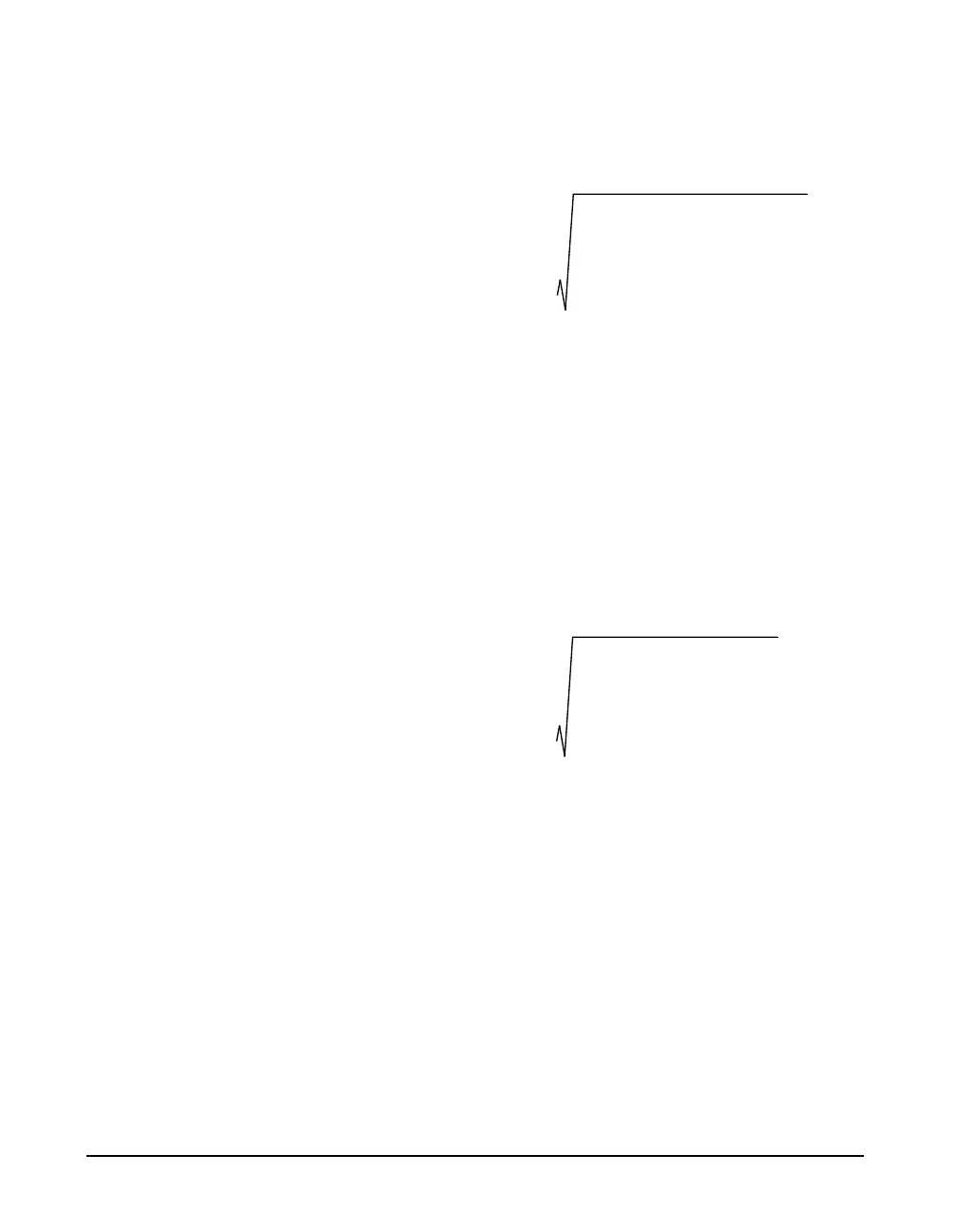
Moving Average: The averaging process is continually
accepting new data so it is similar to an exponential moving
average. The equation for it is
The sound pressure is squared and multiplied by a
exponential decay factor so that when the time of integration
is near the current time (t) it is essentially undiminished. For
times older (less) than the current time, the value is
diminished and so becomes less important. The rate at which
older data are made less influential is expressed by the
constant T. The larger it is, the slower the decay factor
reduces and the slower the response of the system to rapid
changes. These are standardized into three values called
Time Weighting. See the values below.
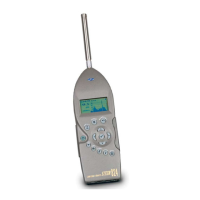
Fixed Average: The averaging process is over a fixed time
period. The equation for it is
The sound pressure is squared and averaged over a fixed
time period. Unlike the moving average, the sound pressures
in all time intervals are equally weighted.
Sound Pressure Level (SPL, L
p
) The logarithmic form of sound pressure. It is also expressed
by attachment of the word decibel to the number. The
logarithm is taken of the ratio of the actual sound pressure to
a reference sound pressure which is 20 MicroPascals ( Pa).
There are various descriptors attached to this level
depending on how the actual sound pressure is processed in
the meter:
Instantaneous: The time varying reading on a meter face on
in a meter output due to changes in the sound pressure. The
reading will depend on the time-weighting applied.
p
rms
1
T
---
p
2
e
t –T–
d
t
s
t
=
p
rms
1
T
2
T
1
–
-----------------------
p
2
t td
T
1
T
2
=


 To Next Page