11 UMTS Mode
136 SRM-3006 Narda
11.1 About UMTS mode
With GSM, individual channels can simply be measured frequency-
selectively and allocated to a particular radio cell. This is not possible for
UMTS because the information for the individual channels here is
scrambled and spread over an entire frequency channel of 5 MHz. This
procedure is also called W-CDMA (Wideband Code Division Multiple
Access). A P-CPICH (Primary Common Pilot Channel) is embedded in the
multiplex signal for each radio cell. This channel transmits continuously at a
constant level. Every radio cell has its own P-CPICH with its own scrambling
code.
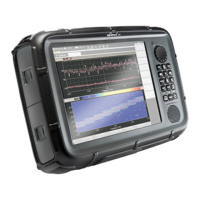
In UMTS P-CPICH Demodulation mode (or UMTS mode for short), the
SRM-3006 decodes all the scrambling codes that are present in a selected
UMTS frequency channel. In this way, it can record and list separately the
contributions made by each of the individual radio cells to the overall field
exposure level. It also calculates the total of these contributions. It is then
possible to use a selectable extrapolation factor to determine the worst case
situation that would occur if all traffic channels were fully loaded. The
SRM-3006 additionally indicates the analog measurement value. This
corresponds to the actual field exposure level integrated over the complete
UMTS frequency channel of 5 MHz.
Note: The SRM-3006 also records even those UMTS channels that have
levels up to 15 dB below the highest measured channel level.



 To Next Page