6 Functions Common to More Than One Operating Mode
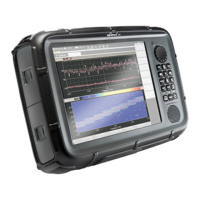
Narda SRM-3006 85
6.6.1 Measurement using a three axis antenna
Three axis (isotropic) antennas allow you to make simple and quick isotropic
measurements by automatically detecting the three spatial components of
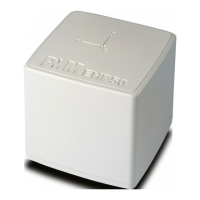
the field to be measured. Narda Safety Test Solutions offers three antennas
for measuring electric or magnetic field strength:
It is of course possible to also measure each axis separately using a three
axis antenna.
Isotropic measurement
Isotropic measurement mode is selected automatically by default. All three
axes are measured one after the other and the isotropic result calculated
and displayed by the SRM-3006. The display shows the label Isotropic at
lower left.
Measuring a single axis
Isotropic measurement mode is selected automatically when a three axis
antenna is used.
You can measure each axis separately from the Axis menu for those
applications where additional information about the spatial components of
the field is required.
The measurement is only useful if the orientation of the sensors relative to
the field is known. A tripod with a special antenna holder can be used for
Narda antennas (see Fitting a Narda antenna on a tripod on page 33). The
positions of the three measurement axes are marked on this special holder.
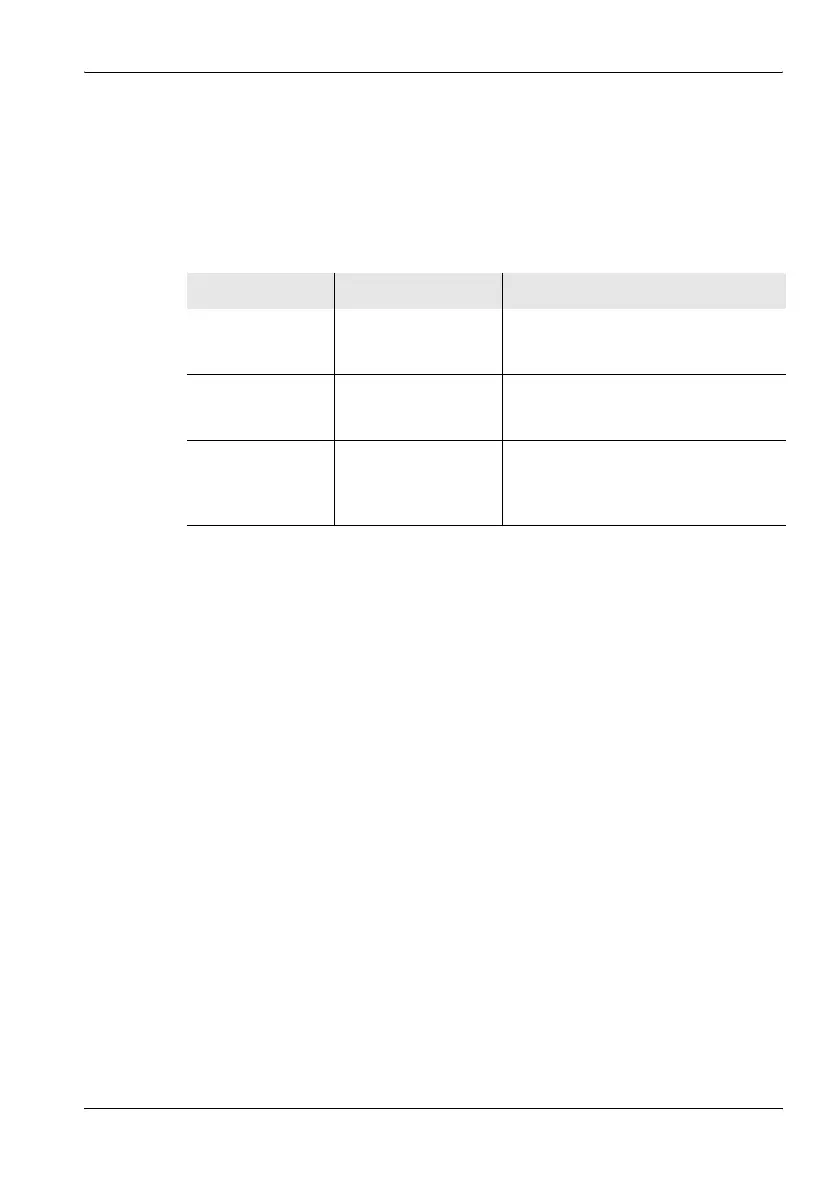
Table 22: Three axis antenna types
Type Frequency range Preferred application
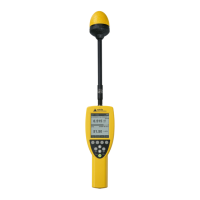
E-field antenna
(isotropic), dipole
array, passive
420 MHz – 6 GHz Fast, non-directional measurements
e.g. at mobile communications and
WiMAX frequencies.
E-field antenna
(isotropic), dipole
array, passive
27 MHz – 3 GHz Fast, non-directional measurements
e.g. at mobile communications
frequencies.
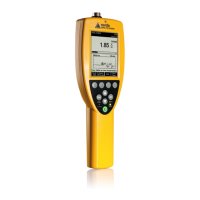
H-field antenna
(isotropic), coil
array, active
9 kHz – 250 MHz Fast, non-directional near-field
magnetic field measurements on
radio/TV transmitters and industrial
equipment.



 To Next Page