8.25
Date Code 20060320 Instruction Manual SEL-311C Relay
Breaker Monitor and Metering Functions
Demand Metering
Demand Current
Logic Output
Application–Raise
Pickup for Unbalance
Current
During times of high loading, the residual ground overcurrent elements can
see relatively high unbalance current I
G
(I
G
= 3I
0
). To avoid tripping on
unbalance current I
G
, use Relay Word bit GDEM to detect the residual ground
(unbalance) demand current I
G(DEM)
and effectively raise the pickup of the
residual ground time-overcurrent element 51GT. This is accomplished with
the following settings from Table 8.4, pertinent residual ground overcurrent
element settings, and SEL
OGIC control equation torque control setting
51GTC:
EDEM = THM
DMTC = 5
GDEMP = 1.0
51GP = 1.50
50G2P = 2.30
51GTC = !GDEM + GDEM * 50G2
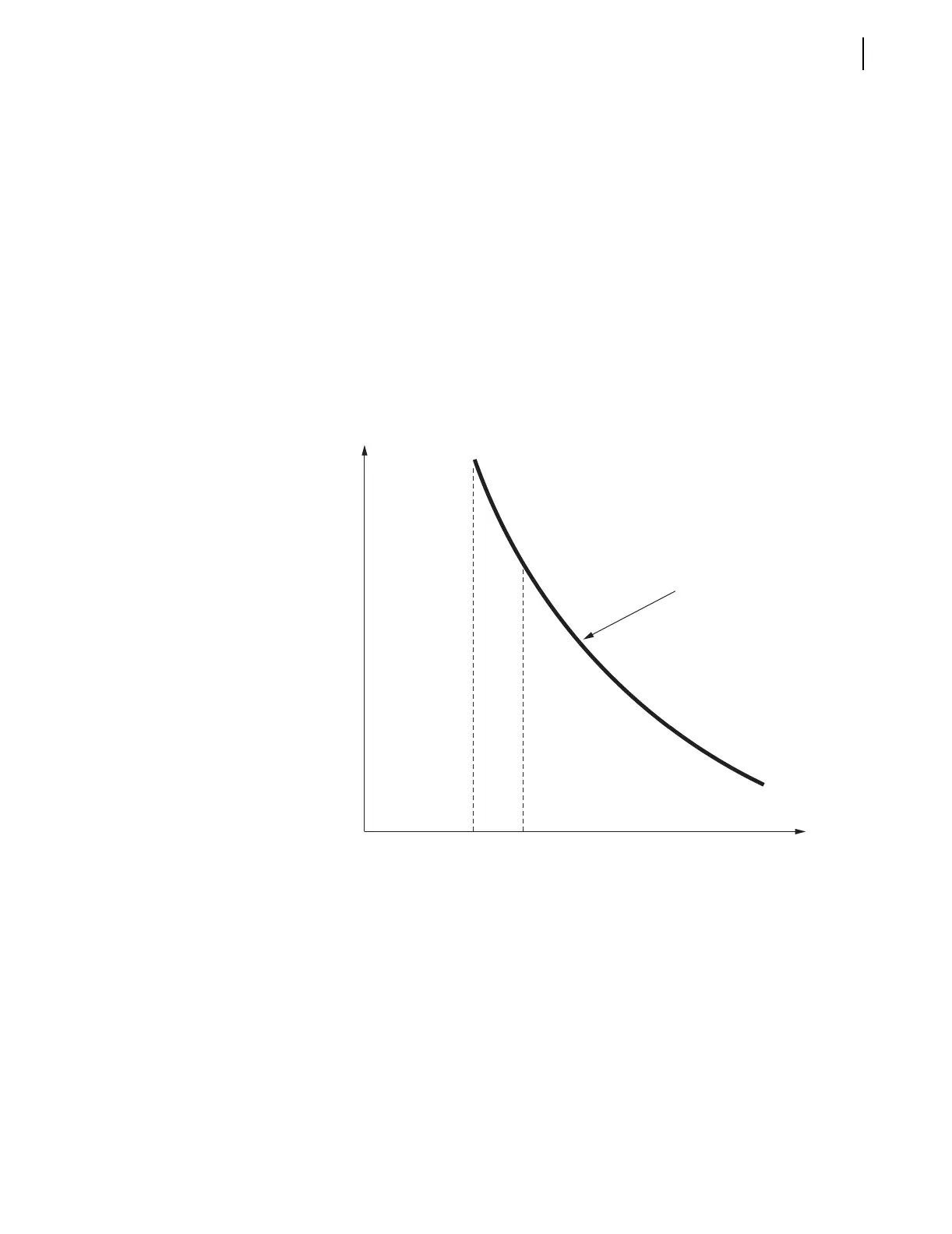
Refer to Figure 8.13, Figure 8.14, and Figure 3.25.
Figure 8.14 Raise Pickup of Residual Ground Time-Overcurrent Element for
Unbalance Current
Residual Ground Demand Current Below Pickup GDEMP
When unbalance current I
G
is low, unbalance demand current I
G(DEM)
is
below corresponding demand pickup GDEMP = 1.00 A secondary, and Relay
Word bit GDEM is deasserted to logical 0. This results in SEL
OGIC control
equation torque control setting 51GTC being in the state:
51GTC = !GDEM + GDEM * 50G2 = NOT(GDEM) + GDEM * 50G2 =
NOT(logical 0) + (logical 0) * 50G2 = logical 1
Thus, the residual ground time-overcurrent element 51GT operates on its
standard pickup:
51G1T
I
G
(Residual)
51GP
= 1.50
t
50G2P
= 2.30


 To Next Page