4.7
Date Code 20120126 Instruction Manual SEL-2032 Communications Processor
SELOGIC Control Equations
Outputs
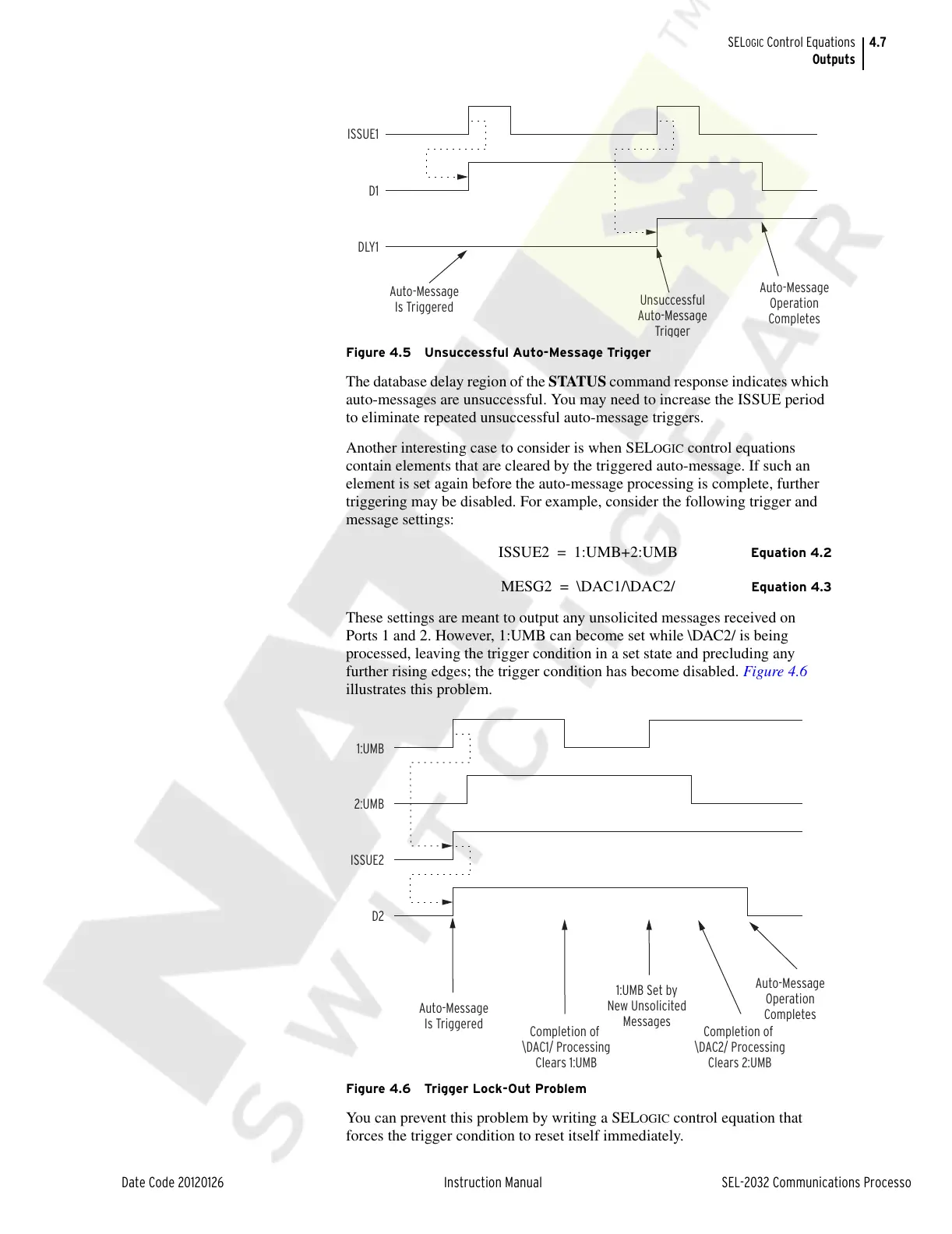
Figure 4.5 Unsuccessful Auto-Message Trigger
The database delay region of the STATUS command response indicates which
auto-messages are unsuccessful. You may need to increase the ISSUE period
to eliminate repeated unsuccessful auto-message triggers.
Another interesting case to consider is when SEL
OGIC control equations
contain elements that are cleared by the triggered auto-message. If such an
element is set again before the auto-message processing is complete, further
triggering may be disabled. For example, consider the following trigger and
message settings:
Equation 4.2
Equation 4.3
These settings are meant to output any unsolicited messages received on
Ports 1 and 2. However, 1:UMB can become set while \DAC2/ is being
processed, leaving the trigger condition in a set state and precluding any
further rising edges; the trigger condition has become disabled. Figure 4.6
illustrates this problem.
Figure 4.6 Trigger Lock-Out Problem
You can prevent this problem by writing a SELOGIC control equation that
forces the trigger condition to reset itself immediately.
Auto-Message
Operation
Completes
Unsuccessful
Auto-Message
Trigger
Auto-Message
Is Triggered
ISSUE1
D1
DLY1
Auto-Message
Operation
Completes
Completion of
\DAC2/ Processing
Clears 2:UMB
Completion of
\DAC1/ Processing
Clears 1:UMB
Auto-Message
Is Triggered
1:UMB Set by
New Unsolicited
Messages
1:UMB
2:UMB
ISSUE2
D2
Courtesy of NationalSwitchgear.com


 To Next Page