Model 831 Manual Trigger Method 13-9
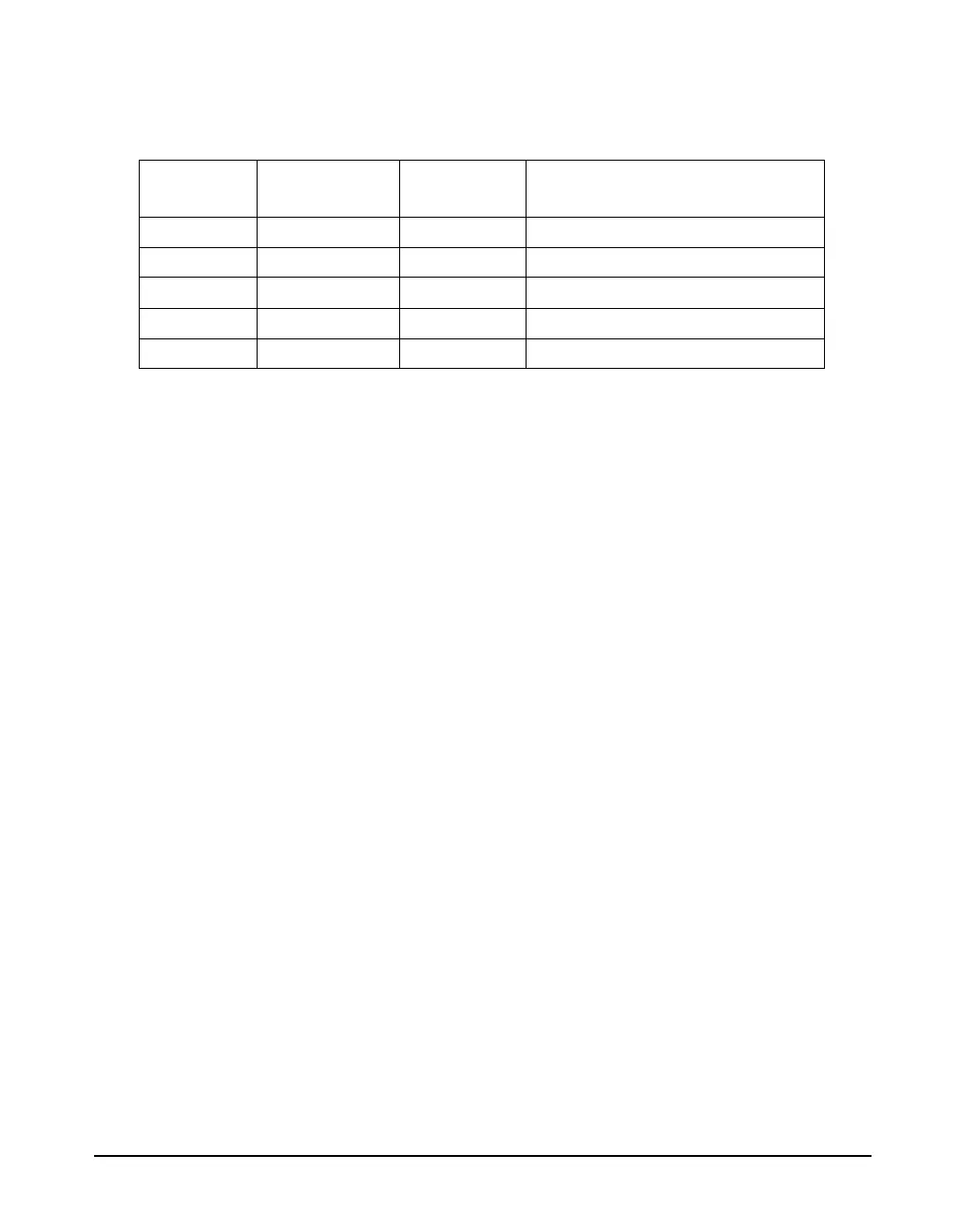
options available, having the characteristics presented in
TABLE 13-1.
To set the Dynamic Response, highlight the Dynamic
Response data field and press
5. Set the digit to a value
between 1 and 5 and press
5.
Dynamic Trigger Example
Suppose the dynamic trigger was set with the following
parameters:
SPL1: 65 dB
Dynamic Trigger Offset: 20 dB
Dynamic Response: 3 (Tracking Ln Percentile = 90% and
Rise Rate = 0.5 dB/minute)
The initial background tracking level
is set at SPL Trigger Level 1 minus
the offset setting.
When the measurement is first begun, the background
tracking level is set to Trigger Level SPL1 minus the offset
setting. In this situation, the tracking level would then be 65-
20 = 45 dB. The initial event trigger level would then be 45
+ 20 = 65 dB.
As the measured sound increases
above the tracking level, the tracking
level will increase at the rise rate.
Conversely as the measured sound
decreases below the current tracking
level, the tracking level will decrease
at the rate determined by the
tracking Ln percentile and its
corresponding rate.
The limitation to this increase in the event trigger level
would be that the rate of increase in the value of Ln used to
determine the event trigger level would be limited to a
maximum of 0.5 dB/minutes. Thus, a rapid change in the
value of calculated Ln of say several dB would not produce
an immediate change in the event trigger level.
Setting
Number
Tracking Ln
Percentile
Rise Rate, dB/
minute
Description
1 95% 0.5 Lower Tracking Level
2 90% 1/3 Slower
3 90% 0.5 Default, Normal Operation
4 90% 1 Faster
5 80% 1 Faster and Higher Tracking Level
TABLE 13-1 Dynamic Response: Dynamic Triggering


 To Next Page