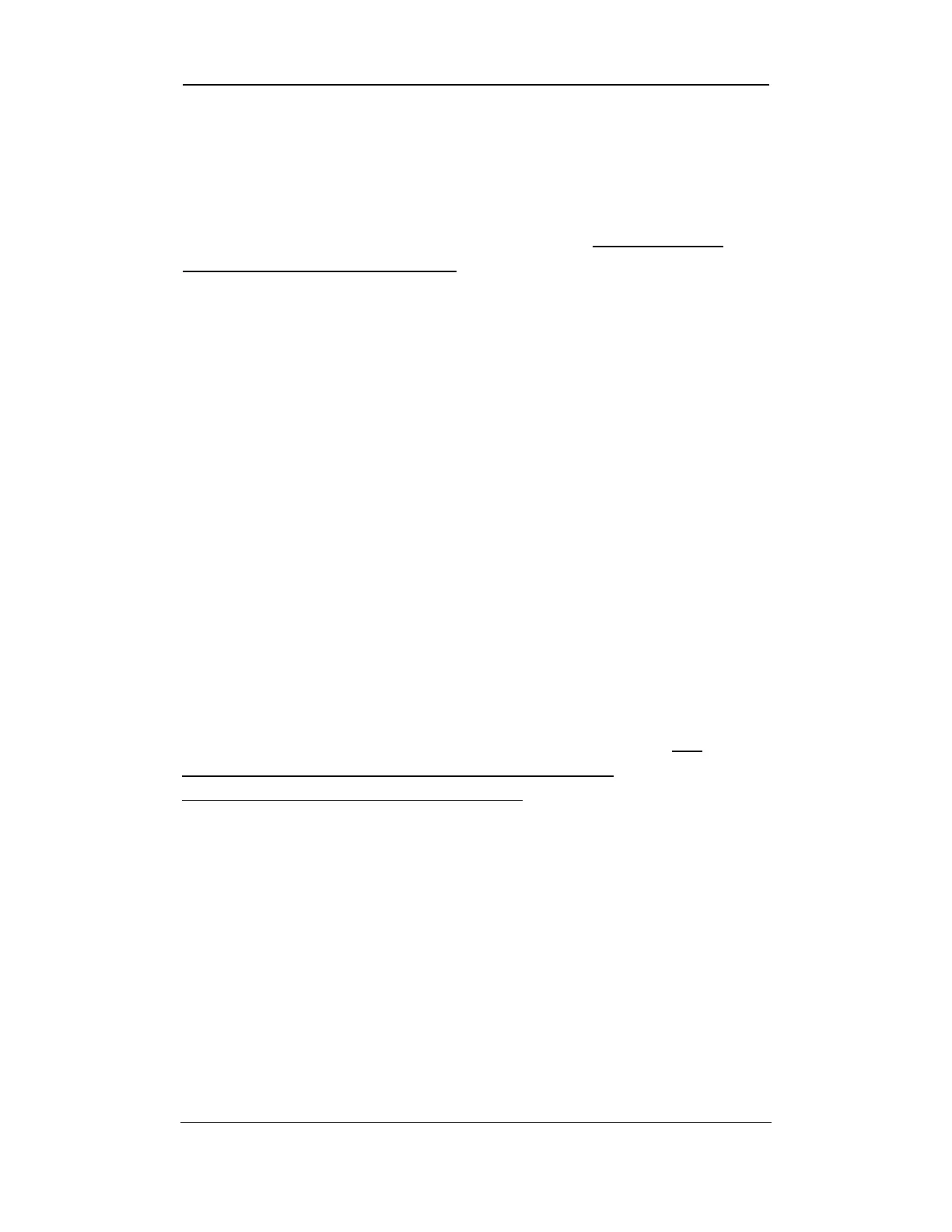
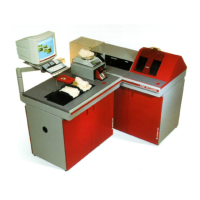
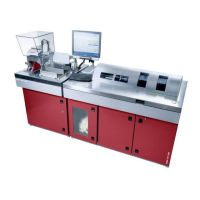
USTER
®
HVI SPECTRUM
Instruction Manual
Uster Technologies, Inc. Chapter 7
Testing Procedures • Page 7-9
2.6 Step 6—Perform L/S and C/T
(Optional Module) Tests
Once the micronaire tests are completed, follow the steps below to
perform the length/strength and color/trash tests. Remember to
activate the Vacuum Blower
or the test results will FAIL!
• Place a piece of the sample on the length/strength plate. Make sure
that the sample is large enough to cover the sample plate and thick
enough that it isn’t see through (approximately 30 grams).
• Place another sample on the color/trash window. Make sure that the
sample is large enough to completely cover the entire window.
• Simultaneously, press down on each of the two buttons located on
the tabletop in front of the measuring components.
• The sample hands will compress the cotton to eliminate air pockets
and the measurements will be taken. The sample arms will return to
the original resting position when testing finished.
• After the measurements are completed, the results are displayed
under the Length/Strength area in the corresponding fields
(elongation, uniformity, etc.). Each of the fields displays the test data
to indicate that the test is finished.
The color/trash and micronaire tests can be performed in a different
sequence than described here. However, keep in mind that the
Micronaire Value is required to calculate the
Length/Strength and Fineness tests.
• The trash test results are displayed in the Color/Trash area. These
fields contain the color test results for % Rd (lightness) and +b
(yellowness). The three-digit (xx.x) Rd number represents the
average of the color observations for Rd, and the three-digit (xx.x)
+b number is an average of the +b values.
o T: (Leaf or Trash Grade) is a value that is based on trash
area.
o TA: (Trash Area) is the ratio of the total accumulated area of
all the trash particles to the area of the viewing window of the
instrument.


 To Next Page