Fastener Identification (continued)
Fasteners with a Locking Feature
IMPORTANT
If a fastener with a locking feature or previously applied thread locking
compound is reused, clean the fastener threads, and apply new thread locker
to the fastener during installation.
Locking features are designed to create friction and prevent a fastener from
loosening. Locking features can be found on externally or internally threaded
fasteners. Common examples are plastic inserts incorporated into the fastener and
pre-applied “dry” thread locking compound. Keep in mind, a fastener with a locking
feature usually means there will be friction during initial installation and during
removal.
Replace fasteners with a locking feature once they have been removed because the
effectiveness of the locking feature diminishes with each reuse. If it is necessary to
reuse a fastener with a locking feature; apply a thread locking compound (Loctite for
example) to the fastener during installation. Use the appropriate strength and type of
thread locking compound based on application, fastener size or information found in
the product Operator’s Manual, Service Manual, or Installation Instructions.
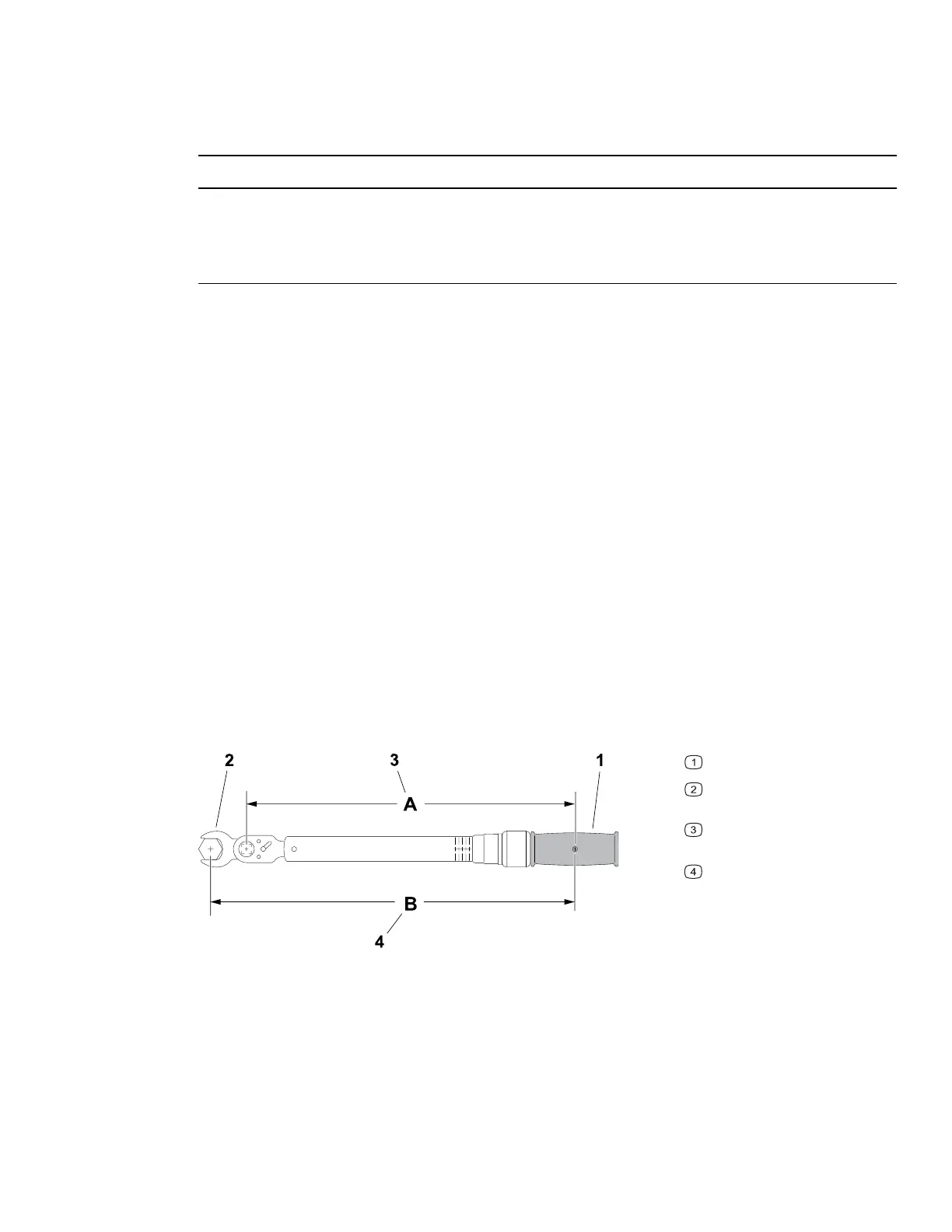
Calculating the Torque Values When Using a Drive-
Adapter Wrench
Figure 6
Torque Conversion Factor = A / B
G205924P
Torque wrench
Drive-adapter wrench
(crowsfoot)
A (effective length of
torque wrench)
B (effective length of
torque wrench and drive-
adapter wrench)
Using a drive-adapter wrench (e.g., crowfoot wrench) in any position other than 90°
and 270° to the frame of the torque wrench will affect the torque value measured by
the torque wrench because of the effective length (lever) of the torque wrench
changes. When using a torque wrench with a drive-adapter wrench, multiply the listed
torque recommendation by the calculated torque conversion factor (Figure 6) to
4520P Page 2–5 Specifications: Torque Specifications
09.40003Rev 00



 To Next Page