Operation 9960 Self-Propelled Peanut Combine
94 06/03/05 MAN091
Overview
This chapter provides instructions for
starting up the machine and using it. It also
includes the pre-starting checks that should
be done each day before starting up your
combine. Performing these checks
consistently will not only ensure the
machine is running properly, but will also
help you to get the optimum performance
from your combine.
Breaking in the Engine
As a new combine, the engine is ready for
normal operation. However, for the first 100
hours of operation, avoid any unnecessary
engine idling.
Checklist
The checklist below contains operation
reminders to check as you become familiar
with your combine.
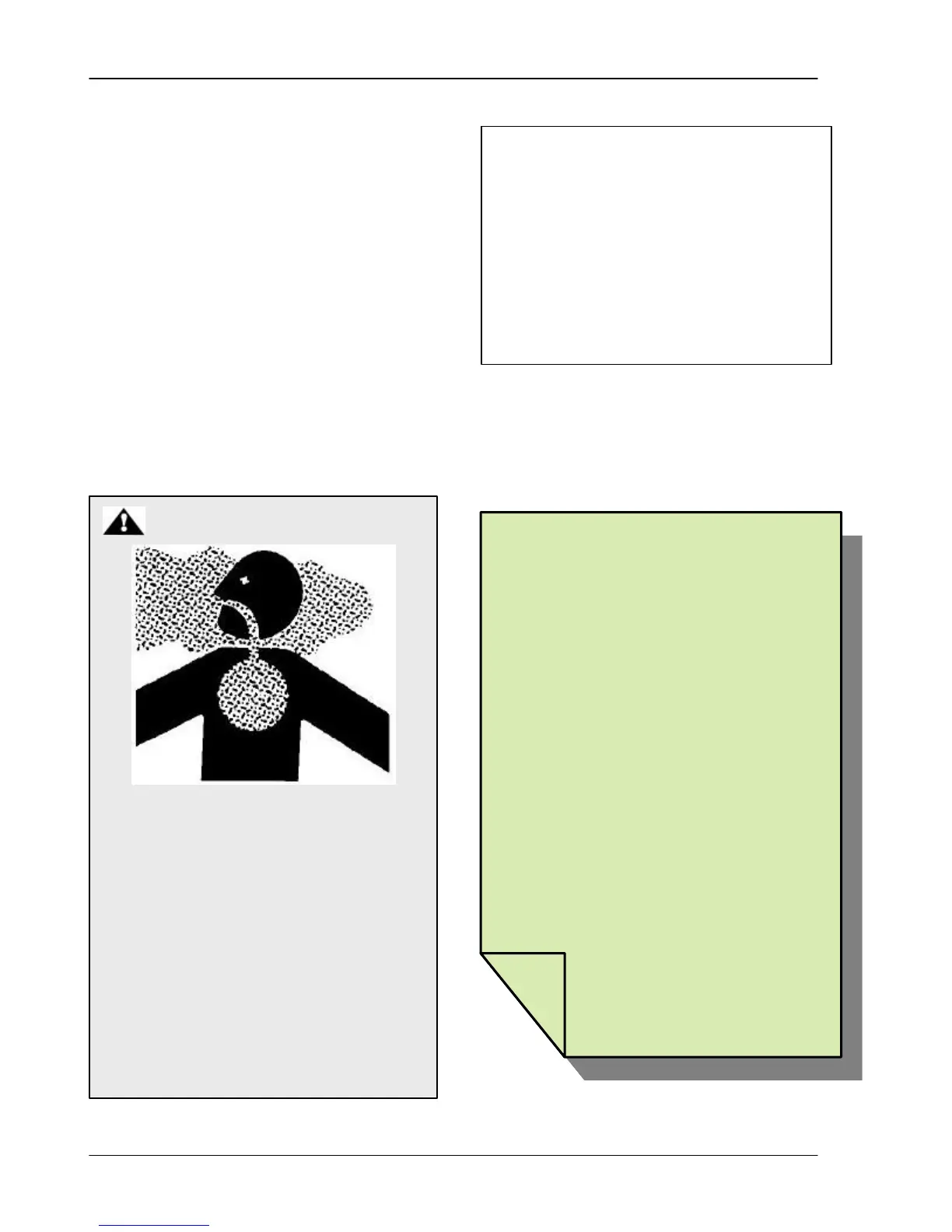
Engine exhaust fumes can cause sickness
or death. We recommend you do NOT
run the engine in an enclosed area.
If it is necessary to start the engine in an
enclosed area, remove the exhaust fumes
from
the area with an exhaust pipe
extension.
If you do not have an exhaust pipe
extension, open the doors and make sure
outside air is getting into the area. Again,
we recommend you do NOT
the engine in an enclosed space.
Check the engine oil often, watching
for leaks.
√
Check coolant level often, watching
for signs of leaks. Maintain the
correct level of coolant in the
recovery tank.
√
Until you become familiar with the
sound and
extra alert during operation.
√
If at any time the temperature gauge
needle moves out of the black zone
into the red/orange zone, stop the
engine and check the problem
immediately. This indicates the
engine temperature is above 240º
(115º C).
Initial Operation Checklist
delivered with all hydraulic hoses correctly
routed and attached. If th
conveyor if you have OCS) needs to be
removed for some reason, make sure the
hoses are correctly routed again before
operating the machine.
Refer to Appendix E -
Hoses
for instructions on routing the
hoses.



 To Next Page