also be used as a legitimate 1PPS reference during normal operation, in conjunction with an
external time reference (for more information, see "Configuring Input Reference Priorities" on
page163.)
NetClock’s internal oscillator is normally disciplined to an input reference (such as GNSS, IRIG
input, 1PPS input, etc.) in order to provide the highest degree of oscillator accuracy and to
account for oscillator drift. While disciplining (with a 1PPS input reference input present and
valid), the oscillator’s output frequency is monitored and based on the measured frequency, the
oscillator is steered to maintain a very accurate 10 MHz output. If no valid 1PPS input ref
erences are present (or input references are present but not considered valid), the oscillator will
be in Freerun mode instead.
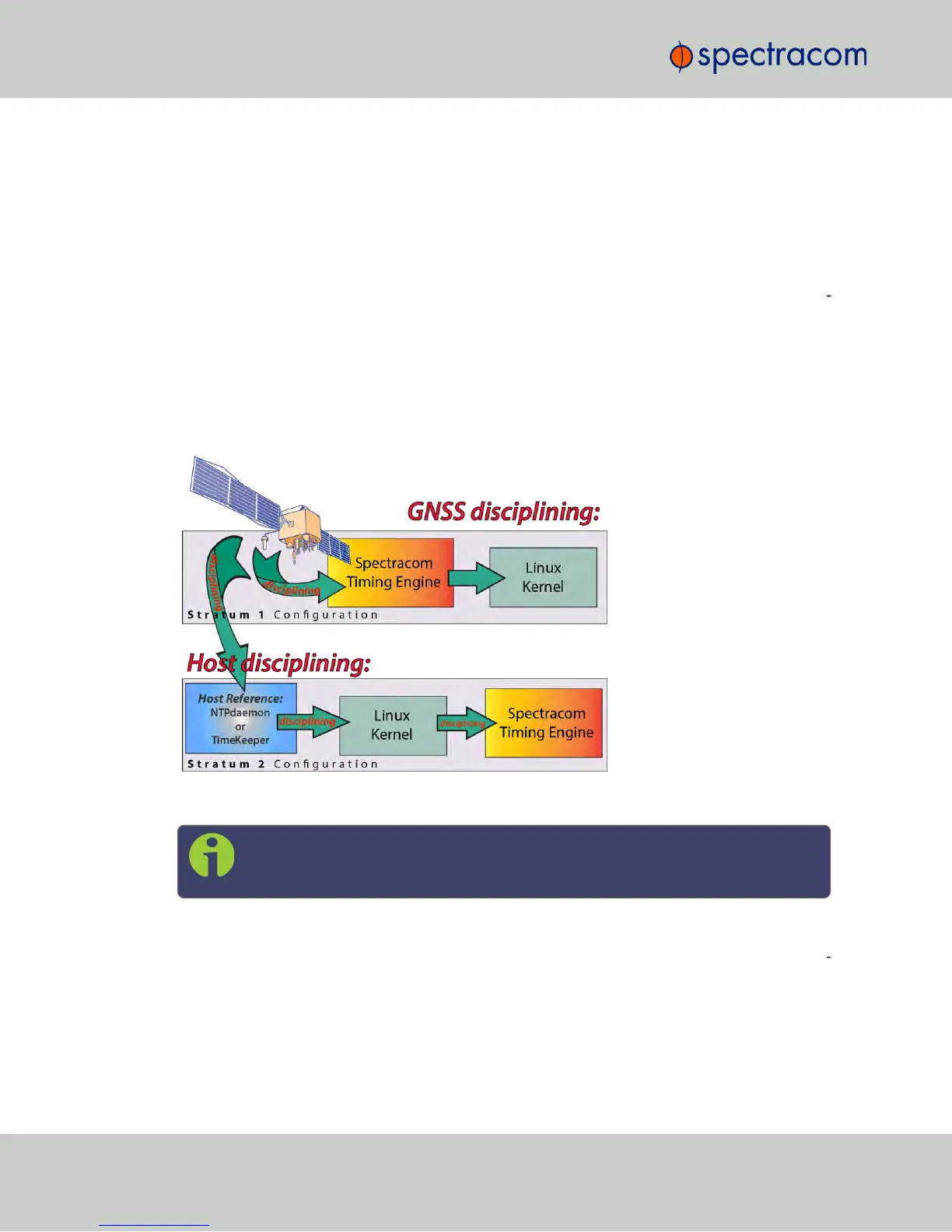
If no external input reference such as GNSS, IRIG, etc. is available (or is temporarily lost),
NetClock may become an NTP Stratum2 or higher reference. If so configured, NetClock can
use a reference such as an NTP daemon, or TimeKeeper, referred to as a Host Reference. If the
Host Reference becomes active, it will automatically take over the disciplining of the oscillator.
This built-in functionality is referred to as Host Disciplining.
Figure 3-2: Host disciplining
Note: Host disciplining is NOT supported by NetClock units that are equipped
with a Rubidium oscillator.
The Oscillators Settings page provides the user with some control of the disciplining process.
This page is also used to configure the length of time NetClock is allowed to remain in the Hol
dover mode when all references are lost.
3.5.1 Oscillator Types
NetClock units are available with different types of internal oscillators:
214
CHAPTER 3 • NetClock User Reference Guide Rev. 16
3.5 Managing the Oscillator



 To Next Page