3.3.3.10 GNSS Constellations
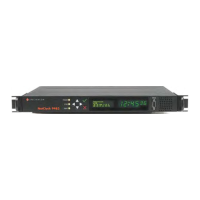
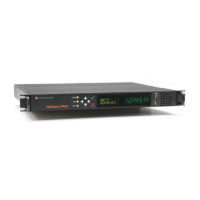
Depending on the GNSS receiver installed in your unit (see "Determining Your GNSS Receiver
Model" on page187), NetClock allows you to select which GNSS constellations can be
tracked. For example, you can determine if you want GLONASS satellites to be tracked
(besides GPS).
Selecting GNSS Constellations
If your NetClock is equipped with a GNSS receiver other than a Res-T model, it is capable of
tracking multiple GNSS constellations simultaneously.
Note: As of System software version 5.7.0, the Multi GNSS Option is no longer
required to receive several constellations simultaneously. After an upgrade, the
previous constellation settings will be maintained.
To learn more about determining which receiver model is installed in your unit, and which
GNSS constellations and combinations are supported, see "Determining Your GNSS Receiver
Model" on page187.
In new units, per default both GPS, and Galileo are enabled. Either selection can be disabled,
but not both of them (if both are turned off, no changes will be saved and the last constellation
setting will be preserved).
To verify if satellite signals for the selected GNSS constellations are currently received, see
"Determining Which GNSS Satellites Are Received" on page204.
Configuring GNSS Constellations
To configure which GNSS constellations NetClock's GNSSreceiver shall track:
1.
Navigate to INTERFACES > REFERENCES: GNSS Reference.
2.
Click the GEAR button next to GNSS 0. The GNSS0 window will open:
202
CHAPTER 3 • NetClock User Reference Guide Rev. 16
3.3 Managing Input References



 To Next Page