3 Markers and targets (rigid bodies)
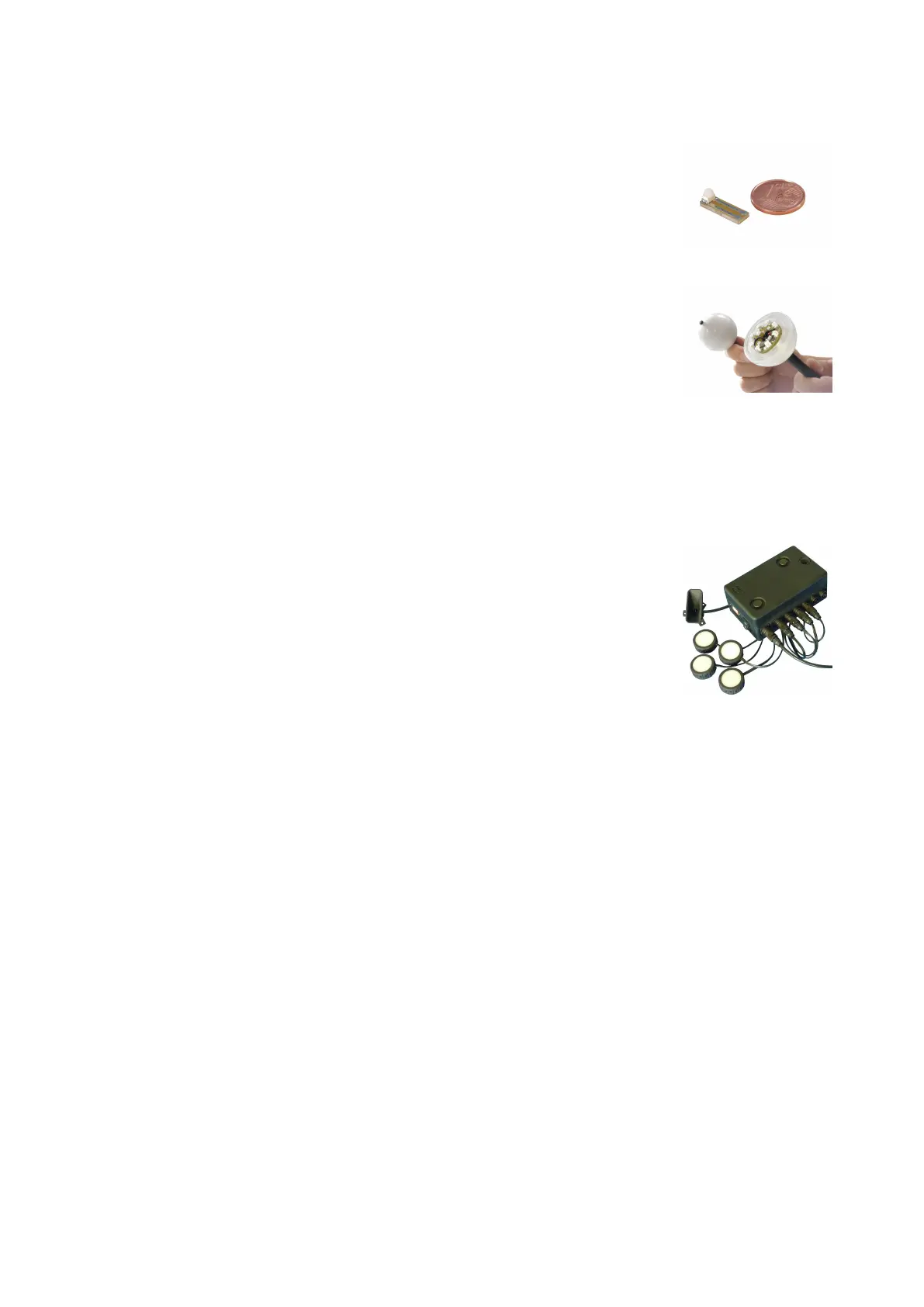
2. Single LEDs with diffusor sphere:
+ for optimum angular range of visibility,
- distance between marker and tracking camera is limited to
a short distance (up to 4.5m).
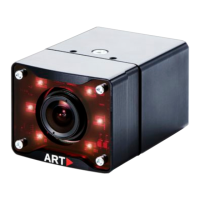
3. Big active spherical markers:
+ several single LEDs per marker, covered with light scatter-
ing spheres,
+ provide visibility from all sides and up to very high distances
(approx. 20m),
+ suitable for outdoor tracking,
- diameter: 50mm,
- weight: 50g.
4. Big active flat markers:
+ several single LEDs per marker, covered with light scatter-
ing surface,
+ tracking up to very high distances (approx. 20m),
+ suitable for outdoor tracking,
+ magnetic base for easy positioning on metal surfaces,
- the angular range of visibility is limited to less than 180
◦
,
- diameter: 30mm.
All active markers provided by ART are controlled by a special PC board and need power
supply.
Synchronization of active markers The easiest way to create an active marker is to
have it emit IR light continuously. However, this would be inefficient in respect to energy
dissipation and would yield low signal-to-noise ratios. ART tracking cameras have very
short exposure times, i.e. narrow time slots of sensitivity. Most of the light emitted by
the markers would hit the cameras sensors at times when it is inactive rendering the light
useless for tracking. As a consequence, the range between cameras and marker would
become significantly shorter. Additionally the active markers can be configured to emit
high power intensities by flashing just like the camera flash. This also helps with en-
ergy dissipation due to an upper limit allowed for each single LED. Therefore, most active
22


 To Next Page