www.izcorp.com • 1.800.776.1356
TDIF WORD SYNC
The TDIF WORD SYNC 75-Ohm BNC connectors on the rear panel are available to provide a more
reliable clock source when using TDIF to transfer digital audio between devices. This clock is similar to a
wordclock but differs in its phase relationship to the data signal. It should not be confused with the
embedded L/R data clock in the TDIF digital audio signal.
MADI
MADI is an optional I/O card available to transfer multi-channel audio through Coaxial or Optical interface.
Either interface can be used to receive a clock signal from a master clock or another digital audio source.
Both MADI Optical and MADI Coaxial will always output clock and data.
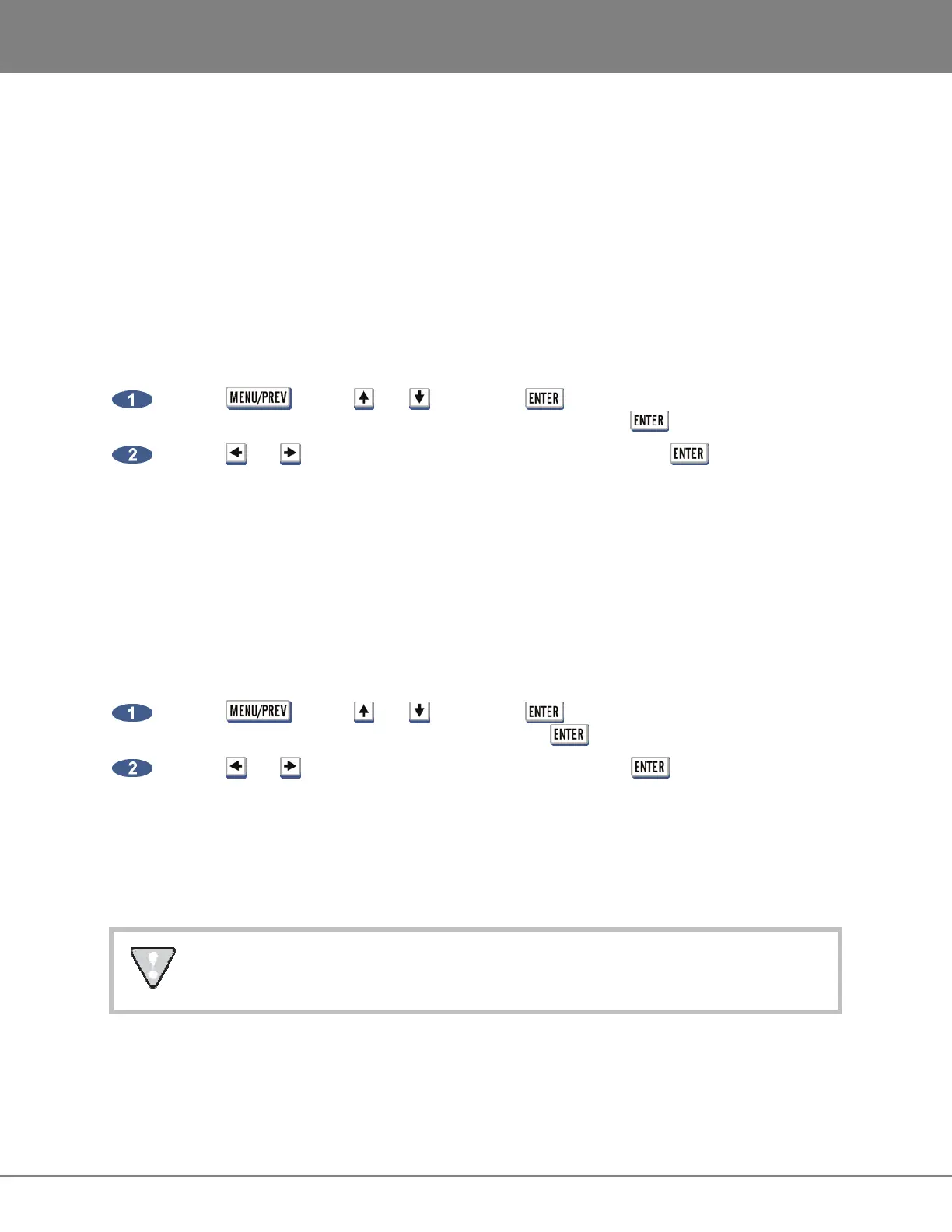
To switch between MADI Optical and MADI Coaxial Input format:
Use the key, the and keys and the key to go to the MAIN MENU / I/O
MENU / MADI SETTINGS / COAX/OPTICAL IN and press the key.
Use the and keys to select COAXIAL or OPTICAL and press the key.
POSITIONAL REFERENCE
Positional (timecode) reference is the key to reliable positional (time line) synchronization of multiple
devices.
SMPTE or MTC (MIDI Timecode) formats are used for positional synchronization reference with RADAR.
All the industry standard frame rates - 30 Non-drop, 30 Drop, 29.97 Non-drop, 29.97 Drop, 25, 24 and
23.976 - are supported.
The current selection in MAIN MENU / SYNC MENU / TC SETTINGS / TC FORMAT determines
which format will be
used as the timecode source.
Use the key, the and keys and the
key to go to the MAIN MENU / SYNC
MENU / TC SETTINGS / TC FORMAT and press the
key.
Use the and keys to select a timecode format and press the key.
SMPTE
SMPTE, also known as LTC or Longitudinal Timecode, is connected using the XLR LTC: SMPTE/EBU
IN and OUT connectors on the rear panel. The LTC inputs and outputs can be either balanced or
unbalanced. The LTC input has a sensitivity ranging between 100mV and 20V. The output is 1V peak to
peak. This will produce a –7 VU meter reading on a +4 device like a professional analogue tape machine.
When using unbalanced lines, pin 3 should be left floating.
MTC
MIDI timecode is input and output using the MIDI IN and MIDI OUT connectors on the rear panel of the
RADAR.



 To Next Page