Driving & Safety --- Section 2
The Executive 2005
117
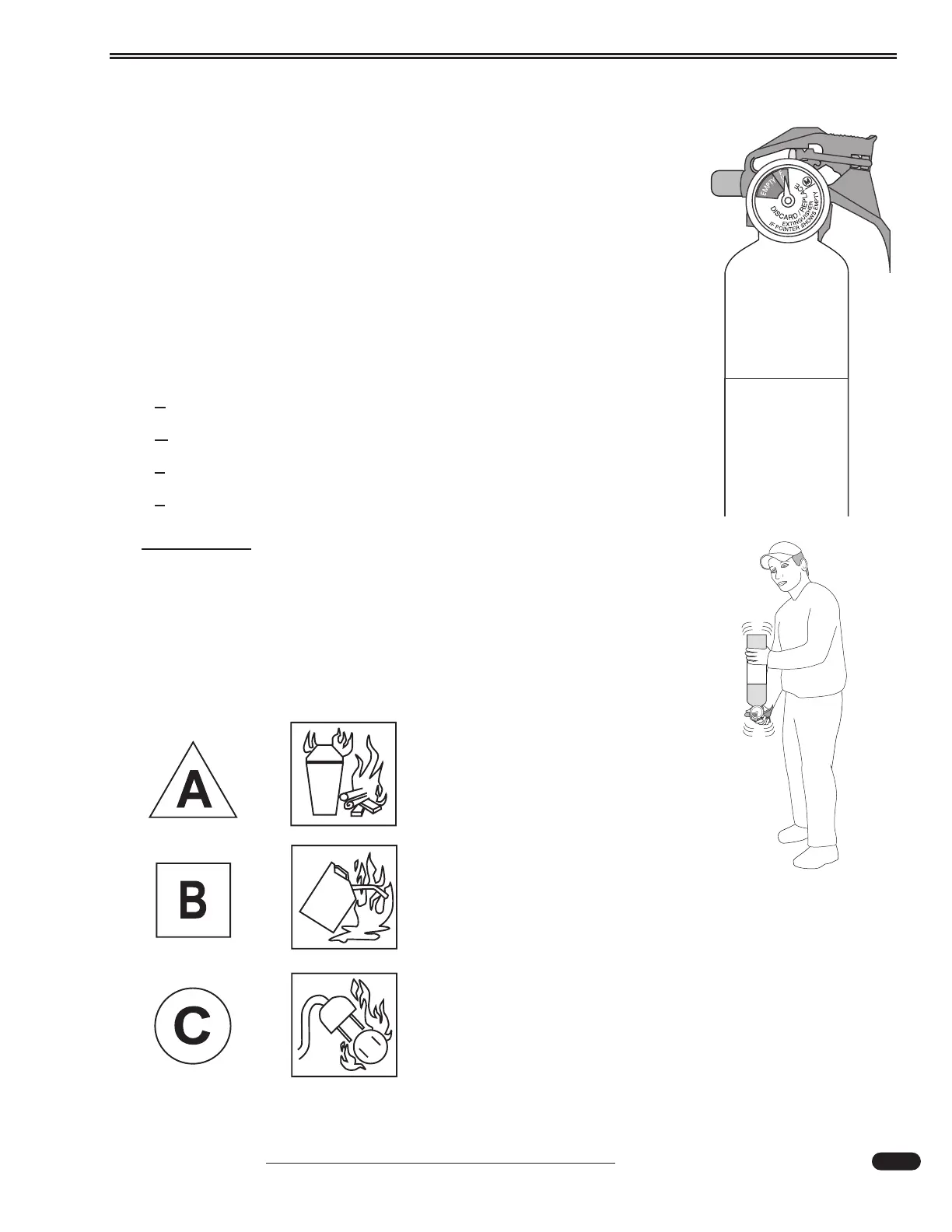
FIRE EXTINGUISHER
The fire extinguisher in the motorhome is located near the main
entrance door. Please read the operating instructions that are printed on the
fire extinguisher. If there is any doubt on how to operate the fire extin-
guisher practice using it. Be sure to replace or recharge the extinguish-
er immediately after use.
Inspect the fire extinguisher at least once a month. Do so more fre-
quently if the extinguisher is exposed to weather or possible tampering. Do not
test the extinguisher by partially discharging. Internal pressure will escape
and the fire extinguisher will need to be replaced.
Use the PASS word!
Pull the pin to unlock the extinguisher.
Aim at the base (bottom) of the fire and stand 6 to 10 feet away.
Squeeze the lever to discharge the agent.
Sweep the spray from left to right until totally extinguished.
W
ARNING:
Road vibration will cause extinguisher powder to compact and
may cause extinguisher malfunction. Invert and shake extinguisher
monthly.
There are three classes of fire to be concerned with in a motorhome. Any
fire can fall into more than one class; a fire that involves both burning paper
and kitchen grease would be a Class AB fire.
Classes of Fire:
A-Fire that are fueled by materials
that leave a residue when they
burn: paper, wood, cloth, rubber,
and certain plastics.
B - Fire that involve flammable liquids and gases:
gasoline, paint thinner, kitchen grease, propane and
acetylene.
C - Fires that involve energized electrical wiring or
equipment. If electricity to the equipment is turned
off, a class C fire becomes one of the other two
class fires.
020073
020261
100209



 To Next Page