Water Systems --- Section 6
The Executive 2005
275
Water pump will not shut-off or continues to run when the faucet is closed:
• Check to see if the fresh water/tank fill valve is completely closed.
• Check the output (pressure) side plumbing for leaks and inspect for a leaky toilet or valves.
• Look for a loose drive assembly or pump head screws.
Water pump is noisy or rough in operation:
• Check for plumbing that may have vibrated loose.
• Does the mounting surface multiply noise (flexible)?
• Check for mounting feet that are loose or compressed too tight.
• Look for loose pump head to motor screws.
Water pump is rapid cycling:
• Look for restrictive water flow in the faucets or shower heads.
Pressure Accumulator Tank
The pressure accumulator tank mounts in the curbside water bay
near the water pump. The pre-charge pressure in the accumulator tank
should be checked monthly.
Accumulator Features:
1. Smooth flow from the faucets.
2. Reduced water pump cycling.
3. A pre-charged air cushion.
4. Elimination of pulsation and water hammer.
5. Water pressure at faucets.
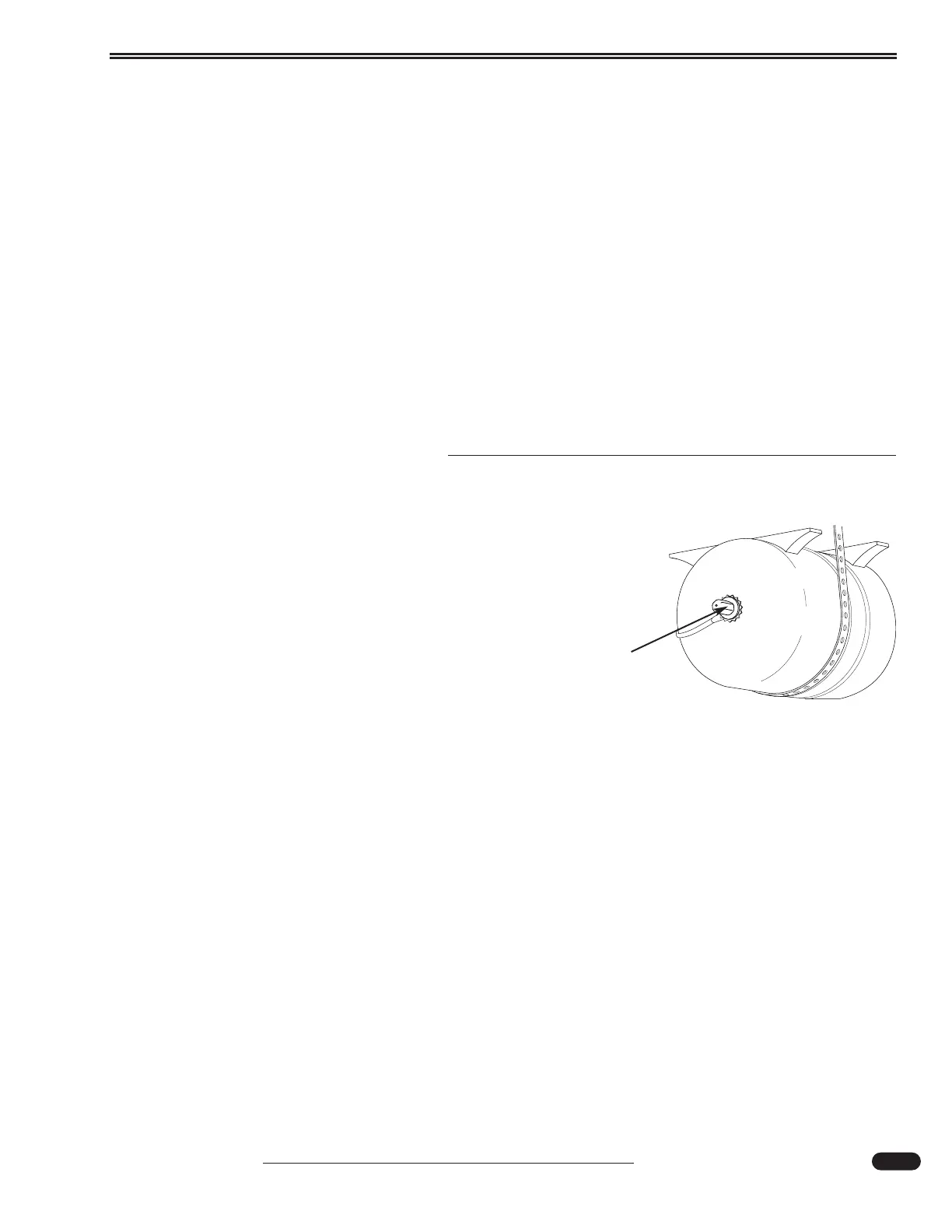
The accumulator tank includes a tire valve that is used to pre-charge the tank with air pressure. The
pre-charge pressure must not exceed the water pump cut-in pressure, the pressure at which the pump
restarts. The water pump has a cut-in pressure of 40 psi. The pre-charge pressure of the accumulator
tank is 18 to 22 psi. To check the air pressure in the accumulator tank, the water pump and city water
will need to be off. Open a faucet to relieve the water pressure. Check the accumulator tank pressure
monthly using a tire air pressure gauge (one that reads low air pressure). Use a hand-operated pump to
add air pressure to the accumulator tank only when needed. The amount of airflow and high-pressure
from a compressed air system can quickly overcharge the tank, causing the internal bladder or tank
to rupture.
Remove tank valve cap to check air pressure.
040494d
Valve
Cap



 To Next Page