Section 8 --- Electrical Systems - House
The Executive 2005
378
It may take a number of hours or days, with the motorhome hooked to shore power 24 hours a day,
to charge the batteries to a full state of charge. During the charge cycle, one inverter may be in Bulk
charge while the other is in Float. This is normal, as the two inverters though electrically linked
through a common shunt, do not have a common link between their internal chargers.
Discharge and recharge time of the house batteries will vary depending on the type of load and voltage
during the charge or discharge cycle. Discharging the batteries at a slow steady rate to a specific voltage,
then charging the battery bank for the same amount of amp hours removed during the discharge cycle,
will not yield a charged battery bank. The AGM battery bank, though very efficient, is not a perfect trade
with amp hours discharged and charged. In addition, the type of discharge load depends on the charge time.
A rapid and heavy discharge cycle yields less available amp hours than a slower discharge rate.
Conversely, a rapid discharge cycle, though equivalent in the same amount of amp hours as a slow dis-
charge cycle, requires a longer charge time. Regardless of the type of discharge cycle, it always requires
more amp hours to charge the batteries than what the batteries have discharged.
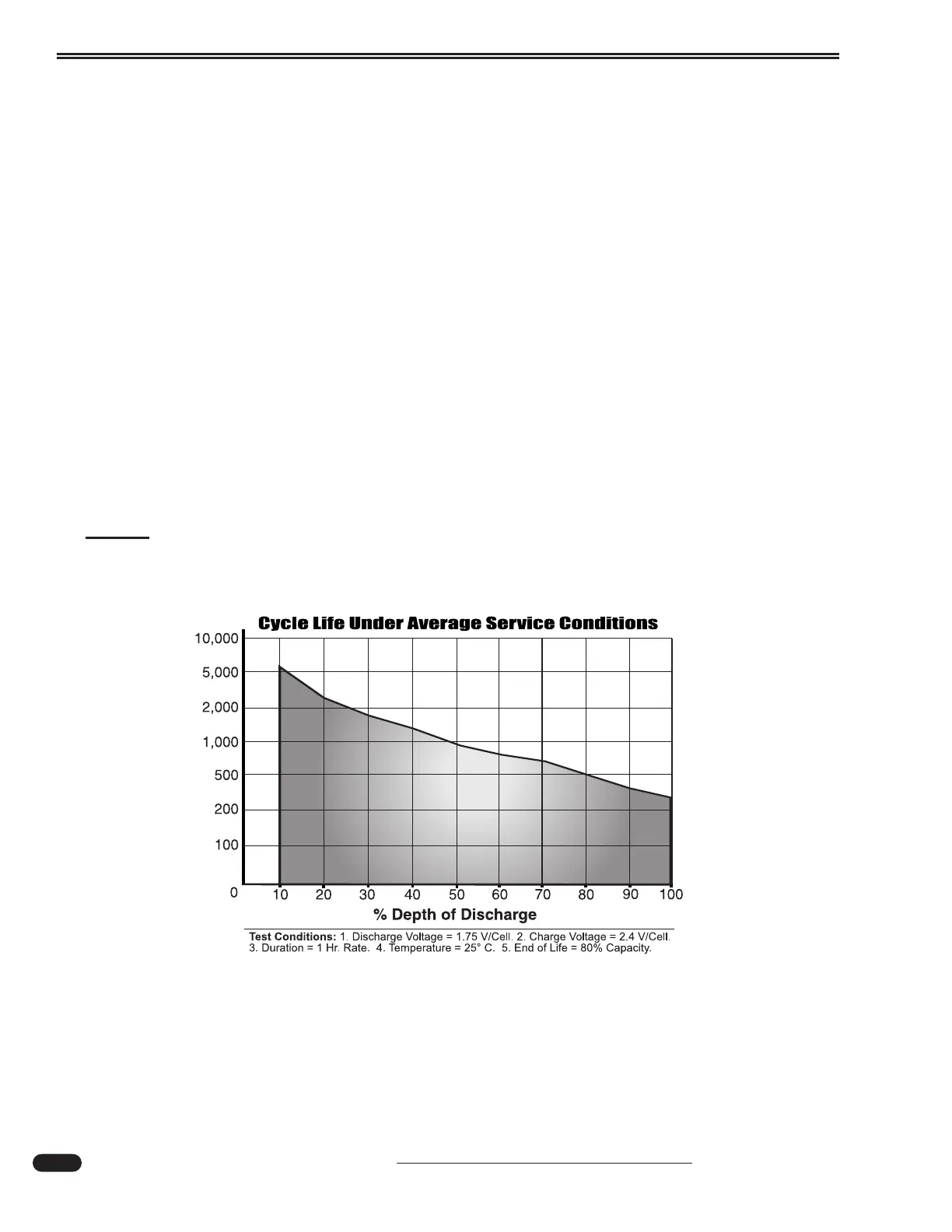
The life of the battery bank will greatly decrease when the Depth of Discharge (DOD) is below
50%. Charge the batteries whenever they have been discharged. Batteries left in a discharged condition
will eventually no longer accept a full charge or may not accept a charge at all. Never store the
motorhome with a discharged battery bank. It is better to make several small discharge and full
charge cycles than a few deep DOD cycles.
NOTE:
For optimum battery life, the batteries should not be cycled lower than 60% state of
charge.
Battery Depth Discharge % Chart



 To Next Page