Driving & Safety --- Section 2
The Executive 2005
81
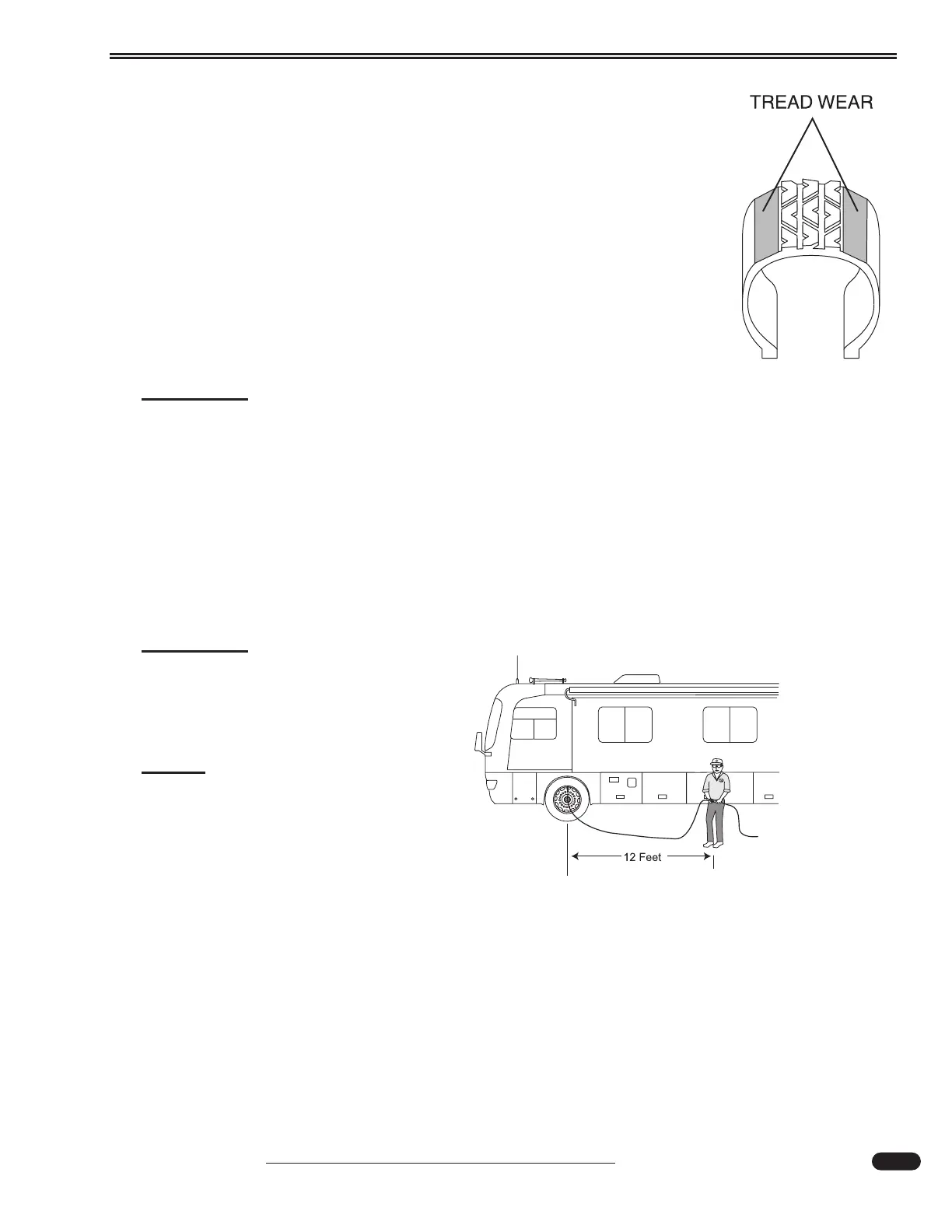
Lower than recommended pressure can cause:
• Tire squeal on turns.
• Separations.
• Rapid and uneven wear on the edges of the tread.
• Circumferential breaks.
• Tire container may bruise or rupture.
• Higher risk of road hazard.
• Tire cord breakage.
• Loss of casing durability.
• Excessive tire temperature.
• High fuel consumption.
• Reduced handling quality.
WARNING:
A slow leak may go unnoticed on one of the dual tires. This can
cause the good tire paired with it to fail due to exceeding the
load limits it is designed to carry. Tires with damaged side-
walls can burst upon inflation. A flat or nearly flat tire can also
generate enough heat from friction to ignite.
Unequal tire pressures on same axle can cause:
• Uneven braking, swerve upon acceleration.
• Steering lead, torque steer.
• Reduced handling quality.
W
ARNING:
For safety purposes clear the
area of people and pets during
tire inflation. Inflate tires using a
remote inflation device.
NOTE:
An air coupling is located in the
LP-Gas tank compartment. This
Type C fitting can be used to add
air to the tires. Detailed informa-
tion about this fitting is located in
Section 10.
020161
Example of Underinflation
More wear on edges.
090439



 To Next Page