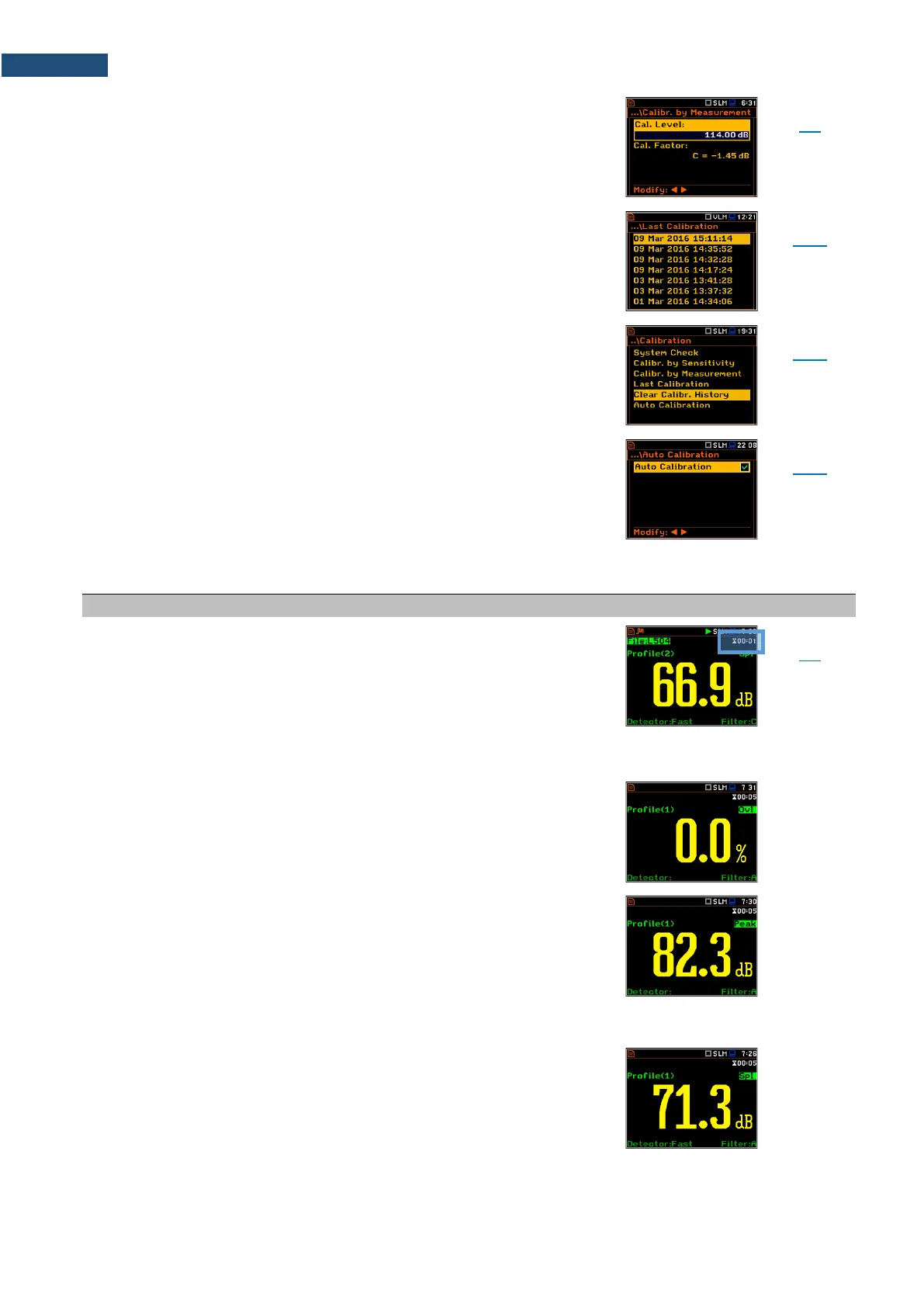
Difference between the reference signal level and the
measured level. The calibration factor is always added to
the results and measurement range limits.
Records of previously performed calibrations of the
instrument. Each record contains information about
calibration date and time, calibration type, calibration
factor etc.
Clear Calibration
History
Operation that clears all calibration records.
Feature that enables automatic calibration when the
reference sound or vibration signal is detected by the
instrument.
17.3 DEFINITIONS OF MEASURED RESULTS
Time from the measurement start, that is displayed in the
right upper corner of the display in the format mm:ss in
the range from 00:00 to 59:59, or in the format
hh:mm:ss in the range from 01:00:00 to 99:59:59, or in
format xxxh from 100h to 999h, and >999h if the
elapsed time exceeds 999 hours. Its maximum value is
equal to the Integration Period and the elapsed time is
zeroed when new measurement cycle starts.
Percentage of the overloaded input signal, which
occurred within the elapsed measurement time.
For sound measurements: Peak Sound Level, the
greatest instantaneous value of a standard frequency
weighted sound pressure level within the elapsed
measurement time.
For vibration measurements: the greatest instantaneous
value of a standard frequency weighted vibration
(acceleration, velocity or displacement) within the
elapsed measurement time.
Sound Pressure Level, the maximal value of the
frequency and time-weighted sound pressure level at the
exponential RMS detector output for the last second.


 To Next Page