MT8852B Operation Manual PN: 13000-00205 Rev. N 15-1
Chapter 15 — Adaptive Frequency
Hopping (Option 15)
15-1 Overview of Adaptive Frequency Hopping (AFH)
AFH is a method used to improve the transmission quality within the ISM frequency band. It
is used to prevent hopping to channels that are currently being used by an interfering 802.11
radio in the 2.4 GHz ISM band.
When two Bluetooth devices connect under normal circumstances, they establish a basic
frequency hopping scheme across the 79 frequency channels in the 2.4 GHz ISM band,
hopping at a rate of 1600 times per second. However, as is becoming increasingly common,
interference may be encountered in environments where other wireless technologies, such as
WLAN or DECT, are also in use in the same radio band. Blocked channels, caused by
interference, result in a deterioration in the performance of the connection and this in turn is
manifested in poor voice quality or reduced data transfer rates.
To limit the impact of this interference, an adaptation on frequency hopping, known as
Adaptive Frequency Hopping (AFH) was introduced by the Bluetooth Special Interest Group
in the 1.2 Bluetooth specification. AFH aims to restore the performance of a Bluetooth
connection by identifying channels with high error rates and excluding the use of these
channels thereafter.
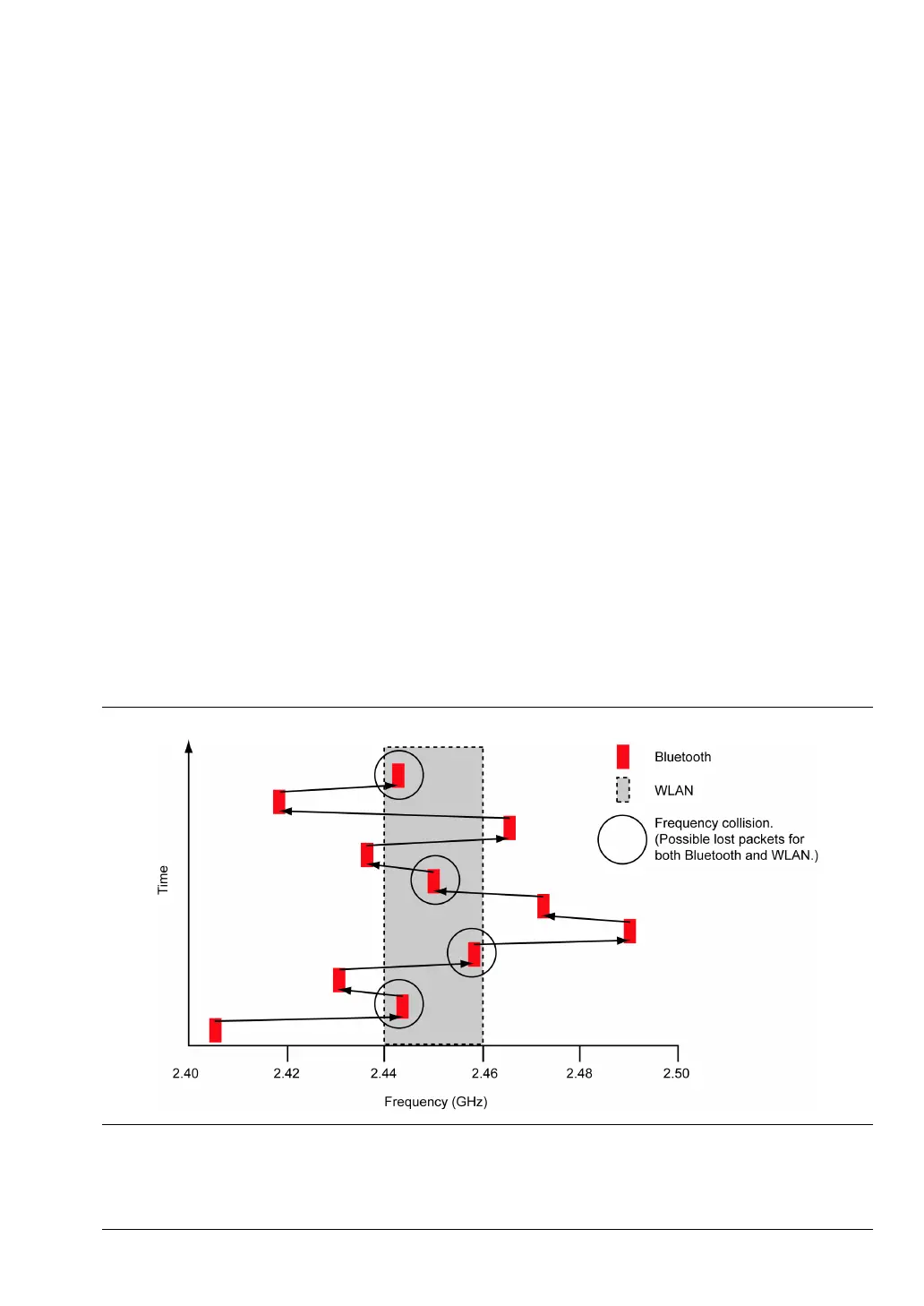
The figure below shows an example of Bluetooth packets being blocked by WLAN
transmission within the same radio band.
Figure 15-1. Frequency Collision












 To Next Page