Page 124 – 6. Shapes and Pixel Mapper effects
TitanUniversal_Man_v10_QU.doc 15 March 2016
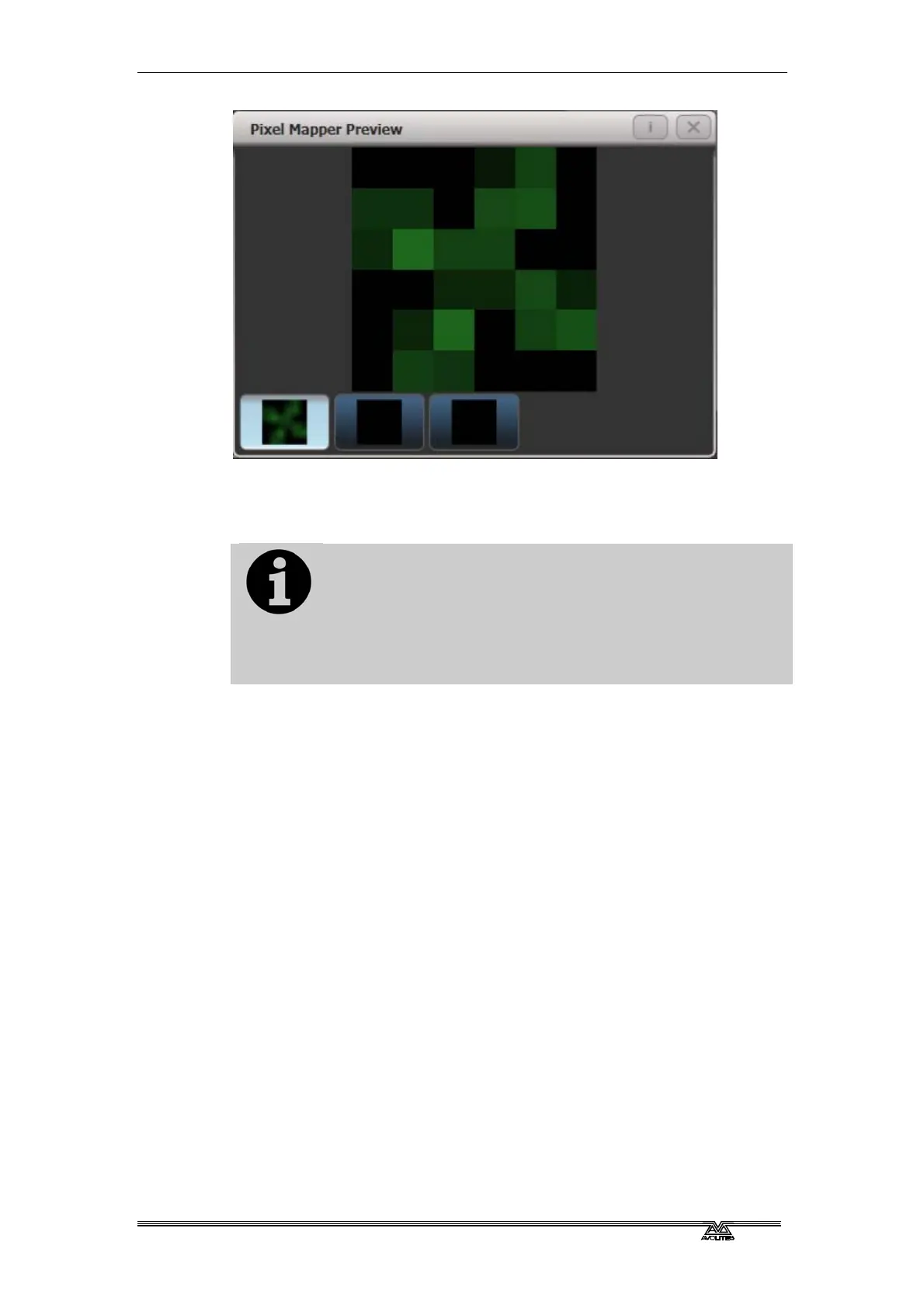
If you wish you can overlay further layers on the effect. Once you
have an effect you like, you can save it to a playback.
When adjusting the parameter sliders, as well as using
click/drag on the screen you can also use the wheels or
type in a numerical value. To assign a slider to the
wheels or for numerical input, click the value box to the
right of the control. Double click the value to reset it to
its default, or use the +/- softkey to change the sign of
the value.
• You can reorder the Pixel Mapper layers by selecting the layer
to move and clicking on the up/down arrow buttons.
• You can copy or move layers, elements and animations by
pressing Copy or Move, then select an element, then select a
destination to copy or move it to.
• The Block Effect switch allows you to create a pixel map effect
which will block out any pixel maps running on the selected
fixtures (according to the priority setting). This lets you create a
cue which will temporarily stop a pixel map effect (similar to
Block Shapes).
6.3.2 Pixel mapper Layer Masters
You can assign each of the four layers to a master. The master allows
you to adjust the layer controls in real time. When the master is
assigned to a fader handle using the [Assign Masters] [Pixel Mapper]
controls, the fader will control opacity of the layer.
This means you can create cues and palettes which can manipulate
the layer settings of effects which are running in other cues.
To enable the layer master, turn on the Use Master switch in the
effect editor window.
• Layer masters may require an updated personality file.


 To Next Page