2 • DC Description
Doc. 065031-04 1/08 89
correct type. Select the input control type in the Device Configuration
dialog box for each TTL input (see Figure 2-50
).
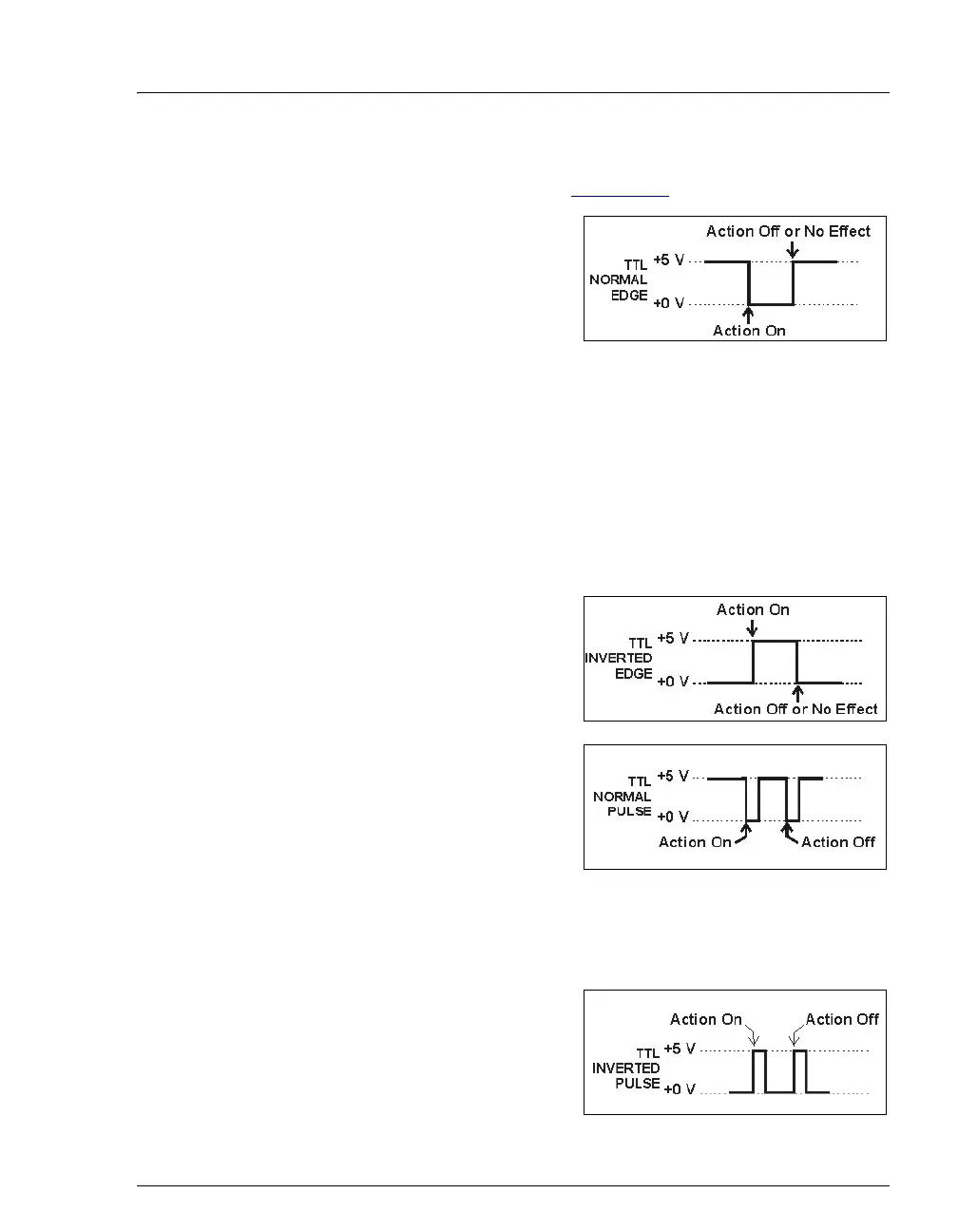
• Normal Edge: In normal edge
operation, the negative (falling)
edge of a signal turns on the
function.
The action of the positive
(rising) edge depends on the function: For on/off or other functions
that have two options, the rising edge turns off the function. However,
for functions with only one option, the rising edge has no effect.
For example, for the injection valve position, the falling edge
switches the valve to Load and the rising edge switches the valve to
Inject. Similarly, for the
detector start/stop, the falling edge starts the
detector and the rising edge stops it. For the detector mark and offset
functions, the falling edge turns on the function and the rising edge
has no effect.
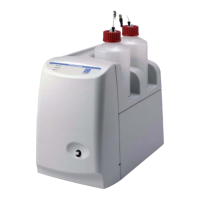
• Inverted Edge: The inverted
edge mode works identically to
the normal edge mode except
that the positive and negative
edges are reversed in function.
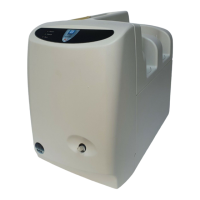
• Normal Pulse: In normal pulse
operation, the negative (falling)
edge of the TTL signal is the
active edge and the positive
(rising) edge is ignored.
A pulse width of 50 ms or more
is guaranteed to be detected. A pulse width of 4 ms or less is
guaranteed to be ignored. The action for pulse widths that are greater
than 4 ms and less than 50 ms is undefined.
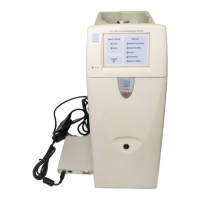
• Inverted Pulse: The inverted
pulse mode operates identically
to the normal pulse mode
except that the positive and
negative edges are reversed in
function.


 To Next Page