Appendix
User Manual corpuls
3
292 ENG - Version 2.1 – P/N 04130.2
Defibrillator General
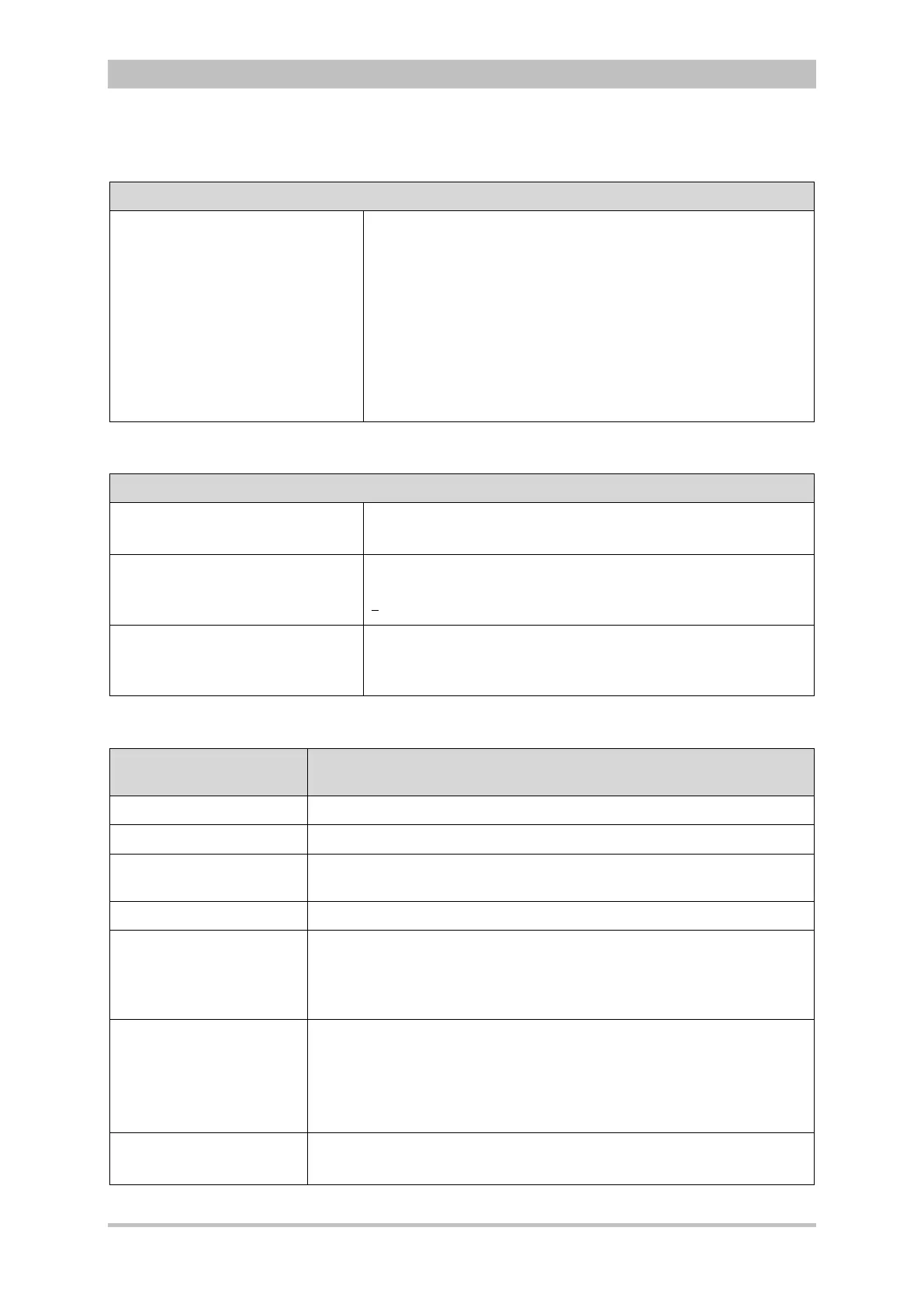
Output
Insulated application (insulation
voltage > 5 kV
The type is determined by the
kind of shock electrodes used
Electrodes for external defibrillation:
External shock paddles (type BF):
shock paddles for adults
baby shock paddles
(adapter for shock paddles; energy reduction 1:10)
Disposable defibrillation/pacing electrodes (type CF):
corPatch easy electrodes
corPatch easy electrodes (neonates)
Shock spoons (type CF)
-17 Output
Conductive area
External shock paddles Shock paddles 53 cm²
Baby shock paddles 16.6 cm²
corPatch easy electrodes
corPatch easy approx. 81 cm²
corPatch easy pre-connected approx. 87 cm²
corPatch easy Pediatric approx. 42 cm²
Shock spoons
Size B 18.25 cm²
Size C 46.60 cm²
-18 Conductive area
Defibrillation/cardiovers
ion
Description/explanation
Charging signal
Display of text "
Defibrillator is charging
" on the screen
Ready for shock
Ready-signal and display of text "
" on the screen
Delay time between R-
wave and shock impulse
Typ. 15 msec., max. 35 msec.
Energy display
Synchronisation Manual defibrillation: Automatic and manual synchronisation as well
as asynchronous defibrillation,
operation mode displayed on screen
AED mode: always asynchronous mode
0.5 s after shock release with high impedance
Conventional defibrillation: 30 sec. after reaching the status of ready
for shock and if one of the charge/shock keys has not been pressed
in the meantime
AED mode: 30 sec. after the message “
” appears
Test Defibrillator Built-in test resistor for shock testing: 50 Ohm
Test resistor built in cable socket and in shock paddle holder
-19 Defibrillation


 To Next Page