Torquing Connectors
D-2 PN: 10585-00001 Rev. P ML2437A/38A OM/PM
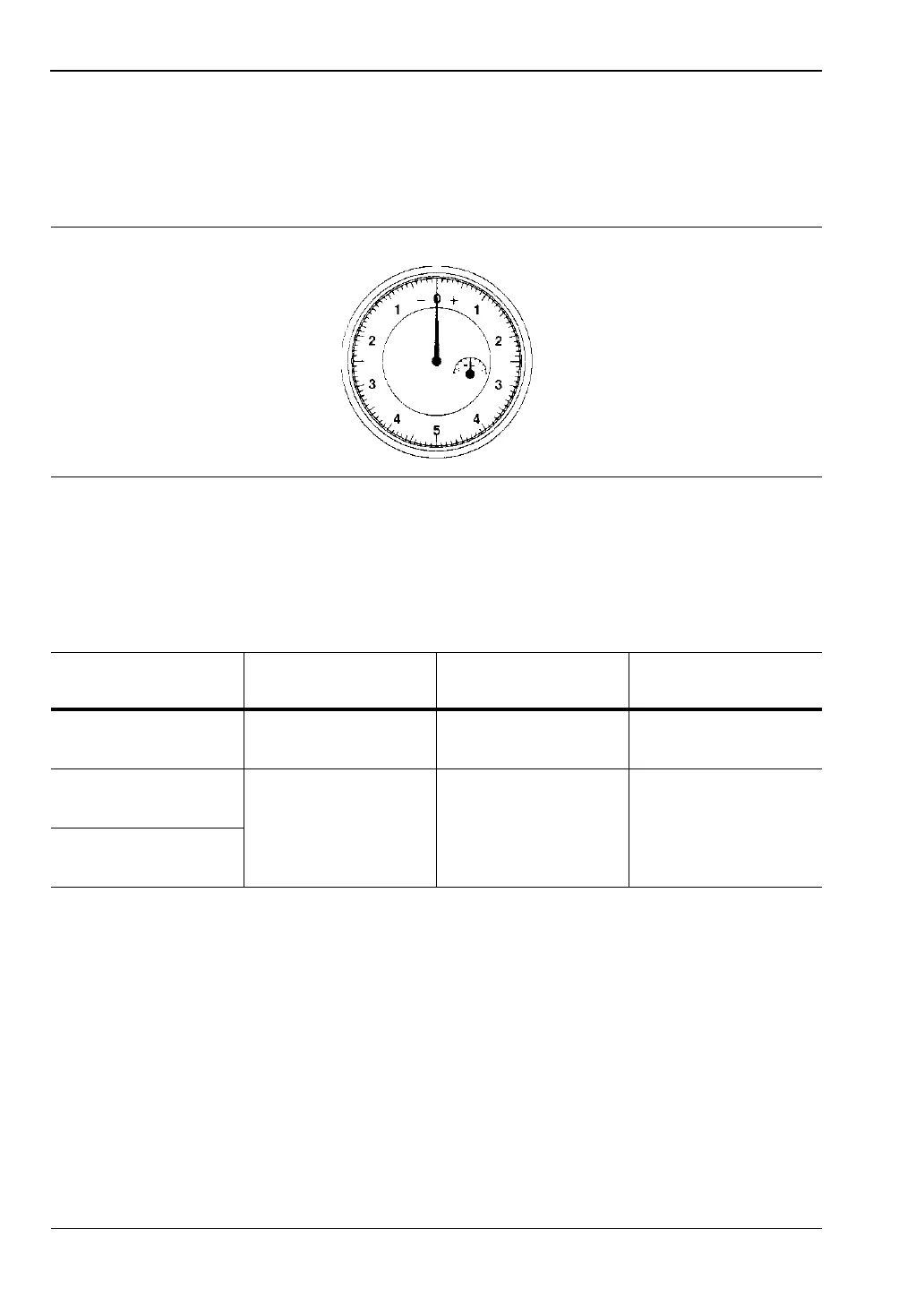
The center pin of a precision RF component connector has a precision tolerance. The mating
connectors of various RF components may not be precision types. Consequently, the center
pins of these devices may not have the proper pin depth. The pin depth of EUT connectors
should be measured to assure compatibility before attempting to mate them with Power
Sensor connectors. An Anritsu Pin Depth Gauge or equivalent can be used for this purpose.
If the measured connector is out of tolerance in the "+" region, the center pin is too long (see
Allowable EUT connector pin depth table below). Mating under this condition will likely
damage the precision RF component connector. If the test device connector measures out of
tolerance in the "-" region, the center pin is too short. This should not cause damage, but it
will result in a poor connection and a consequent degradation in performance.
D-2 Torquing Connectors
Over torquing connectors is destructive; it may damage the connector center pin. Finger-tight
is usually sufficient for Type N connectors. Always use a connector torque wrench (8 lbf-in)
when tightening WSMA, K or V type connectors. Never use pliers to tighten connectors.
D-3 Mechanical Shock
Precision connectors are designed to withstand years of normal bench handling. However, do
not drop or otherwise treat them roughly. Mechanical shock will significantly reduce their
service life.
Figure D-2. Pin Depth Gauge
EUT Connector Type
Anritsu Gauging Set
Model Pin Depth (inches)
Pin Depth Gauge
Reading
N - Male
N - Female
01-163 207 -0.000
+0.030
207 +0.000
-0.030
WSMA - Male
WSMA - Female 01-162 -0.000
-0.010
Same as pin depth
3.5 mm - Male
3.5 mm - Female






 To Next Page