L-INX User Manual 179 LOYTEC
Version 4.0 LOYTEC electronics GmbH
3. Adjust the basic settings for the newly created objects, such as the object name and
description. The object name will be used as the name for the scheduler, as seen on the
Web UI.
4. In the CEA-709 technology a static NV is created to receive information from the
remote device about changes to the scheduler configuration, so that the local device
does not need to poll the remote device. Set a name for this NV (default is
nviSchedLink<number>) and assign it to a suitable function block.
Note: Due to the static input NV, which is required for a remote CEA-709 scheduler object,
adding remote scheduler points will change the static interface of the device.
The new static input NV representing the remote calendar on the local device (this NV is
normally called nviCalLink) needs to be bound to the output NV called nvoCalLink located
in the Calendar functional block of the remote device and the new static nviSchedLink NVs
which were created for each remote scheduler point need to be bound to the respective
nvoSchedLink variable located in the Scheduler functional block of the remote device. The
binding between the nvoSchedLink variable on the remote device to the nviSchedLink
variable on the local device defines which of the scheduler data points on the local device
connect to which scheduler unit on the remote device. All required information is
transmitted over the link NVs, so it is possible to later change the binding to any other
remote scheduler without rescanning the network.
Note: If connected via LNS, the bindings to the nvoCalLink and nvoSchedLink NVs are made
automatically by the configuration software in the download process.
6.15.2 Alarm Clients
Accessing alarm server objects on remote devices is done by creating remote alarm data
points. These points may be created from data obtained by a network scan. The local device
is configured as an alarm client and subscribes to alarm updates from the remote alarm
server. The alarm client can also be used to acknowledge alarms on the remote alarm server.
Any updates are synchronized back to the alarm client.
To Create an Alarm Client
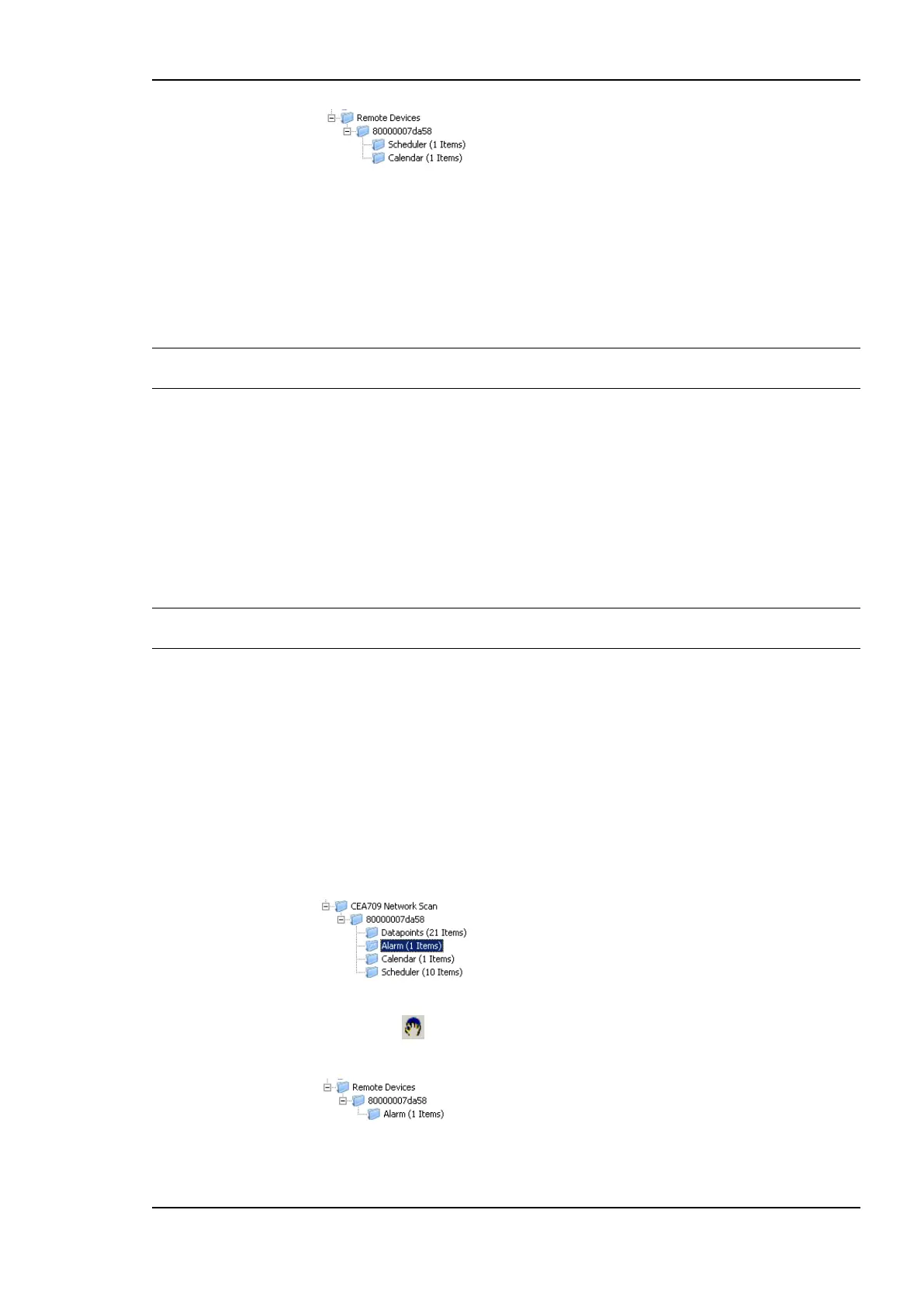
1. Execute a network scan, as described earlier in this document. The scan folder is filled
with available remote alarm servers.
2. From the points in the import folder, select the alarm server points you are interested in
and click the Use on Device speed button. This creates the corresponding alarm
client points in your project.
3. In the CEA-709 technology select the new alarm client point and adjust the name of the
local NV (default name is nviAlarm_2). This NV is located in the Clients functional
block.



 To Next Page