Important safety and service information
0-5
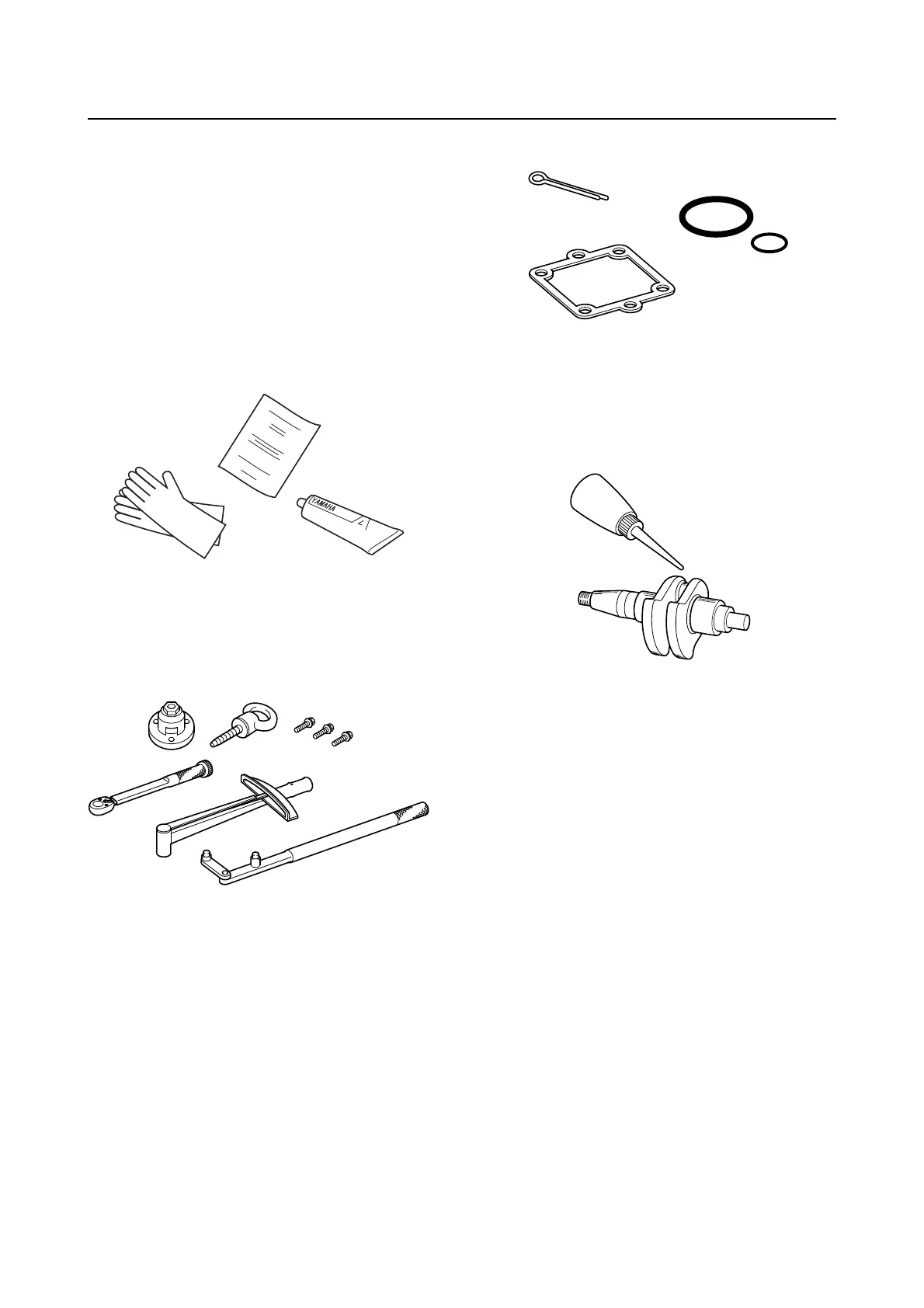
Handling of lubricants and sealants
• Follow all instructions and safety precautions
provided on the product label and the materi-
al safety data sheet (MSDS/SDS) for lubri-
cants, sealants, and other shop chemicals.
• Wear impervious gloves,
eye protection, or
other protective apparel when required.
• Wash skin
thoroughly after contact with lubri-
cants, sealants, and other shop chemicals,
and change clothing if contaminated with
them.
Special service tools
For safety and to help protect parts from dam-
age, use the recommended special service
tools.
Tightening torque
When tightening nuts, bolts, and screws, follow
the tightening instructions provided throughout
the manual. If the tightening order is not speci-
fied, tighten the large sizes first, and then tight-
en the small sizes, starting from the center and
moving outward.
Non-reusable parts
Always use new gaskets, seals, O-rings, cotter
pins, and so on, when installing or assembling
parts.
Disassembly and assembly
• Use compressed air to remove dust and dirt
during disassembly.
• Apply engine oil to the contact surfaces of
moving parts before asse
mbly.
• During disassembly, cover all openings,
such as intake and exhaust ports, to
prevent
foreign materials from entering the engine.
Foreign materials could cause severe inter-
nal damage when the engine is started.
• Insta
ll bearings so that the bearing identifica-
tion mark is facing in the direction indicated in
the installation procedure. In addition, make
sure to lubricate the bearings liberally.
• Apply a thin coat of water resistant grease
to
the lip and periphery of an oil seal before in-
stallation.
• Check
that moving parts operate normally af-
ter assembly.
• When starting the engine after
reassembly,
check for fuel and water leaks from hoses
and pipes that were disconnected or re-
moved while servicing.
• When assembling th
e PTT/PT unit, do not
use a rag. Otherwise, dust and particles
could get on the PTT/PT unit components,
causing poor performance.



 To Next Page