ADOBE AFTER EFFECTS 7.0
User Guide
55
drop-frame timecode skips, or drops, two frame numbers (not the actual frames of video) each minute except every
tenth minute. Use for output to NTSC videotape.
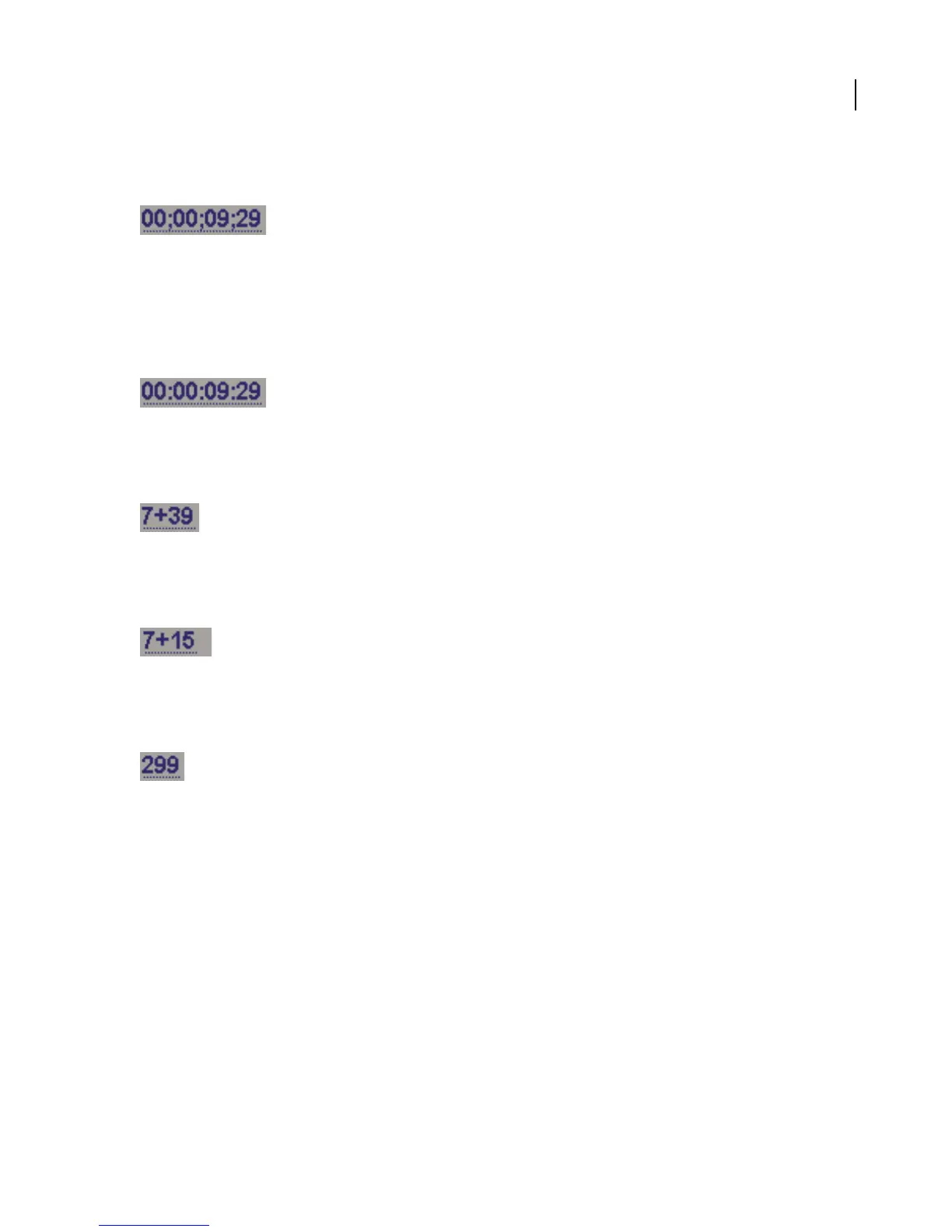
30 fps drop-frame timecode as indicated by semicolons
Note: When working with NTSC DV assets, you should usually use 30 fps drop-frame timecode. This format conforms
with the timecode base inherent in NTSC DV footage and displays its duration most accurately.
30 fps non drop-frame timecode Reports time in hours, minutes, seconds, and frames, separating units with colons.
It does not drop frame numbers. Use for output to computer displays via the web or CD-ROM.
30 fps non drop-frame timecode as indicated by colons
Feet + frames 16mm Reports time in feet and frames, assuming the frame rate of 16mm film: 40 frames per foot. Use
for output to 16mm film.
Feet + frames 16mm timecode showing 39 as the highest possible number of frames before the next foot.
Feet + frames 35mm Reports time in feet and frames, assuming the frame rate of 35mm film: 16 frames per foot. Use
for output to 35mm film.
Feet + frames 35mm timecode showing 15 as the highest possible number of frames before the next foot.
Frames Reports time solely in a running count of frames. Does not assign measurements of either time or spatial
length. Use to output sequential stills such as those generated for an animation or DPX film editor.
Frames timecode simply numbers each frame in sequential order.
To change timecode display
1 Open the project and choose File > Project Settings.
2 Select a time display style:
Timecode Base To use timecode for the display style, select Timecode Base, and then choose Auto from the
Timecode Base menu. If you’re using footage or a composition with a frame rate of 29.97 fps, choose Drop Frame or
Non-Drop Frame from the NTSC menu.
Note: You can specify specific frame rates in the Timecode Base menu; however, in most cases, you should leave the
timecode base set to Auto.
Frames To use frames for the display style, select Frames.
Feet + Frames To use Feet + Frames for the display style, select Feet + Frames, and then choose a film type from the
Feet + Frames menu.



 To Next Page