Functional Description
Microsemi Proprietary and Confidential UG0677 User Guide Revision 9.0 18
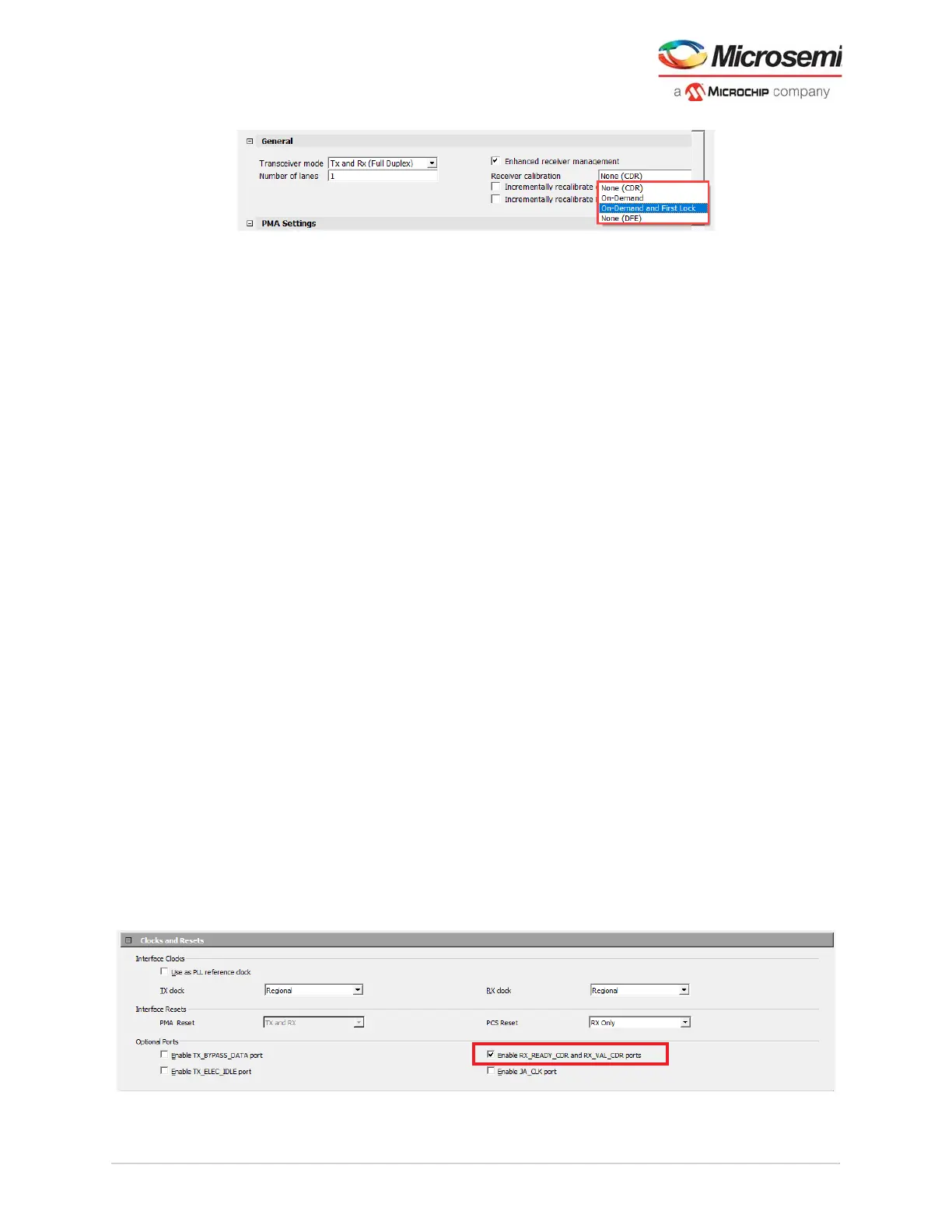
Figure 9 • Calibration Options for Enhanced Receiver Management Operations
The following receiver calibration options are provided for the ERM operation.
• None (CDR): Select if the XCVR is configured as CDR and no CTLE auto-calibration is performed.
Static settings are configured by Libero based on data rate and backplane model. This receiver
calibration mode uses Lock2Reference of the Rx PLL.
• On-Demand and First Lock: Select to perform calibration on first lock (after PoR) and on-demand.
This option is available for both CDR and DFE configuration of the XCVR. You can trigger calibration
on-demand using CALIB_REQ port. The CALIBRATING signal is asserted upon CALIB_REQ
assertion and de-asserted when the calibration is completed.
• On-Demand: Select to perform calibration on-demand. This option is available for both CDR and
DFE configuration of the XCVR. You can trigger calibration on-demand using CALIB_REQ port. The
CALIBRATING signal is asserted upon CALIB_REQ assertion and de-asserted when the calibration
is completed.
• None (Static DFE): DC Offset Calibration of the CDR is performed, however, the DFE Coefficients
are set through PDC commands used from the register rather than from automatic DFE calibration
operation. See Physical Constraints, page 103. Static_DFE does not use the DFE calibration routine
and requires the user to carefully select DFE coefficient values. These values can be gathered by
the SmartDebug tool or by simulation.
There are two potential ways to incrementally improve the performance of the DFE path when an initial
calibration is completed.
• Incrementally Recalibrate Data Eye: This recalibration should improve the data eye for most
gradients that typically occur from temperature or voltage changes within the system.
• Incrementally Recalibrate DFE Coefficient: This recalibration performs the DFE calibration in
incremental method. The initially calculated DFE coefficient values are used as the starting values
for this algorithm. This results in the reduction of the Calibration time by reducing the number of DFE
coefficients that requires recalibration.
Note: Full calibration is always done for DFE. You must select one of the two options—On-Demand and First
Lock or On-Demand—if the transceiver is configured in DFE mode.
Enable LANE#_RX_READY_CDR and LANE#_RX_VAL_CDR ports are optionally exposed by selecting
the associated checkbox for the ERM solution. The XCVR component provides optional
RX_READY_CDR and RX_VAL_CDR ports for the datapath and variation of the LANE#_RX_READY
and LANE#_RX_VAL ports that are always exposed with the ERM. These additional ports are provided
to monitor the CDR lock signal. These ports can be used for rate change from >5G to <5G and
10GBASE-KR auto-negotiation support.
XCVR designs implementing protocols with auto-negotiation logic typically negotiates link rates over
DRI. In these use cases, the ERM will interfere with the auto-negotiation and can cause incorrect
behavior.
Figure 10 • Exposing RX_READY_CDR and RX_VAL_CDR Pins



 To Next Page