By setting the HOMEBASE position you allow BroadShield to use this location as
a reference position for spoofing detection: Should BroadShield detect that the
geographic position reported by VersaSync's GPS receiver seems to move bey-
ond the set Alarm Threshold (even though VersaSync does not move), an alarm
will be triggered.
The standard use case is to make your GNSS 1 Position your HOME BASE:
1. Should the position fields be populated (other than the Alarm Threshold),
click CLEARLOCATION (this will prevent BroadShield from issuing an
alarm once you SAVEd the new position.)
2. Click USE in the GNSS 1 Position box to apply the settings.
3. The default Alarm Threshold is 50 m, i.e. any detected position shift beyond
a 50-m circle around the HOMEBASE position will cause an alarm. You can
change this setting to adjust the sensitivity.
4. Click SAVE to accept the entered values.
A less common use case may be that you want to pre-set the unit's position for
later use e.g., if the VersaSync unit will be deployed in a different location: Set a
position manually by entering lat/long (format: xx.xxxxxx degrees) and alt. Note,
however, that this may cause a spoofing alarm, since BroadShield detects a dif-
ference between the HOME BASE position and the GNSS position.
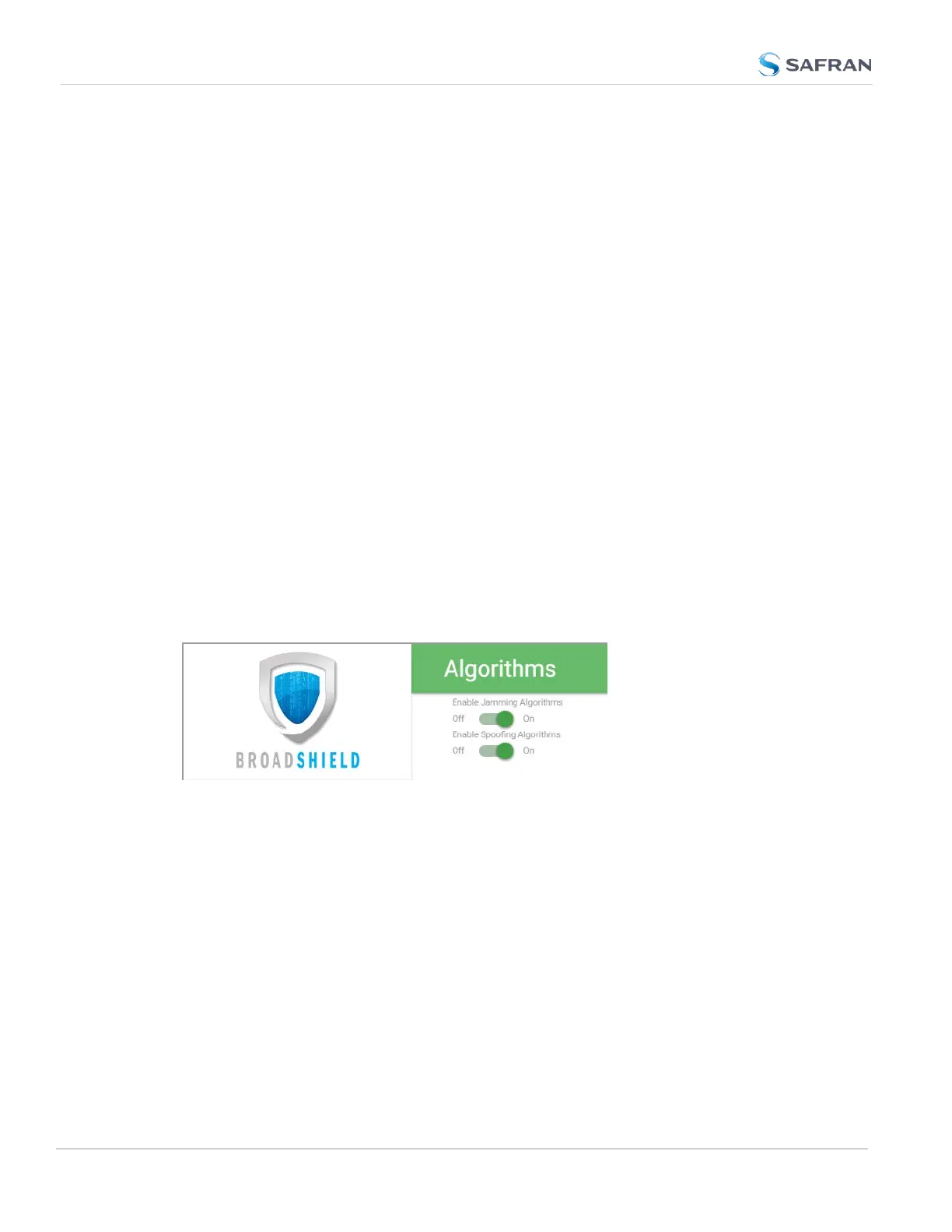
ALGORITHMS
This menu option allows you to disaable/enable Jamming or Spoofing. Spoofing
refers to impersonating the live- sky GNSS signal, thus "deceiving" the
GNSSreceiver, while Jamming refers to interference of the signal, i.e. making the
live-sky GNSS signal unusable. Per default, both are Enabled.
ABOUT
The About menu displays Version and Build Date of the BroadShield software.
Periodic updates are released with VersaSync system software updates, as they
become available.
188
CHAPTER 3 • VersaSync User Manual Rev. 12
3.3 Managing References



 To Next Page