164
────────────────────────────────────────────────────
11.3 Details of the RS-232C Interface
────────────────────────────────────────────────────
1.3.2 Command Syntax
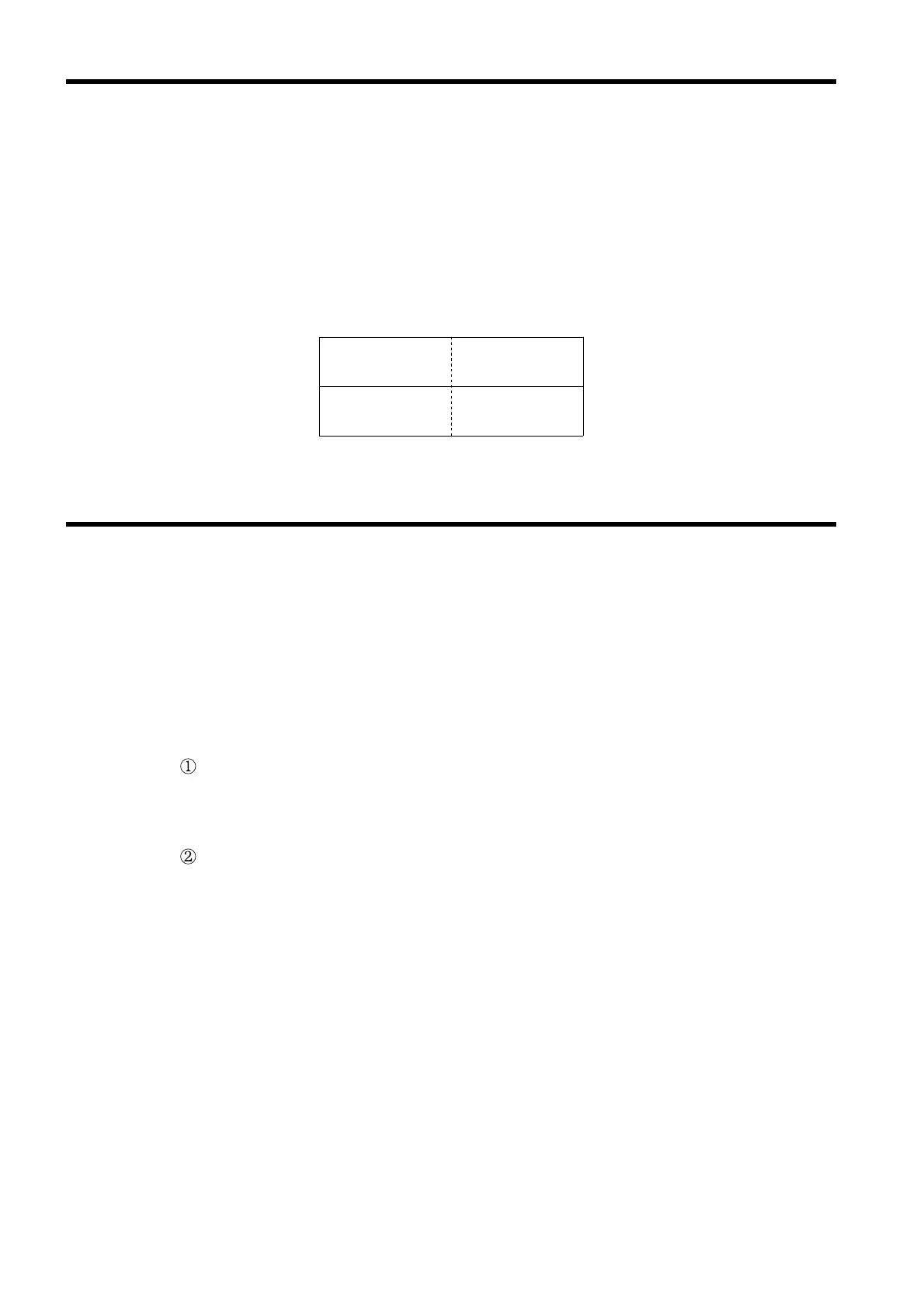
CURRent
CURR
Accepted
CURRE
CUR
Error
1.3.3 Headers
The names of commands for the 3166 are as far as possible mnemonic.
Furthermore, all commands have a long form, and an abbreviated short form.
In command references in this manual, the short form is written in upper case
letters, and then this is continued in lower case letters so as to constitute the
long form. Either of these forms will be accepted during operation, but
intermediate forms will not be accepted. Further, during operation both lower
case letters and upper case letters will be accepted without distinction.
Response messages generated by the 3166 are in long form and in upper case
letters.
Whether or not headers are prefixed to response messages is set by the
"HEADer" command. It is essential to prefix headers to program messages.
(1) Command program headers
There are two types of command: simple commands, compound commands,
and standard commands.
Simple command header
This header is a sequence of letters and digits.
HEADer
Compound command header
This header is made up from a plurality of simple command type headers
marked off by colons.
VOLTage:RANGe
(2) Query program headers
These are for commands used for interrogating the unit about the results of
operations, about measured values, or about the current states of settings for
the unit. As shown by the following examples, they can be recognized as
queries by a question mark appearing after the program header. The structure
of the header is identical to that of a command program header, with "?"
always being affixed to the last command. There are queries possible in each
of the three previously described types of command form.
MEASure:NORMal? <data1> to <data10>
SCALe:PT?


 To Next Page