TROUBLESHOOTING
F2–209
F2
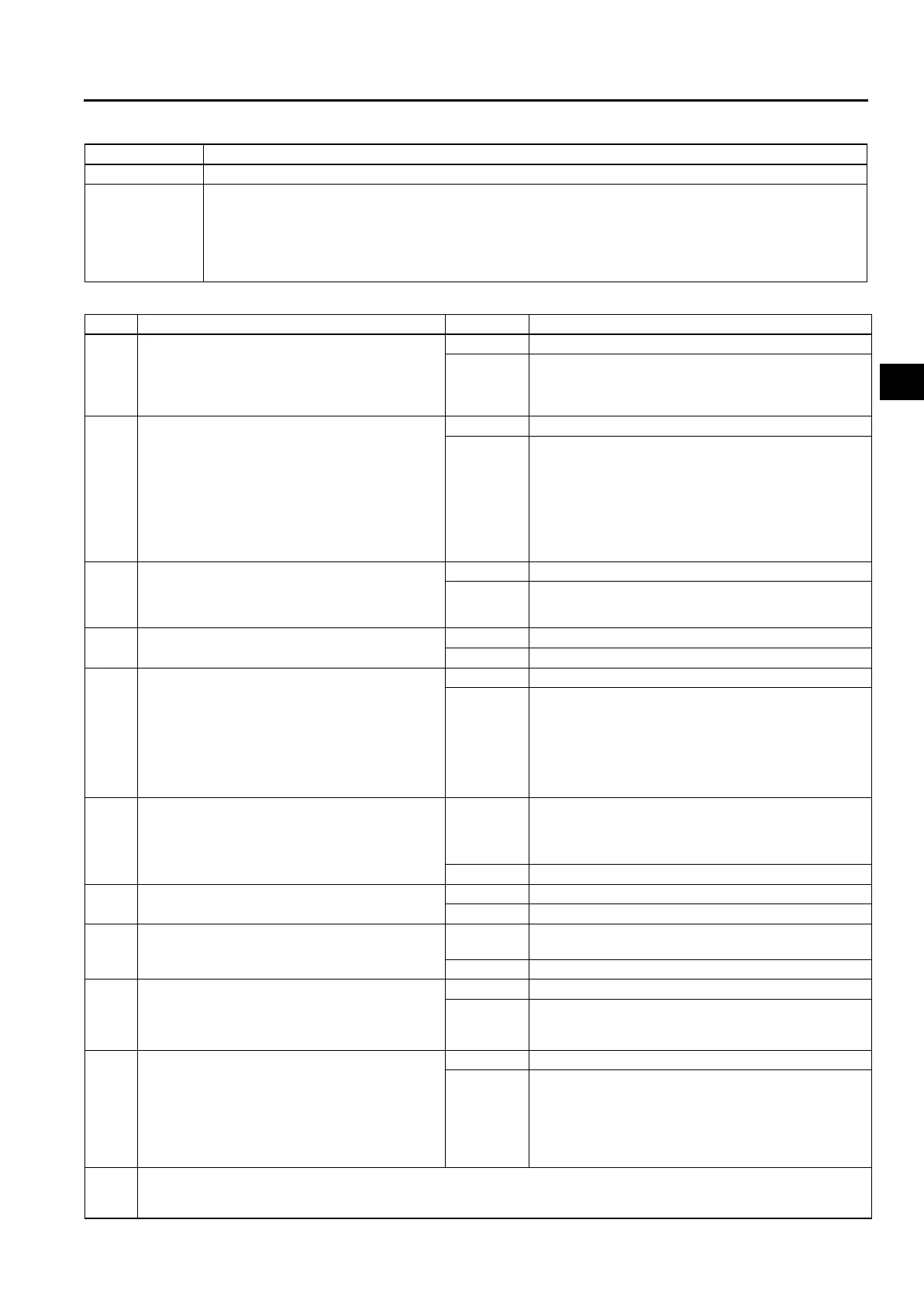
NO.16 HIGH OIL CONSUMPTION/LEAKAGE
A6E408018881218
Diagnostic Procedure
16 HIGH OIL CONSUMPTION/LEAKAGE
DESCRIPTION • Oil consumption is excessive.
POSSIBLE
CAUSE
• Improper engine oil level
• Improper dipstick
• Improper engine oil viscosity
• Engine internal parts malfunction
• Oil leakage
• Turbocharger malfunction
STEP INSPECTION RESULTS ACTION
1 Verify following:
• Proper dipstick
• Proper engine viscosity
• Engine oil level
Are all items okay?
Yes Go to next step.
No Service as necessary.
Repeat Step 1.
2 Remove to necessary to inspect turbocharger.
Note
• Do not remove turbocharger.
Inspect if turbocharger compressor wheel is
bent, damaged, or interfering with housing on
vehicle.
Is there any problem?
Yes Replace turbocharger.
No Go to next step.
3 Inspect if turbocharger compressor wheel
locknut is loose or has fallen down inside
turbocharger.
Is there any problem?
Yes Replace turbocharger.
No Go to next step.
4 Turn turbocharger compressor wheel by hand.
Does wheel turn easily and smoothly?
Yes Go to next step.
No Replace turbocharger.
5 Inspect if turbocharger turbine wheel is
damaged, cracked or interfering with housing on
vehicle.
Note
• Inspect all fins on each turbine wheel.
Is there any problem?
Yes Replace turbocharger.
No Go to next step.
6 Is any engine oil found inside turbocharger
turbine housing?
Yes Excessive amount of oil is found:
Replace turbocharger.
Small amount of oil is found:
Wipe oil off of vehicle, then go to next step.
No Go to next step.
7 Is any engine oil found inside turbocharger
compressor housing?
Yes Wipe oil off of vehicle, then go to next step.
No Go to next step.
8 Is any engine oil found around oil pipes attached
on turbocharger center housing?
Yes If oil leaks from damaged pipe, replace oil pipe.
Then, go to next step.
No Go to next step.
9 Is any engine oil found inside air intake pipes or
hoses?
Yes Wipe engine oil off.
No Turbocharger is okay.
Install all parts removed in Step 2.
Then go to next step.
10 Is engine compression correct?
(See B2–8 COMPRESSION INSPECTION)
Yes Inspect oil leakage from outside of engine.
No Inspect for following:
• Damaged valve seat
• Worn valve stem and valve guide
• Worn or stuck piston ring
• Worn piston, piston ring or cylinder
Service as necessary.
11 Verify test results.
• If okay, return to diagnostic index to service any additional symptoms.
• If malfunction remains, replace PCM. (See F2–64 PCM REMOVAL/INSTALLATION)












 To Next Page