4.107
Date Code 20100129 Instruction Manual SEL-751A Relay
Protection and Logic Functions
Data Reset
Data Reset
The RSTTRGT setting resets the trip output and front-panel TRIP LED,
provided there is no trip condition present (including start inhibit lockouts).
See Figure 4.29 for more details. The RSTENRGY and RSTMXMN settings
reset the Energy and Max/Min Metering values respectively. You should
assign a contact input (for example, RSTTRGT := IN401) to each of these
settings if you want remote reset. The RSTDEM and RSTPKDEM settings
reset demand and peak-demand. See Figure 4.40 for the demand current logic
diagram.
Access Control
The DSABLSET setting defines conditions for disabling all setting changes
from the front-panel interface. To disable setting changes from the front-panel
interface, assign, for example, a contact input (e.g., DSABLSET := IN402) to
the DSABLSET setting. When Relay Word bit DSABLSET asserts, you can
view the device settings from the front-panel interface, but you can only
change settings using serial port commands. Table 4.50 shows the settings
prompt, setting range, and factory default settings.
Time Synchronization Source
The SEL-751A accepts a demodulated IRIG-B time signal. Ta ble 4 . 51 shows
the setting to identify the input for the signal. Set TIME_SRC := IRIG1 when
you use relay terminals B01/B02 or EIA-232 serial Port 3 for the time signal
input. When you use fiber-optic Port 2 for the signal, set the
TIME_SRC := IRIG2. Refer to IRIG-B Time-Code Input on page 2.18 and
IRIG-B on page 7.6 for additional information.
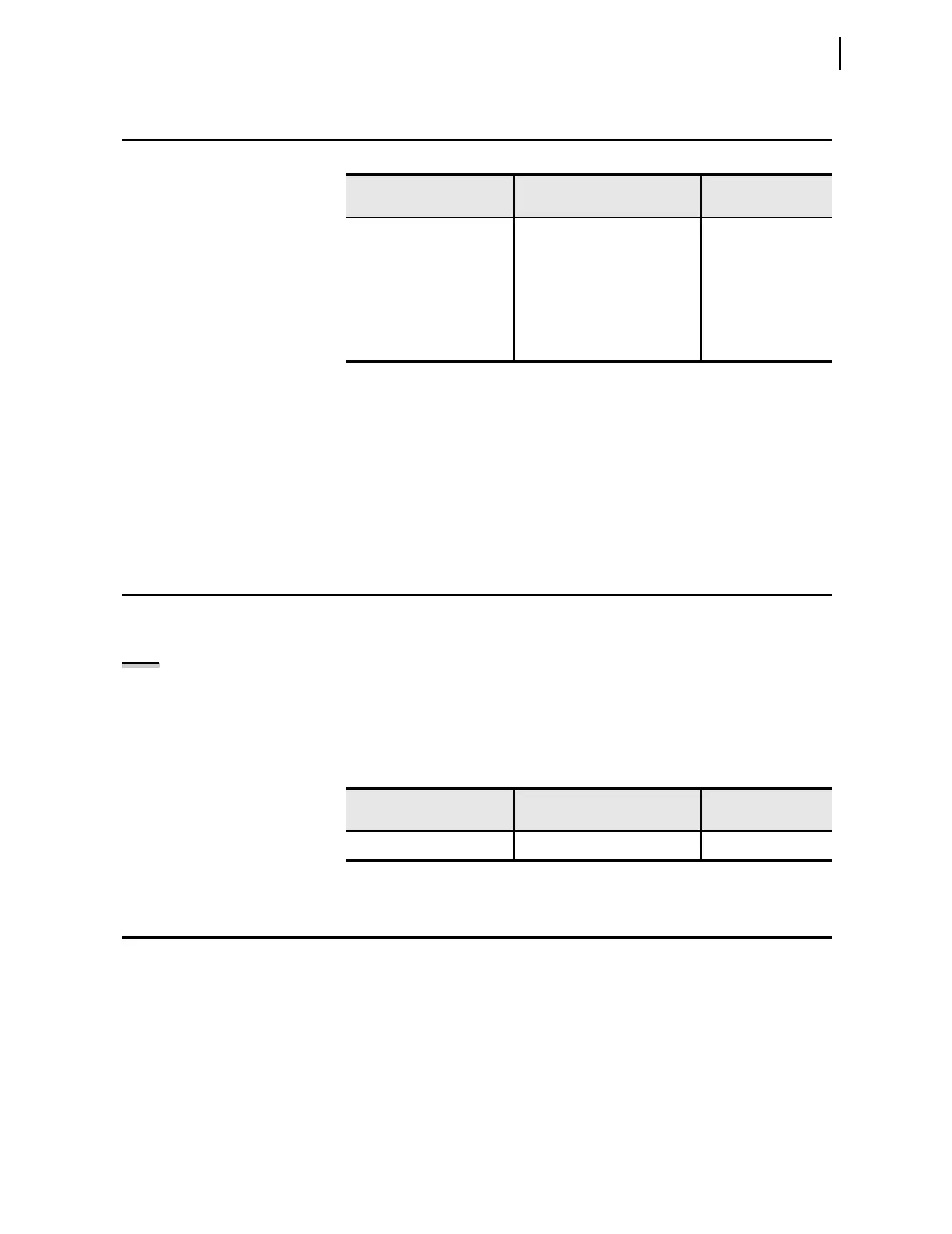
Setting Prompt Setting Range
Setting Name :=
Factory Defau lt
RESET TARGETS SELOGIC RSTTRGT := 0
RESET ENERGY SELOGIC RSTENRGY := 0
RESET MAX/MIN SELOGIC RSTMXMN := 0
RESET DEMAND SELOGIC RSTDEM := 0
RESET PK DEMAND SELOGIC RSTPKDEM := 0
Table 4.50 Setting Change Disable Setting
Setting Prompt Setting Range
Setting Name :=
Factory Defau lt
DISABLE SETTINGS SELOGIC DSABLSET := 0
NOTE: DSABLSET does not disable
the setting changes from the serial
ports.


 To Next Page