7.36
SEL-751A Relay Instruction Manual Date Code 20100129
Communications
SEL ASCII Protocol and Commands
If the requested SER report rows do not exist, the relay responds with No SER
data
.
SER D Command
The SER D command shows a list of SER items that the relay has automatic-
ally removed. These are “chattering” elements. You can automatically remove
chattering SER elements in the SER Chatter Criteria category of the Report
settings; the enable setting is ESERDEL. See Section 4: Protection and Logic
Functions, Report Settings (SET R Command) for more information on SER
automatic deletion and reinsertion.
If you issue the SER D command and you have not enabled automatic
removal of chattering SER elements (Report setting ESERDEL), the relay
responds,
Automatic removal of chattering SER elements not enabled.
SET Command (Change Settings)
The SET command is for viewing or changing the relay settings (see
Table 7.41 and Table 7.42).
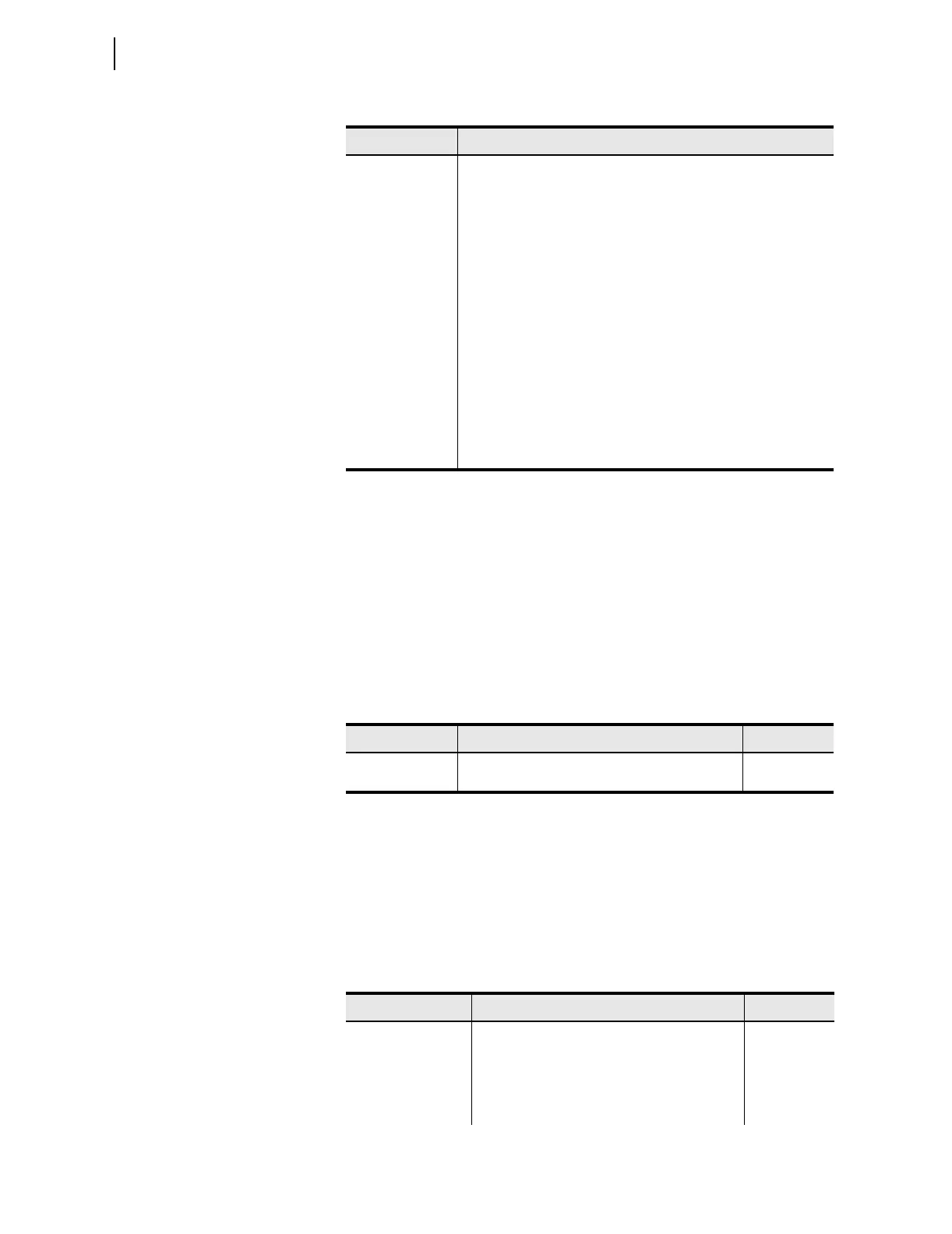
Table 7.39 SER Command Format
Parameter Description
row1 Append row1 to return a chronological progression of the first
row1 rows. For example, use SER 5 to return the first five rows.
row1 row2 Append row1 and row2 to return all rows between row1 and
row2, beginning with row1 and ending with row2. Enter the smaller
number first to display a numeric progression of rows through the
report. Enter the larger number first to display a reverse numeric
progression of rows. For example, use SER 1 10 to return the first 10
rows in numeric order or SER 10 1 to return these same items in
reverse numeric order.
date1 Append date1 to return all rows with this date. For example, use
SER 1/1/2003 to return all records for January 1, 2003.
date1 date2 Append date1 and date2 to return all rows between date1 and date
beginning with date1 and ending with date2. Enter the oldest date
first to display a chronological progression through the report. Enter
the newest date first to display a reverse chronological progression.
Date entries are dependent on the date format setting DATE_F. For
example, use SER 1/5/2003 1/7/2003 to return all records for
January 5, 6, and 7, 2003.
Ta b le 7 . 4 0 S E R D Co m m a nd
Command Description Access Level
SER D List chattering SER elements that the relay is
removing from the SER records.
1
Table 7.41 SET Command (Change Settings) (Sheet 1 of 2)
Command Description Access Level
SET n s TERSE Set the Relay settings, beginning at the first set-
ting for group n (n = 1, 2, or 3).
2
SET L n s TERSE Set general logic settings for group n (n = 1, 2,
or 3).
2
SET G s TERSE Set global settings. 2


 To Next Page