General Troubleshooting Techniques
6-4 72A-1589 Rev. C 02/01
D
DD
D
R
RR
R
A
AA
A
F
FF
F
T
TT
T
3
33
3
/
//
/
5
55
5
/
//
/0
00
0
1
11
1
General Troubleshooting Techniques
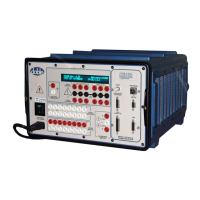
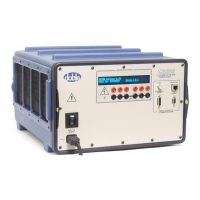
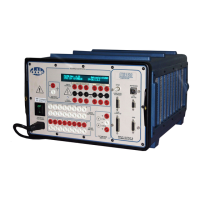
If the F6000 experiences difficulties, perform the following external
checks to isolate the problem before removing the cover.
N
OTE
Many of the major problems encountered in the F6000 are corrected by
replacing a board in the unit. Chapter 7 ”Field Replacement
Procedures” explains how to remove a defective board and replace it.
• Check for boot-up errors.
Power up the F6000 and watch the boot sequence displayed in
the VFD (Vacuum Fluorescent Display).
• Check for source errors in the Source Table of the Control Panel.
• Verify the configuration of voltage and current sources.
Click Tools | F6000 Configuration in the ProTesT menu bar.
• Check the battery simulator.
Turn the battery simulator on from the Control Panel and measure
its output with a voltmeter.
• Check for short circuits (voltage sources).
Remove all connections to the F6000 and check the source
outputs with a voltmeter. If no voltmeter is available, turn the
source on and check for error messages.
• Check for open circuits (current sources).
Remove all connections and check the source outputs with an
ammeter, or short the output terminals.
• If the F6000 is connected via Ethernet, verify that the Ethernet
connection is functioning properly.
Ping the F6000 from a DOS window (see Appendix B ”Ethernet
Communications”).
If the preliminary external checks do not identify the problem, remove
the cover (refer to page 7-2) and check the LED status of internal
components for proper operation (refer to ”LED Status Indicators”
on page 6-5).


 To Next Page