OPERATION
Forming Shields: Finger Conditioner
The position of the forming shields controls the width and placement of the windrow. Deciding which forming shield
position to use is based on the following factors:
• Weather conditions (rain, sun, humidity, wind)
• Type and yield of crop
• Available drying time
• Method of processing (bale s, silage, green-feed)
A wider windrow will generally dry faster and more evenly resulting in less protein loss. Fast drying is especially
important in areas where the weather allows only a few days to cut and bale. For more information, refer to 3.16
Haying Tips, page 102.
A narrower windrow may be preferable for ease of pick-up and when drying is not critical (for example, when cutting
for silage or green-feed).
Positioning Side Deflectors: Finger Conditioner
DANGER
To avoid bodily injury or death from unexpected startup of machine, always stop engine and remove key
from ignition before leaving operator ’s seat for any reason.
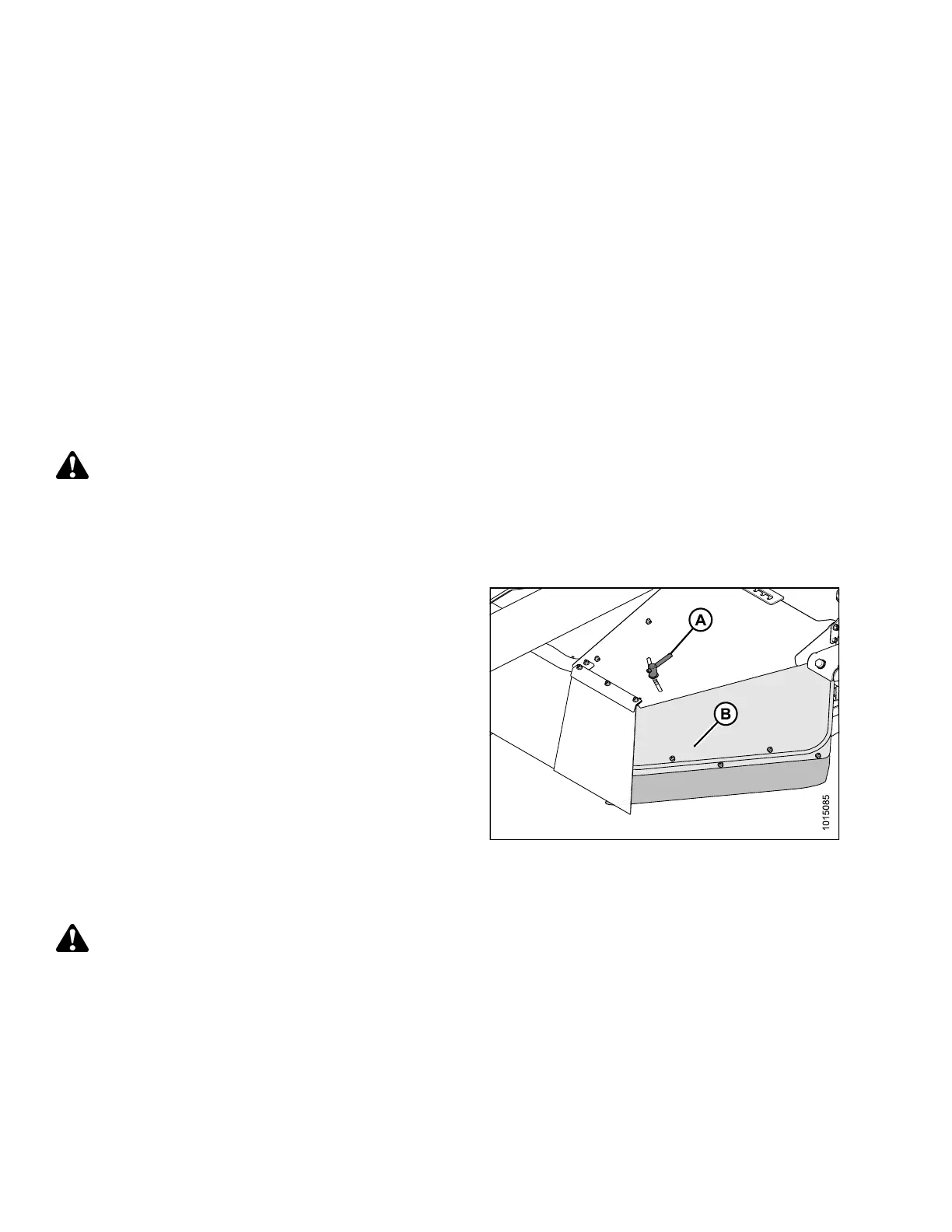
The pos ition of the side deflectors controls the width and placement of the windrow. To ensure windrow placement
is center ed with respect to the carrier wheels, adjust both side deflectors to the same position.
1. Loosen handle (A) on top cover.
2. Move side de flector ( B) to desired position.
3. Tighten the handle.
4. Repeat for other side.
Figure 3.117: Right Side Shown – Left
Side Opposite
Positioning Rear Baffle: Finger Conditioner
DANGER
To avo
id bodily injury or death from unexpected startup of machine, always stop engine and remove key
from i
gnition before leaving operator’s seat for a ny reason.
147910 96 Revision A




 To Next Page