18-6 WING FOLD MECHANISM / TROUBLESHOOTING
ICON A5 / MAINTENANCE MANUAL CHANGE C0
NOTE: If wing is not fully seated, wing lock handle will not latch in the
stowed position.
12. See wing fold/extend additional information. (See “Wing Fold/Extend Additional Information” on
page 18-6.)
VERIFICATION METHOD:
Verify wing lock handle is fully latched and the cockpit annunciators are extinguished.
RELATED INFORMATION:
"Wing Fold Rinse" on page 4-7
"Wing Fold/Extend Additional Information" on page 18-6
18.2.1.3 Wing Fold/Extend Additional Information
Helpful reference information about the wing folding system on the A5. This is not a maintenance,
repair, or alteration task.
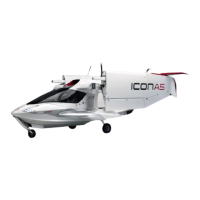
• With both wings folded, the aircraft is light on the nose (tail heavy). Therefore, the wings should
not be folded on an incline or the aircraft may tip onto its tail. Placing ballast on the floorboards
of the passenger compartment can help offset this characteristic.
• The wing fold lock handle has three mechanical latch mechanisms—one latch and two ball
detents.
• There are two switches on each wing for the wing latch handle position annunciator logic.
• There are two switches on each tail pin—one tip position indicator and one lock handle posi-
tion.
• A three-pin locking design ensures the wing remains locked in-place during operations and
automatic aileron alignment eliminates the need to manually adjust aileron positions before
wing fold and after wing extension.
• Folding and unfolding of the wings must be done with the weight of the aircraft on the wheels.
The wings cannot be folded while the aircraft is floating on water.
• Even though the propeller arc clears the folded wing surfaces, ICON does not recommend
running the engine or taxing with wings folded.
NOTE: The folded wings do not impinge on the propeller arc.
• An annunciator panel light in the cockpit will warn the pilot when the wing latch system is
unlocked.
• Folding and unfolding the wings in winds above 10 knots is not recommended.


 To Next Page