TROUBLESHOOTING
F2–217
F2
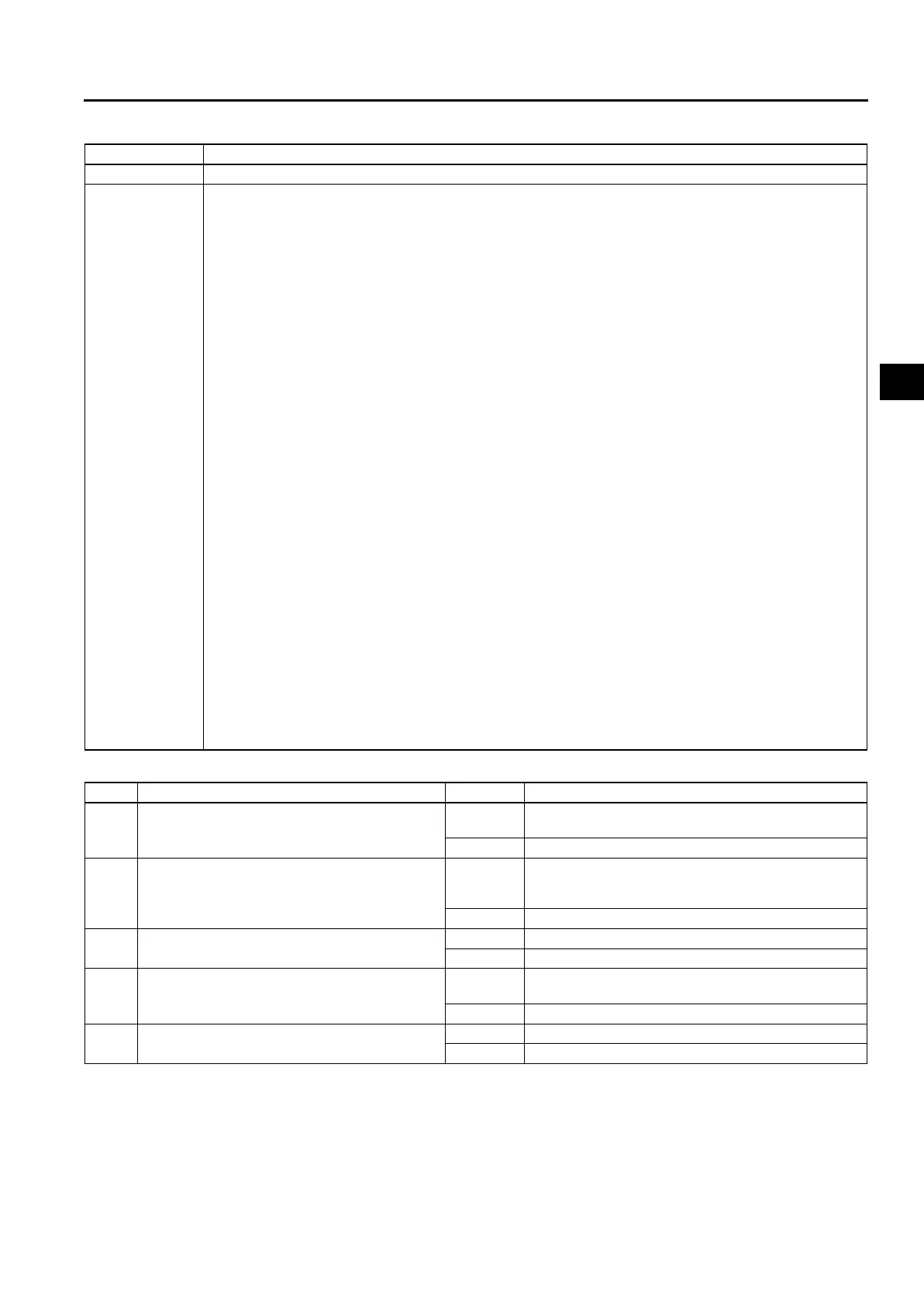
NO.21 ENGINE NOISE
A6E408018881223
Diagnostic Procedure
21 ENGINE NOISE
DESCRIPTION • Engine noise under hood.
POSSIBLE
CAUSE
• Engine internal damage
• Timing belt displacement
• Fuel injector malfunction
• Loose attaching bolts or worn parts
• Improper drive belt tension
• Air leakage from intake-air system
• Incorrect injection timing
• Erratic signal from CKP sensor
• Erratic signal from CMP sensor
• Fuel pressure sensor or related circuit malfunction
• Boost sensor or related circuit malfunction
• Accelerator position sensor or related circuit malfunction
• MAF/IAT sensor or related circuit malfunction
• ECT sensor or related circuit malfunction
• EGR system or malfunction
• IAT sensor No.2 or related circuit malfunction
• Vacuum leakage
• Suction control valve malfunction (built-in supply pump)
• Air leakage from intake-air system
• Air in power steering fluid line
• Turbocharger operating noise
• Solenoid valve operating noise
Warning
The following troubleshooting flow chart contains the fuel system diagnosis and repair
procedures. Read the following warnings before performing the fuel system services:
• Fuel vapor is hazardous. It can easily ignite, causing serious injury and damage. Always keep
sparks and flames away from fuel.
• Fuel line spills and leakage are dangerous. Fuel can ignite and cause serious injury or death
and damage. Fuel can also irritate skin and eyes. To prevent this, always complete “BEFORE
REPAIR PROCEDURE” and “AFTER REPAIR PROCEDURE” described in this manual.
Note
• PCM checks fuel injection amount during a set interval while idling, and automatically corrects it to
maintain engine efficiency. It is normal that engine noise and vibration might be a little louder during
this process.
STEP INSPECTION RESULTS ACTION
1 Is squeal, click or chirp sound present? Yes Inspect engine oil level, solenoid valves installation or
drive belt.
No Go to next step.
2 Is rumble or grind sound present? Yes Inspect drive belt tension or power steering system
fluid level.
If okay, perform power steering fluid line air bleed.
No Go to next step.
3 Is rattle sound present? Yes Inspect location of rattle for loose parts.
No Go to next step.
4 Is hiss sound present? Yes Inspect for vacuum leakage and intake-air system
leakage.
No Go to next step.
5 Is rap or roar sound present? Yes Inspect exhaust system or loose parts.
No Go to next step.











 To Next Page