126
Cedex HiRes Analyzer Operator’s Guide
D
D
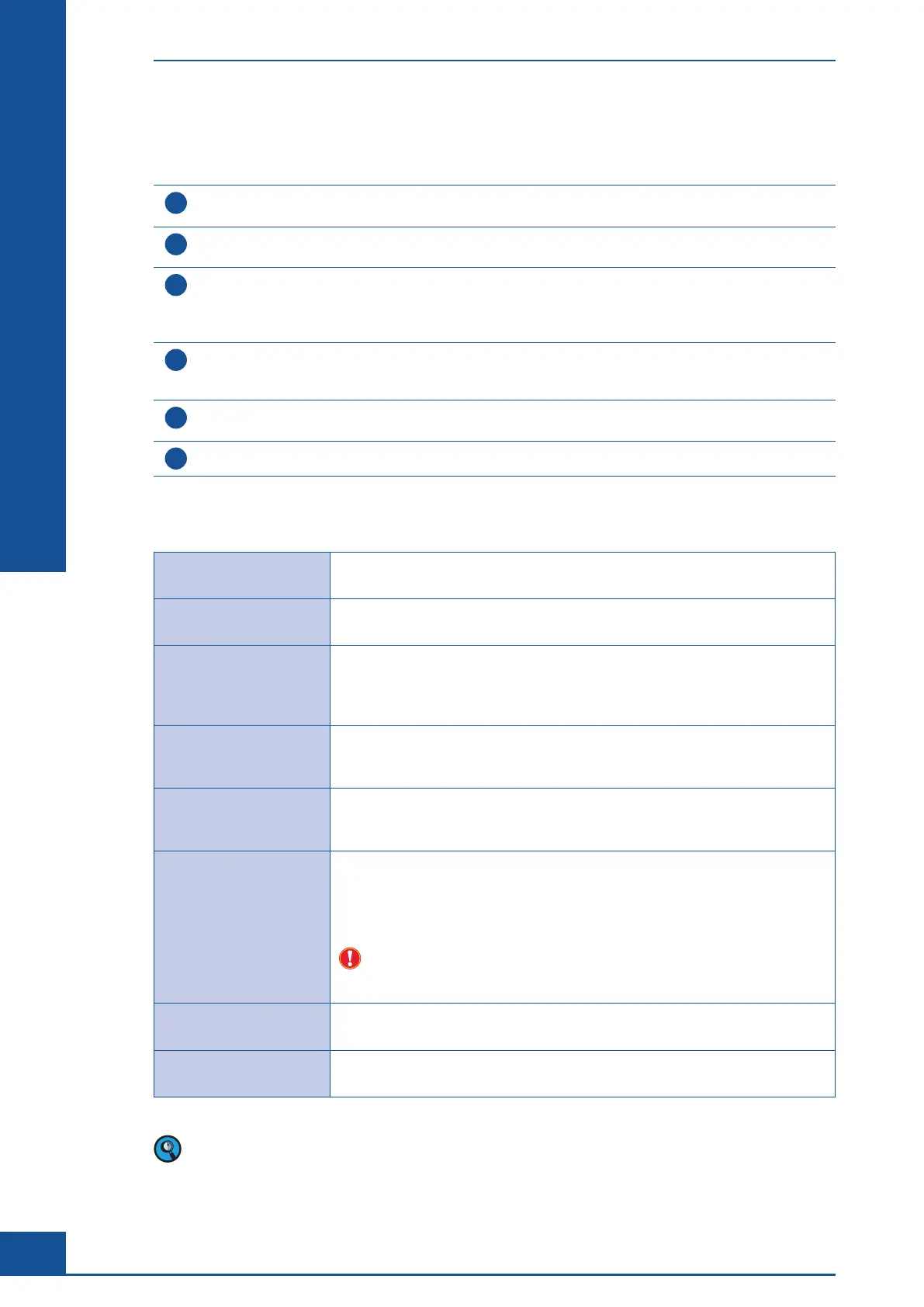
12.1.1. Creating SST Checkpoints With and Without Measurements
To create a new SST checkpoint:
1
Select SST in the Functions menu to access the System Suitability Test List dialog box, or click directly on
the SST button in the Cedex Control Center.
2
Click on the NEW button and the System Suitability Test New dialog box will appear. Using this dialog box, a
measurement checkpoint or a manual checkpoint can be created.
3
To create a checkpoint for a manual check or maintenance activity, click on the SST WITHOUT
MEASUREMENT button. This will open the System Suitability Test New dialog box that allows for the creation
of a checkpoint for a manual check. Enter an SST Name (e.g., Flow Chamber) and an SST Description that
provides sufficient information for any user performing this SST.
4
To create checkpoints for calibration measurements, click on the SST INCLUDING MEASUREMENT button.
The appropriate System Suitability Test New dialog box will appear. A set of parameters needs to be defined.
See Table 8, for a detailed description of the parameters.
5
Click on the SAVE button to create a new SST checkpoint. The checkpoint will be immediately added to the
System Suitability Test List.
6
Clicking on CLOSE will close the dialog box without creating an SST checkpoint.
■
Parameters for SST including Measurement:
SST Name/
SST Description
Enter an SST Name and Description for identification purposes during routine
checkup procedures.
Target Type
Select the characteristic that is to be inspected during the measurements for this
checkpoint (e.g., Total Cell Count, Total Concentration) from the drop-down list.
Cell Type /
Measurement Precision/
Sample Volume/
Sample Initial Dilution
Define different measurement parameters for different checkpoints to verify
operational reliability in various situations.
Target Value The Target Value serves as benchmark for the acceptance criteria. It can be based,
for example, on the average result of a set of measurements carried out with Cedex
HiRes Control Beads.
Valid Range??% The Valid Range??% determines the acceptance range applicable to the results
of SST measurements carried out for this checkpoint based on the target value
entered.
Target Value Check/
Max. Target Value
Min. Target Value
If the Target Value Check is activated, the user performing SST measurements
can enter another target value before running the first SST measurement for this
checkpoint (e.g., when a new container of Control Beads is used). Acceptable
limits
for what can be entered by a user for the variable target
value are set using Max.
Target Value and Min. Target Value fields.
The Max. Target Value and Min. Target Value fields are not related to the
acceptable range for results from an SST measurement. The acceptable range
for results is determined by the % entered in the Valid Range??% field.
Target Value Fixed If the target value is not entered by users, the Target Value Fixed must be
activated.
Measurements required
for passing
Measurements required for passing refers to the number of SST measurements
that has to be performed for this checkpoint.
Table 8: SST parameters for SST with Measurement
In general, the Target Value is determined before the SST checkpoint is activated.
The System Suitability Test (SST)
Creating SST Checkpoints


 To Next Page