VoIP settingsSystem Configuration
............................................................................................................................................................................................................................................................
8AL90208USAD ed01
November 20, 2008
2-13
............................................................................................................................................................................................................................................................
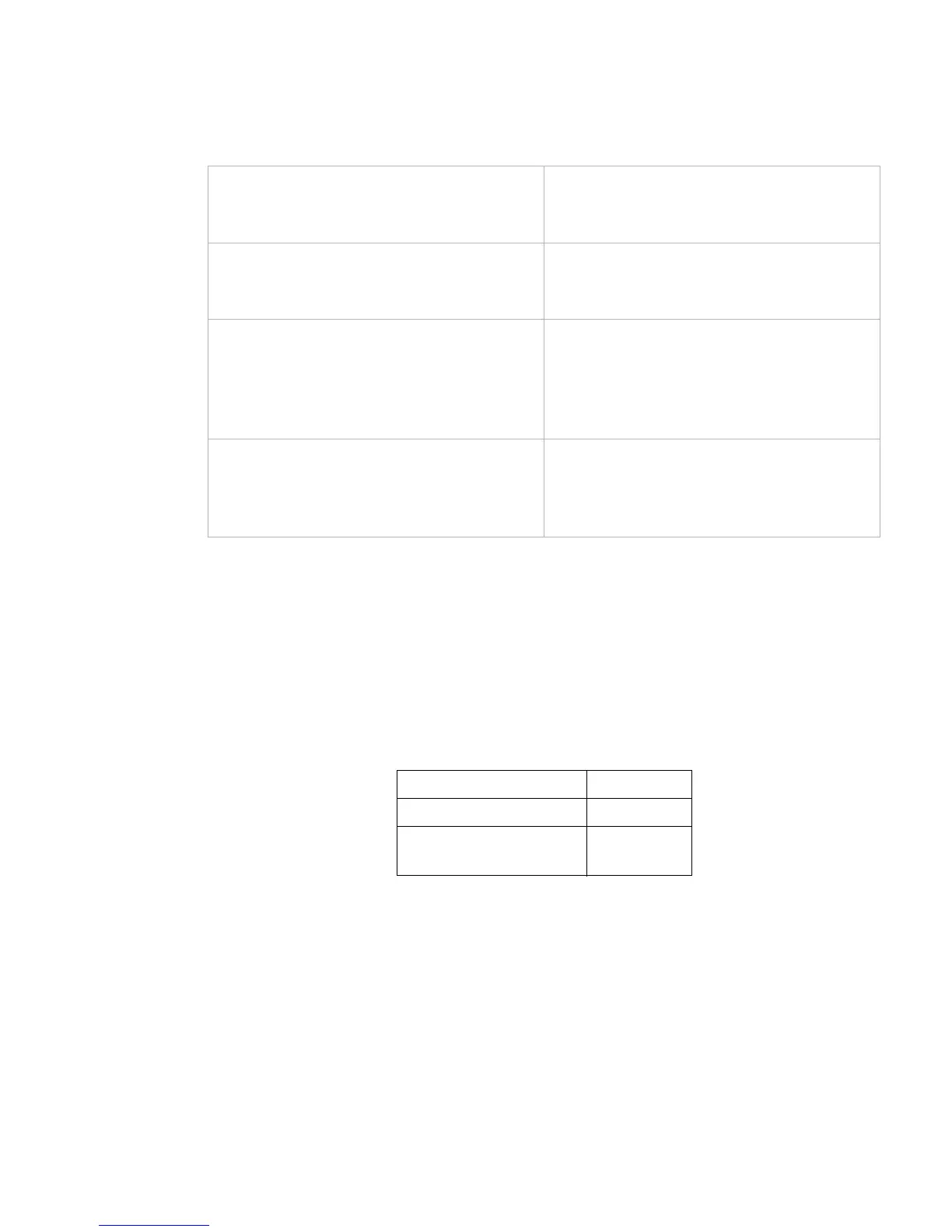
Table 2-2 VoIP Settings
Note:
When configuring the number of legs, always use strictly G.711 as
your guide. Using various codecs (mixed) can yield a lower number
of legs. Table 2-3, “Using Various codecs” (p. 2-13) indicates the ratio in a five-person
conference consisting of phone calls only. The testing that yielded these results was
performed on a HP DL380 with dual 3.6 GHz processors and a 1 Gb/s front plane. The
limits will vary depending on the server type, configuration, and concurrent user
activity.
Table 2-3 Using Various codecs
G.726-32 Payload Type You can select the dynamic payload that the
server must use for the G.726-32 codec. Valid
values are 2 and 102 to 127.
RFC2833 Payload Type You can select the dynamic payload that the
server must use for telephone-events (DTMF
digits). Valid values are 96 to 101.
TOS (Type of Service) Flags You can modify the 8-bit TOS field (also
known as the DIFF-SERV field) in the IP
header of the RTP audio packets that are
generated by the server. The value must be
hexadecimal.
G729 40ms Output Packet Size Select this, if your output packet size
requirement is 40ms rather than the 20ms
associated with the G729 in the Payload
Preference Order drop-down lists.
G.711 600 legs
G.729 300 legs
Mixed:One G.711
Four G.729
200 legs




 To Next Page