ADR233B
Ref ID : ADR233B/IM/PS
Rev No. : 05
Page No. : 148 of 479
The Over voltage protection logic checks whether the voltage goes above the Threshold value
(V>) and once the set time delay (tV> DT Delay) expired then the IED generates over voltage
trip.
4.15 V/Hz Protection (Over Excitation)
Over excitation protection detects impermissible high magnetic flux density in the iron core of
power transformers which can occur in case of increase in voltage and/or decrease in
frequency. Flux density above the rated value saturates the iron core which may result in power
transformer overheating due to large iron losses.
The ADR233B relay provides six independent stages of V/Hz protection function with definite
time delay setting.
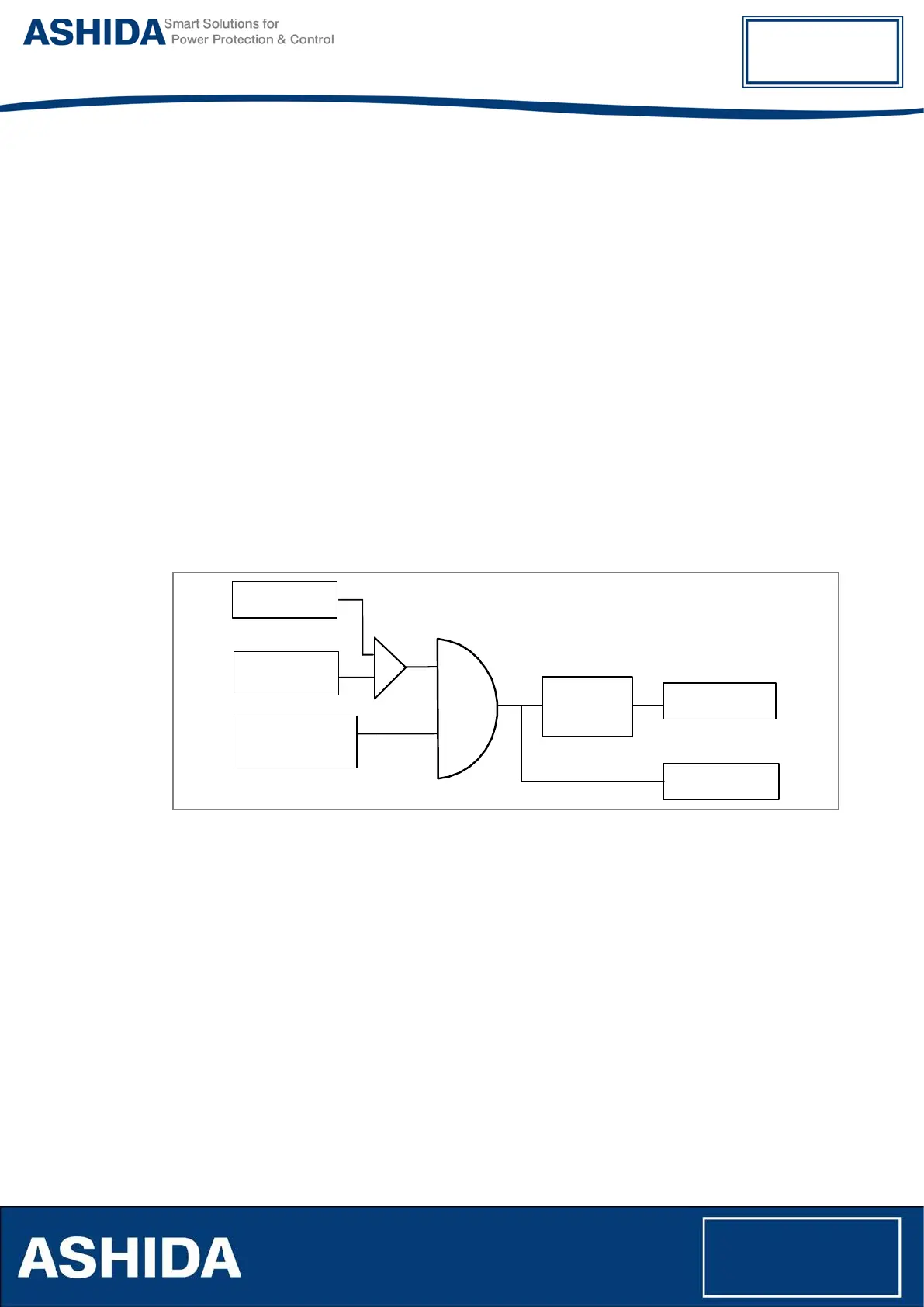
The below logic diagram explains about the over excitation protection function, Over excitation
protection processes the voltage to frequency ratio (V/f) in relation to their nominal values which
this value is exceeds the set value V/Hz Level1 then after delay time set in the “tV/Hz Level1”
setting the relay asserts trip signal “V/Hz Level1 T”. The logic is similar for all remaining stages.
V/Hz Level 1
+
-
&
V/Hz
Measured
V/Hz Level 1
= Enabled
V/Hz Level 1 T
V/Hz Level 1 P
DT Delay
Figure 26: V/Hz Protection Logic
4.16 Circuit Breaker Failure detection Function (W1/W2)
The Circuit Breaker Failure detection is provided for “Breaker Failure” menu. If the Circuit
Breaker fails to operate within the settable time following the protection trip then relay generates
a circuit breaker failure trip signal.
Following the inception of a fault one or more main protection devices will operate. Operation of
the circuit breaker is essential to isolate the fault, and prevent damage or further damage to the
power system.
For transmission and sub-transmission systems, slow fault clearance can also threaten system
stability. It is therefore common practice to install circuit breaker failure protection, which
monitors that the circuit breaker has opened within a reasonable time. If the fault current has not
been interrupted following a set time delay from circuit breaker trip initiation, breaker failure



 To Next Page