i
Preface
How to use this guide
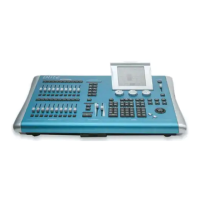
Chapter 1, System Overview, allows you to familiarize yourself with the Dlite console and learn
about Dlite’s displays.
The chapter order, in this guide, is similar to your work flow when starting a new show:
Patching fixtures
Selecting fixtures and setting parameter levels
Programming libraries
Storing lighting objects, such as scenes, chases, and cues
Playing back your show
Saving your show
Subsequent chapters present Dlite’s advanced features
Text conventions
The actual keys on the console panel are referred to as KEYS. Panel KEYS are in BOLD CAPS.
The keys on the touch screens are referred to as BUTTONS. Touch screen BUTTONS are
BOLD, ITALICIZED CAPS.
Command line text and messages appear in italics. Command line refers to area where the
command chain is displayed.
# refers to numbers entered on the numeric keypad.
In operation sequences, optional keys or buttons appear in parentheses.
Example:
SPOT # (#) @ 65.
Key strokes are separated by commas when operation sequences are written in a single line.
Example:
SPOT, #,,#, ACTIVE
When + appears between key or button names, it means: Press THIS (and) THAT at the same
time. Example:
SHIFT + FREE. Generally used only in conjunction with shift pairs.
The term Tap, Touch, and Click are used interchangeably when referring to the touch screen
buttons.
Fixture is used for any lighting device.


 To Next Page