OPERATION
4.3.2 Break-In Period
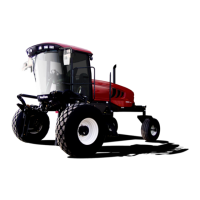
The windrower
is ready for normal operation. However there are several items to check and watch out for during
the first 150 ho
urs.
In a d dition to
the following, perform the items specified in Break-In Inspections, page 313.
DANGER
Before investigating an unusual sound or attempting to correct a problem, place ground speed lever (GSL)
in N-DETENT, shut off engine, and remove key.
IMPORTANT:
Until you beco me fam iliar with the sound and feel of your new w in drower, be extra a lert and attentive.
• O perate engine at moderate load and avoid extremely heavy or light loading for longer than 5 minutes.
• Avoid unnecessary idling. If engine will be idling longer than 5 minutes after reaching operating temperature, turn
key OFF to stop engine.
• Check engine oil level frequently. Watch for any signs of leakage. If oil must be added, refer to Checking Engine
Oil Level, page 227.
NOTE:
During the break-in period, a higher than usual oil consumption should be considered normal.
NOTE:
If windrower must be driven in cold weather (below freezing), let engine idle for 3 minutes, and then
operate at moderate speed until oil has warmed up.
• Watch coolant gauge in cab for temperature rising beyond normal operating range. Check that c oolant level at
reserve tank (mounted next to radiator) stays between HOT and COLD marks on tank.
Refer to Engine Cooling System, page 245. If over-heating problems occur, check for coolant leaks.
4.3.3 P reseason Checks/Annual Service
CAUTION
• R eview the operator’s manual to refresh your memory on safety and operating recommendations.
• R eview all safety signs and other decals on the windrower and note hazard areas.
• B e sure all shields and guards are properly installed and secured. Never alter or remove
safety equipment.
• B e sure you understand and have practiced safe use of all controls. Know the capacity and operating
characteristics of the machine.
• Storeaproperlystockedfirstaidkitandchargedfire extinguisher on the windrower.
1. Perfor
m the following checks:
a. Drain o
ff excess hydraulic oil added for storage. Refer to Draining Hydraulic Oil, page 290.
b. Remov
e plastic bags and/or tape from all sealed openings (air cleaner intake, exhaust pipe, fuel tank).
c. Charg
e b at tery an d ins ta ll. Be sure te rminals are clea n and cables ar e conn ected s ecurely.
169890 86 Revision A


 To Next Page