MAINTENANCE AND SERVICING
Charging the Battery
CAUTION
• Ven tilate the area where batteries are
being charged.
• D o NOT charge a frozen battery. Warm to 60°F
(16°C) before charging.
• D o NOT connect or disconnect live circuits. To
prevent sparks, turn off charger and connect
positive cable first. PROTECT YOUR EYES.
• If charging battery in windrower, disconnect
POSITIVE battery cable before connecting charger
cable, then connect ground cable last, away
from battery.
• Stop or cut back charging rate if battery feels hot,
or is venting electrolyte. Battery temperature m ust
NOT exceed 125°F (52°C).
• The maximum charge rate in amperes should be
NO MORE than 1/3 of the battery’s reserve capacity
minute rating. If the terminal voltage exceeds 16.0
volts while charging, reduce the charge rate.
• C ontinue charging and reduce the rate as needed
until a two hour period results in no increase in
voltage or decrease in current.
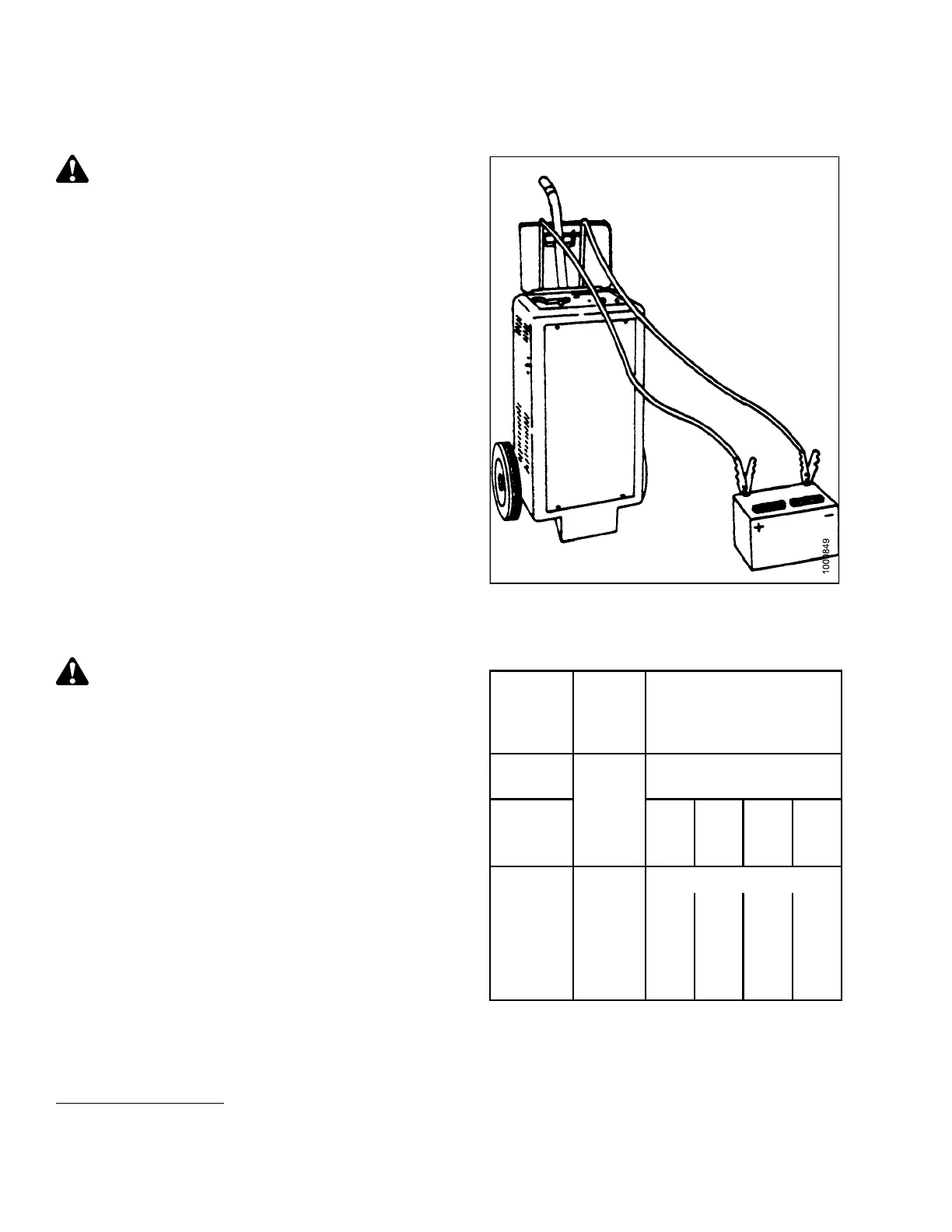
Figure 5
.122: Charging Battery
WARNING
• G el and AGM (Absorbed Glass Mat) batteries
require a voltage-limited charger. Charging a Gel
or AGM battery on a typical shop charger—even
one time—may greatly shorten its life.
• If the electrolyte is accessible, verify that plates
are covered before beginning to charge. At the
end of charge, add distilled water as needed
to bring levels to the proper height. If water is
added, charge for an additional 30 minutes to
mix. If electrolyte levels are low, but battery is not
accessible, remove battery from service.
Table5.17Volta
ge Chart
Voltage
State of
Charge
(%)
Approximate Bat
tery
Charging Time
33
to Full
Charge at 80°F/
27°C.
(Minutes)
Standard
Battery
Maximum Rate at
(Amps)
12 Volts 50 30 20 10
12.6 100
— FUL L CHARGE —
12.4
75
20 35 48 90
12.2 50 45
75
95 180
12.0 25 65 115 145 280
11.8 0 85 150 195 370
33. Charging tim e dep ends u pon battery capacity, condition, age, tem perature, and efficiency of charger.
169890 262 Revision A


 To Next Page