OfficeServ 7100 PROGRAMMING
TECHNICAL MANUAL PART 8 APRIL 2007
8.1.5
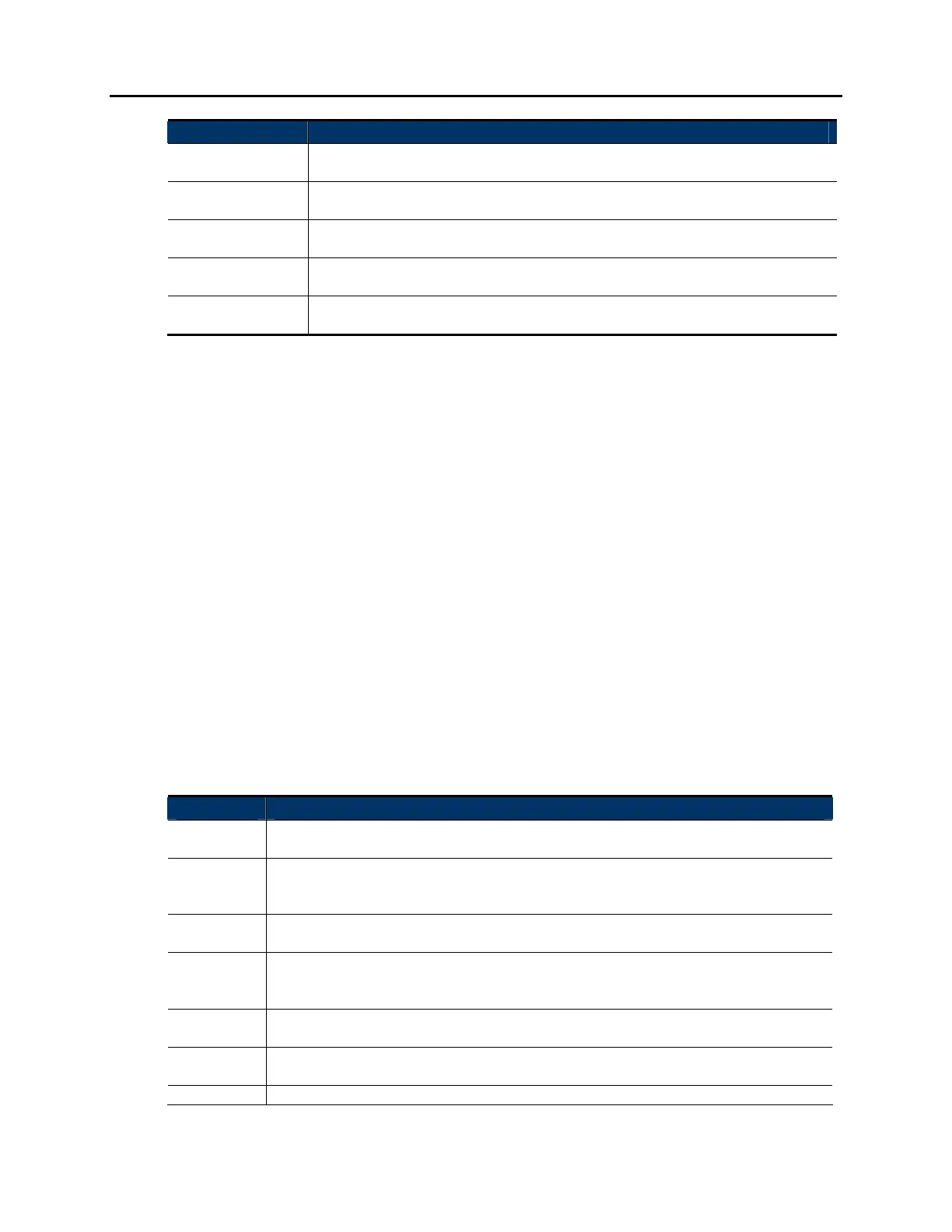
Event Pointer Description
OPERATOR This event is generated when the caller presses the operator assistance
digit.
OPTION /
OPTIONS
This event occurs when a caller presses the digit to hear more options
from a subscriber's Extension.
QUE-FULL This event is generated when a caller chooses to hold for an Extension,
but that Extension's queue is already full.
REMOTE-FWD This event occurs when an automated attendant caller tries to reach an
Extension that has set forwarding to another Extension.
USER-EXIT This event is generated when a subscriber presses the escape digit to
exit their voicemail box.
8.1.5 System Registers
One of the most powerful features of the voicemail and automated attendant system in
the OfficeServ 7100 is the System Registers. System Registers are basically global
variables that store DTMF or voice data. The Caller ID register, for example, stores the
caller ID information for the caller.
Registers can be used to store information about the call, the caller, and entries made
by the caller. Register values are stored until either new values are written or the call
session ends. Registers are primarily read and written in Menu blocks, though some
other blocks can modify certain register values. Registers can also be played back to a
caller or a subscriber through the use of special dialing characters.
One example usage of registers is in specialized paging applications. By default when
the system pages a subscriber for message notification it sends the subscriber's
extension number only. The technician could modify the dialing string to include the
parameters listed below.
Below is the list of registers and their usage.
Register Description
ENTRY This register is not writeable, but instead is used to buffer the DTMF digits
entered by the caller in the current menu.
KEY The Key register is used to buffer all DTMF entries made by the caller across all
blocks. If a specific application requires it, this value can be set to instead only
buffer one block at a time.
CID This register stores the Caller ID information received by the system for the
caller.
FID/FWDID This register stores the phone number of the device that transferred the call to
the voicemail or automated attendant. If a DID number rings directly to the
automated attendant, the register will contain the DID digits.
TID This register stores the trunk number the caller is connected on. In the case of
internal calls, this register is blank.
PORT The Port register is read only and stores the extension number of the voicemail
or automated attendant port the caller is connected to.
TIME This register is read only and stores the current system time.







 To Next Page