8.16
SEL-351A Relay Instruction Manual Date Code 20080213
Breaker Monitor and Metering
Station DC Battery Monitor (Not in SEL-351A-1)
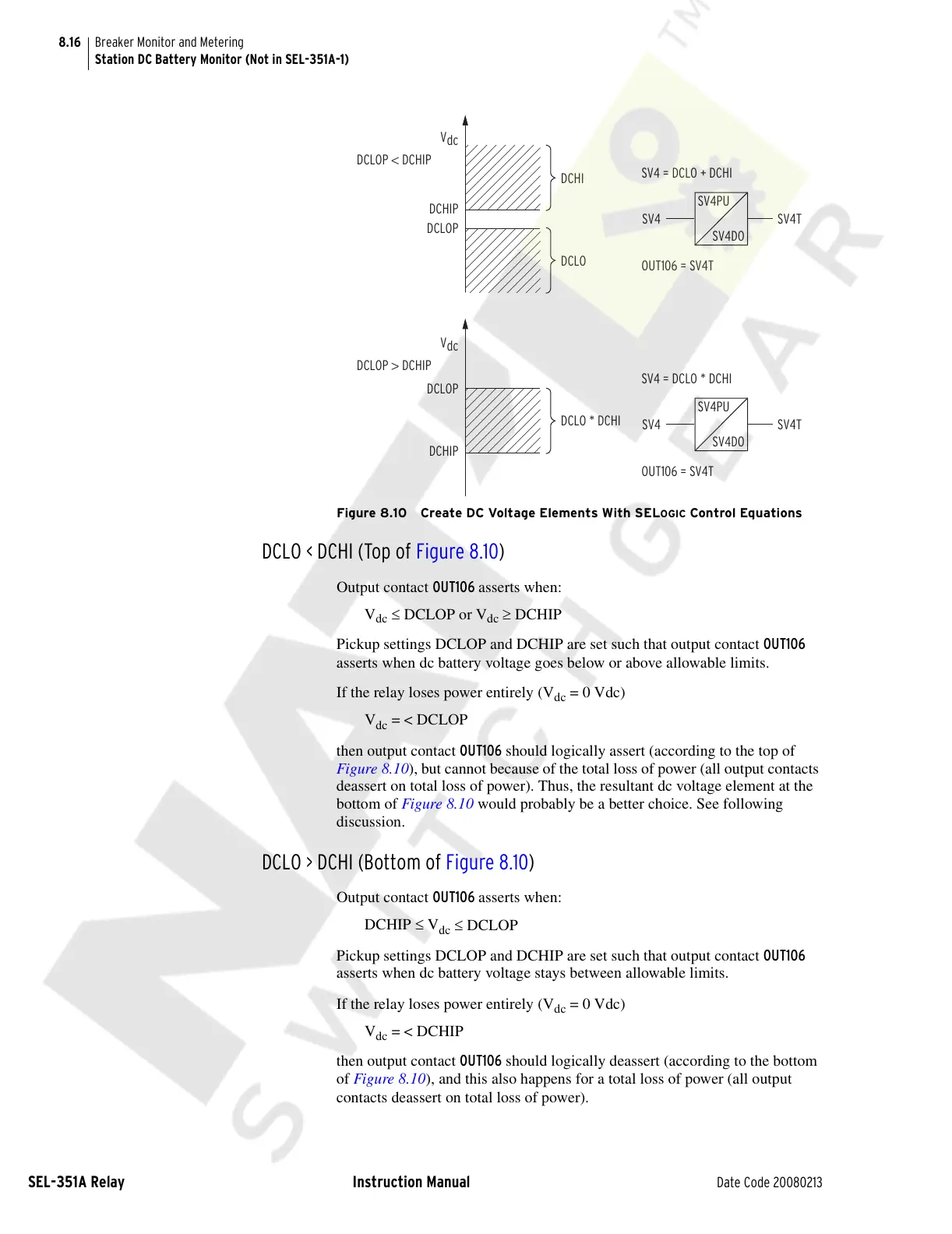
Figure 8.10 Create DC Voltage Elements With SELOGIC Control Equations
DCLO < DCHI (Top of Figure 8.10)
Output contact OUT106 asserts when:
V
dc
≤ DCLOP or V
dc
≥ DCHIP
Pickup settings DCLOP and DCHIP are set such that output contact OUT106
asserts when dc battery voltage goes below or above allowable limits.
If the relay loses power entirely (V
dc
= 0 Vdc)
V
dc
= < DCLOP
then output contact OUT106 should logically assert (according to the top of
Figure 8.10), but cannot because of the total loss of power (all output contacts
deassert on total loss of power). Thus, the resultant dc voltage element at the
bottom of Figure 8.10 would probably be a better choice. See following
discussion.
DCLO > DCHI (Bottom of Figure 8.10)
Output contact OUT106 asserts when:
DCHIP ≤ V
dc
≤ DCLOP
Pickup settings DCLOP and DCHIP are set such that output contact OUT106
asserts when dc battery voltage stays between allowable limits.
If the relay loses power entirely (V
dc
= 0 Vdc)
V
dc
= < DCHIP
then output contact OUT106 should logically deassert (according to the bottom
of Figure 8.10), and this also happens for a total loss of power (all output
contacts deassert on total loss of power).
SV4PU
SV4DO
SV4 SV4T
SV4T
DCHI
SV4 = DCLO + DCHI
OUT106 = SV4T
DCLO
DCLOP
DCHIP
DCLOP < DCHIP
V
dc
SV4PU
SV4DO
SV4
DCLO * DCHI
SV4 = DCLO * DCHI
OUT106 = SV4T
DCLOP
DCHIP
DCLOP > DCHIP
V
dc
Courtesy of NationalSwitchgear.com


 To Next Page