However, the settings which realize reduced processing time, high throughput and
equivalent resolution for Ge detectors may be a bit aggressive for some low energy ap
-
plications. For these applications, which include LEGe, Si(Li) and X-ray detectors,
resolution will be equal to or better than that obtained with traditional analog systems
when the Rise Time and Flat Top filter parameters are optimized for resolution. For
this case, the trapezoidal rise time parameter is increased so that the processing time
and throughput are equivalent to Gaussian shaping.
Rise Time and Flat Top Settings
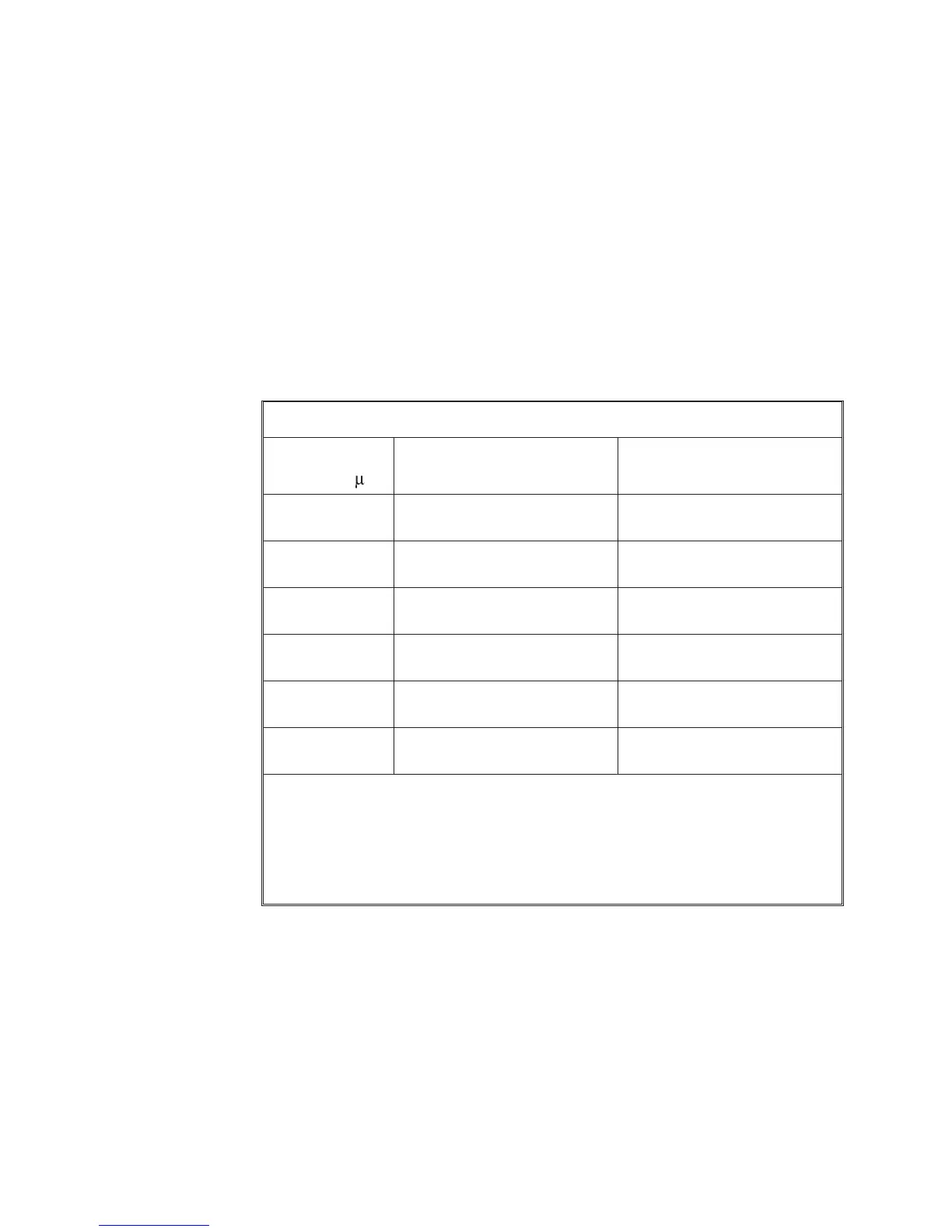
Table B.1 lists the Lynx DSA Rise Time and Flat Top settings which optimize perfor
-
mance for high throughput/good resolution and optional setting for best resolu
-
tion/lower throughput when using Germanium Coaxial detectors.
Table B.1 Gaussian Shaping vs. Throughput and Resolution
Gaussian
Shaping (
s)
Highest Throughput
1
Rise Time / Flat Top
Highest Resolution
2
Rise Time / Flat Top
0.5 µs 0.8 µs / 0.2 µs 1.2 µs / 0.2 µs
1.0 µs 1.2 µs / 0.6 µs 2.8 µs / 0.6 µs
2.µs 2.8 µs / 0.6 µs 5.6 µs / 0.6 µs
4.µs 5.6 µs / 0.8 µs12µs / 0.8 µs
6.µs 8.8 µs / 1.2 µs 18.4 µs / 1.2 µs
12.µs 16.8 µs / 2.4 µs28µs / 2.4 µs
Note 1: Optimized for high throughput, good or equiva
-
lent Gaussian shaping resolution.
Note 2: Optimized for highest resolution, equivalent
Gaussian shaping processing time/throughput.
The optimum shaping-time constant depends on the detector characteristics (such as
size, noise characteristics and collection characteristics), preamplifier and incoming
count rate. Settings for typical germanium coaxial detectors have been discussed
above.
User’s Manual 191
Optimizing Processing Time


 To Next Page