12E5119 Instruction Manual QuickTOC
®
ultra
IECEx 9
LAR | PROCESS ANALYSERS AG
2 Operating Principle of the Analyser
2 Operating Principle of the Analyser
The online measurement system determines the corresponding parameters using the high temperature
method at 1,200°C according to the following measurement methods:
• TOC-Difference Method: TC, TIC, TOC (in accordance with DIN EN 1484:1997 and US-EPA 415.2)
• TOC-Direct Method: NPOC (in accordance with DIN EN 1484:1997 and US-EPA 415.2)
• TConly Method: TC (in accordance with DIN EN 1484:1997 and US-EPA 415.2)
2.1 The Sum Parameter TOC
The TOC (Total Organic Carbon), in addition to COD (chemical oxygen demand) and BOD (biochemical
oxygen demand), is an important sum parameter for assessing the organic load of water. Because all
organic carbon compounds are read and specified as mass carbon (unit: mg/l C), the TOC is a precisely
definable, absolute parameter, and can be directly measured. Other parameters are always stated in
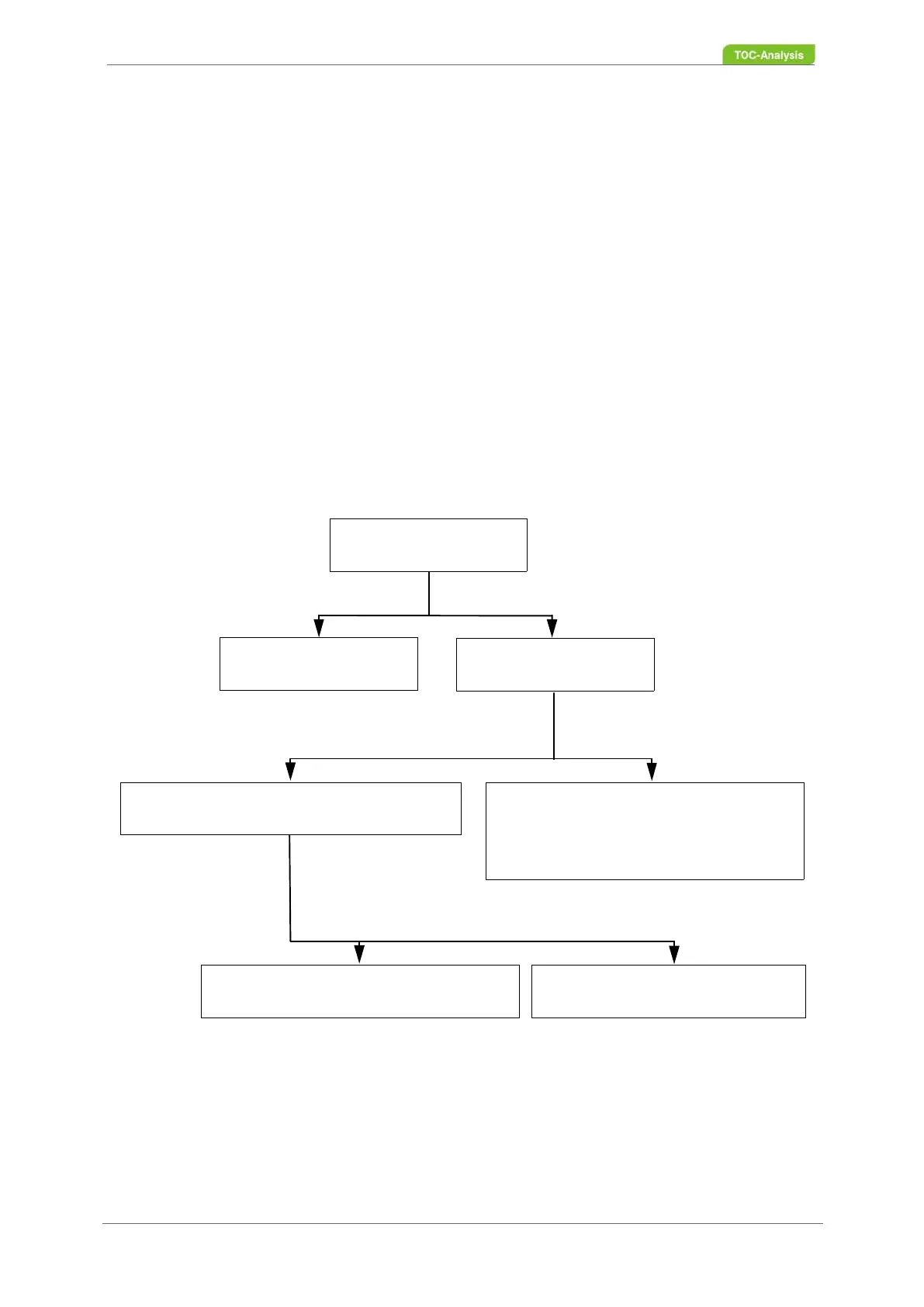
relation to the TOC. Their interrelations and respective meanings are shown below:
The basis of all TOC measurement methods is oxidation - normally using thermal or wet chemical oxi-
dation of organically-ligated carbon to carbon dioxide (CO
2
). The CO
2
produced is detected and deter-
mined quantitatively.
Fig. 1: Sum parameters of organic compounds
TC
Total Carbon
TIC
Total Inorganic Carbon
TOC
Total Organic Carbon
NPOC
Non Purgeable Organic Carbon
POC / VOC
Purgeable Organic Carbon
/
Volatile Organic Carbon
Proteins, Sugar,
org. Acids,
Alcohols,
Humic Compound,
Aromatics, Fats...
Carbonates,
Carbonic Acid...
NPDOC
Non Purgable Dissolved Organic Carbon
Particulate Organic Carbon


 To Next Page