MAINTENANCE AN D SERVICING
DANGER
• NEVER use force on an inflated or partially inflated tire. Make sure the tire is correctly seated before
inflating to operating pressure.
• Do NOT remove, install or make repairs to a tire on a rim, unless you have the proper equipment and
experience to perform the job. Take the tire and rim to a qualified tire repair shop.
• If the tire is NOT in correct position on the rim, or if too full of air, the tire bead can loosen on one side,
causing air to leak at high speed and with great force. An air leak of this nature can thrust the tire in any
direction, endangerin g anyone in the area.
DANGER
Stop engine and remove key from ignition before leaving operator's seat for any reason. A child or even a
pet could engage an idling machine.
Visually check daily that tires have not lost pressure. Adjust pressure as required. Under-inflation of drive tires can
causesidewallcracks.
Measure tire pressure annually with a gauge. Maintain tire pressure as follows:
1. Shut down the engine and remove key.
2. Determine the type and size of tire that is installed on your machine.
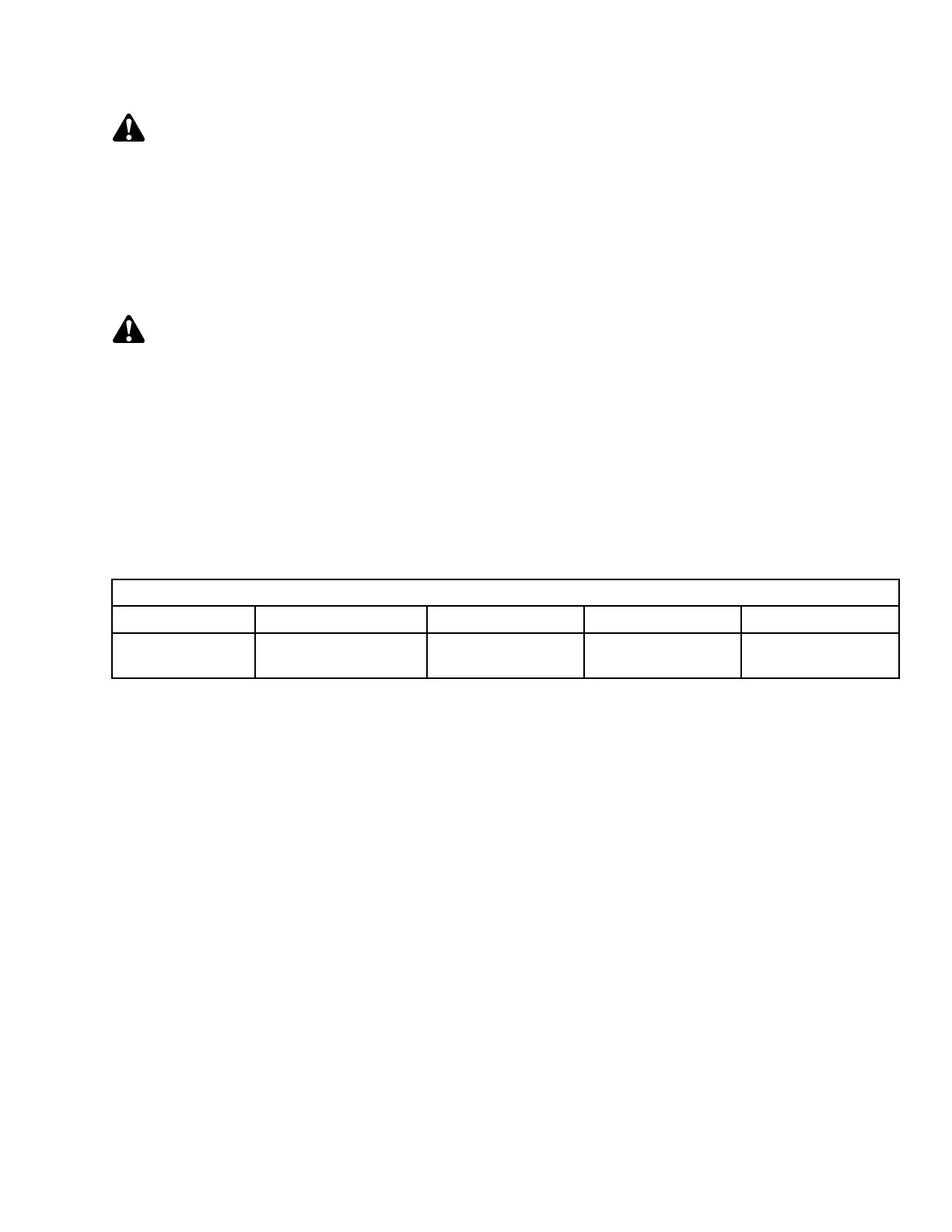
3. Refer to the follow ing table to determine the appropriate tire p r essure:
Table 5.19 Drive Wheel Tire Options
Drive Wheel
Tire Options
18.4-26 Bar
600 / 65 R28 Bar 18.4-26 Turf 23.1-26 Turf 580 / 70 R26 Turf
32 psi
(221 kPa)
26 psi
(179 kPa)
35 psi
(241 kPa)
20 psi
(138 kPa)
24 psi
(165 kPa)
4. Adjust tire pressure as required.
Tightening Drive Wheel Nuts
At first use, or when a wheel is removed, torque drive wheel nuts after one hour of operation.
Continue with torque procedure every hour until two consecutive checks produce no movement of the nuts.
IMPORTA
NT:
•Toavoid
damage to wheel rims and studs, tighten nuts by hand, do NOT use an impact gun, do NOT use
lubrica
nt or Never-Seez
®
compound, and do NOT overtighten wheel nuts.
• Ensure
only the manufacture’s specified nuts are used.
169890 299 Revision A


 To Next Page