108 (327) BRUKER BIOSPIN User Manual Version 002
Basic CP-MAS Experiments
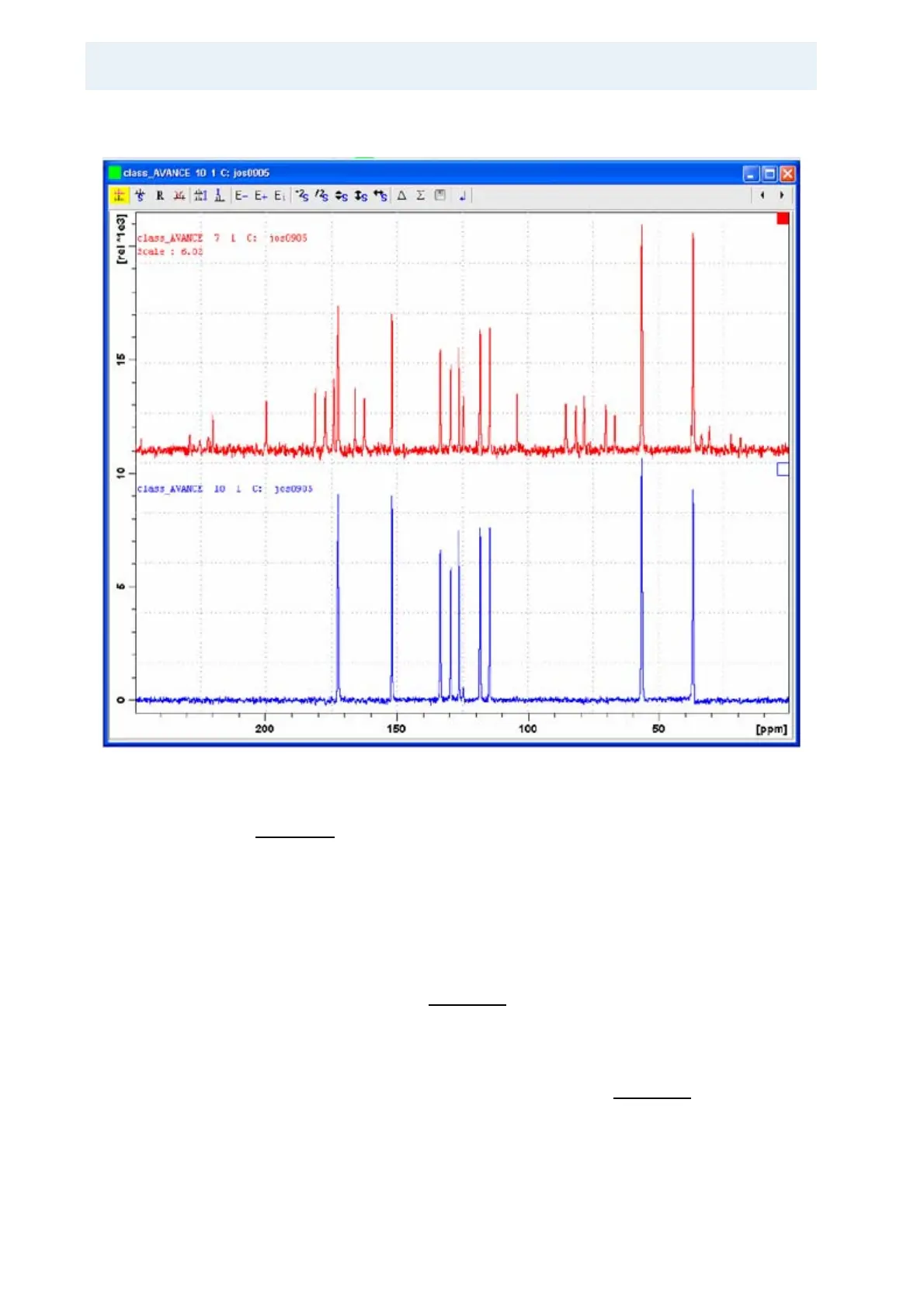
Figure 7.3. Comparison of a CPTOSS and CPMAS Experiment
Figure 7.3. compares a CPTOSS experiment (lower spectrum) to a CPMAS ex-
periment (upper spectrum) on tyrosine HCl at 6 kHz sample rotation using a 4 mm
CPMAS double resonance probe at 500 MHz with 16 accumulated transients.
The sequence is not perfectly compensated for experimental artifacts and if per-
fect suppression of SSB is required, one can use a 5 pulse sequence with a long
phase cycle, requiring a minimum of 243 transients for complete artifact suppres
-
sion using the pulse program cptoss243, where the extension.av is added in
case of the AV2 console.
Figure 7.4. shows the advantage of the well compensat-
ed TOSS sequence with its 243 phase cycle steps over the above 4 pulse se-
quence. Besides the better compensation, the cptoss243 pulse sequence is also
shorter and uses only 1 instead of 2 rotor cycles. This pulse program can be used
with fairly high spinning speeds, up to about 12.5 kHz sample rotation, depending,
of course, on the width of the employed
π – pulses. Figure 7.5. shows for a com-
parison the results obtained with the 4 pulse sequence with 256 scans.



 To Next Page