232 (327) BRUKER BIOSPIN User Manual Version 002
MQ-MAS: Sensitivity Enhancement
pulse into a so-called shifted echo, meaning that the position of the echo can be
shifted by adjusting the delay d6.
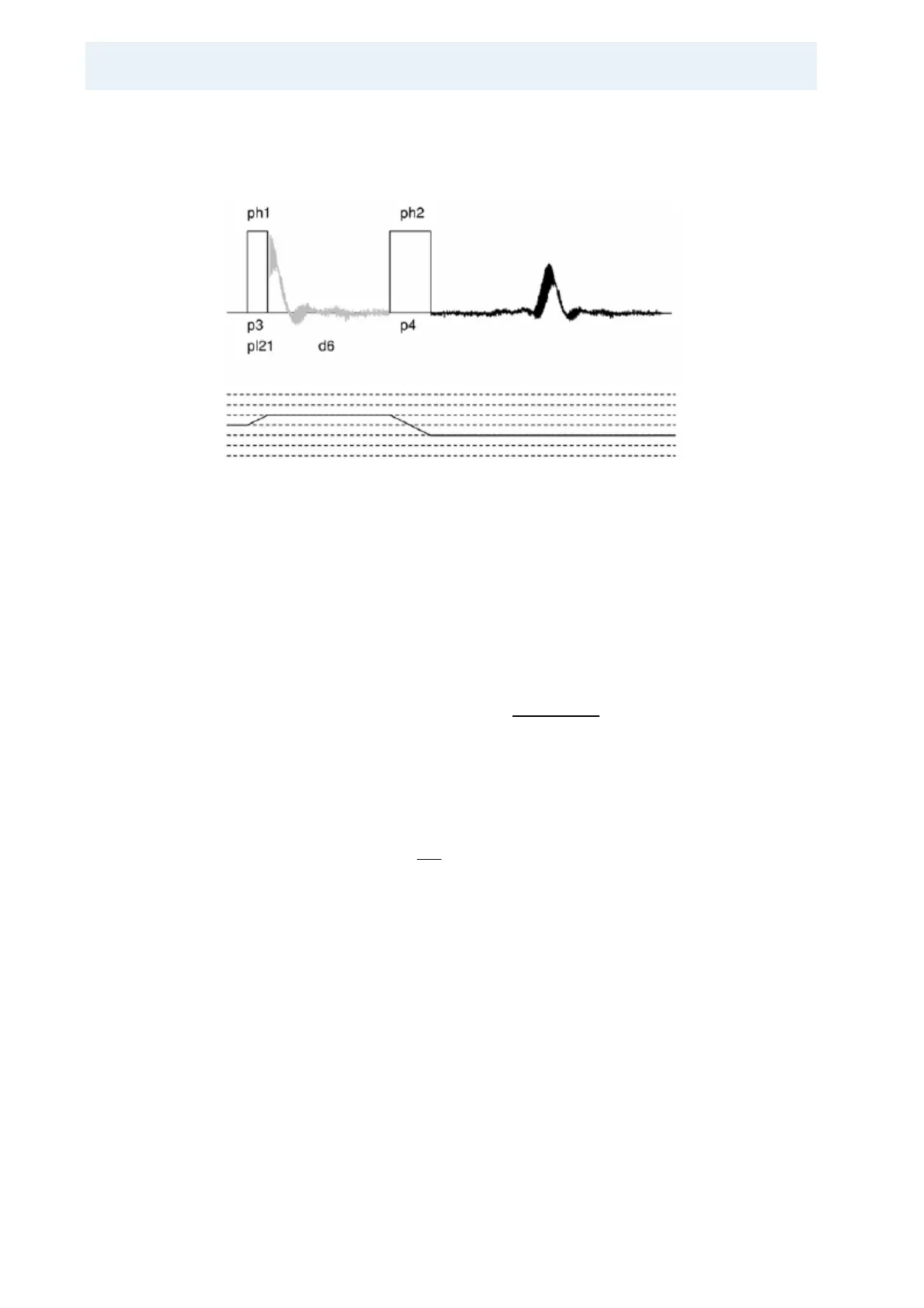
Figure 18.1. Hahn Echo Pulse Sequence and Coherence Transfer Pathway.
After the initial 90° pulse p3 the magnetization dephases and is refocused by the
180° pulse p4. If the τ delay d6 is long enough a full echo can be acquired.
If data acquisition starts immediately after the second pulse the whole echo will be
acquired. The integrated intensity of the echo will be almost twice the intensity of
the single FID; it is just T
2
relaxation during τ that leads to attenuation. In MAS ex-
periments it is advisable to synchronize the echo with the sample rotation i.e.
make τ an integer multiple of rotor periods. For FT of the shifted echo FID there is
a slight “inconvenience” as shown in
Figure 18.2. because after a normal FT the
signal looks quite unconventional. To obtain the usual spectrum a magnitude cal-
culation can be done on 1D spectra, with the loss of phase information. Alterna-
tively, and in particular in 2D spectra it is possible to apply a large 1
st
order phase
correction phc1 to compensate for the time delay before the echo top. The value
of this is:
(Eq. 18.1)
This value can be entered into the processing parameters and a phase correction
pk can be performed. After this the 0
th
order phase correction still needs to be ad-
justed interactively. The best method is to phase the spectrum to give minimum
signal intensity and add or subtract 90° to the obtained value (click 90 or -90 in the
TopSpin phasing interface).



 To Next Page