PFD Operation
4-8 SkyView HDX Pilot’s User Guide – Revision B
Flight Path Marker
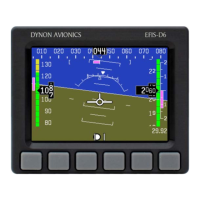
The flight path marker as shown in Figure 34 is an icon that is superimposed on
the PFD. It depicts the actual trajectory that the aircraft is flying through space. In
contrast, the attitude indicator displays the direction that the aircraft is pointed.
The flight path marker is extremely helpful in correlating and distinguishing
between aircraft attitude and flight path, giving you a better understanding of
what the aircraft is doing. Given this, the marker can also be a valuable aide for
avoiding terrain when used with Synthetic Vision.
The flight path marker can be enabled or disabled through the setup menus. Reference the
SkyView Classic / SE / HDX System Installation Guide for information about this setting. To
calculate and display the Flight Path Marker, SkyView HDX requires an indicated airspeed that is
not zero or a GPS ground speed of more than 25 kts. The flight path marker also uses vertical
speed, magnetic heading, GPS ground speed and ground track to calculate its guidance. The
flight path marker will not appear if any of these sources are unavailable.
Several examples of Flight Path Marker behavior:
• If the aircraft’s nose is pitched up, but the marker stays on the horizon, this indicates
that the aircraft is not climbing or descending. You will see this behavior during slow
flight.
• If the aircraft is neither climbing nor descending, the flight path marker will align with
the zero-pitch line. Many aircraft do not cruise at an exactly level attitude. In this case, it
is normal to have a slightly pitched up or pitched down attitude indication, even though
the flight path marker indicates the aircraft is indicating no vertical trajectory.
• If the marker is to the left or right of the attitude indicator’s aircraft symbol, this
indicates that the path over the ground is different than the direction the aircraft is
pointing. This depicts the effects of wind or a slip attitude.
• If the aircraft is climbing out of a canyon and the marker is above the terrain ahead, this
indicates that the aircraft, at its current trajectory, will clear that terrain.
• If the aircraft is climbing out of a canyon and the marker is overlaid on the terrain
ahead, this indicates that the aircraft, at its current trajectory, will impact the terrain.
• If the marker is pointed at a runway threshold during an approach, that is where you will
be when you land if you keep the same approach path to the runway.
Altimeter
The altimeter is displayed on the right side of the PFD. It incorporates an altitude tape and
digital readout, Density Altitude (DA), barometer setting, and altitude bug. Figure 35 is an
example SkyView HDX altimeter.
The altitude tape displays 200 units above and below the current altitude digital readout. Each
tick represents 25 units, with every 50-unit tick drawn slightly longer to differentiate them.



 To Next Page